


What are the most common issues with 11324290?
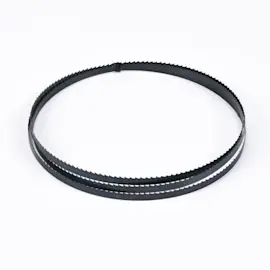
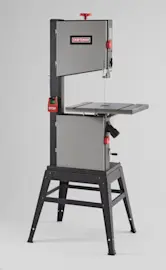
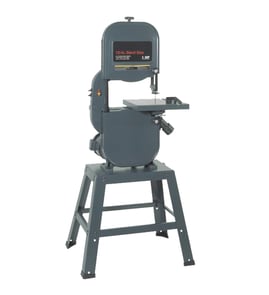
The most common problems we see with the Craftsman 11324290 12-inch band saw involve blade tracking and tension, worn tires or guides, vibration from wheel or belt issues, and electrical faults such as a bad switch or damaged cord. Most symptoms trace back to setup, wear items, or alignment.
- Blade wanders or won’t cut straight: dull blade, incorrect blade tension, guide blocks/bearings set too far away, or fence misalignment.
- Blade comes off the wheels: tracking not set, tension too low, worn wheel tires, or debris on wheels.
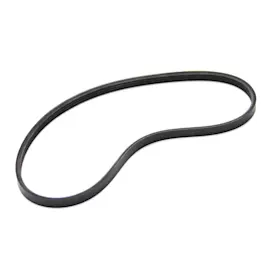
- Excessive vibration or noise: out-of-round tires, loose stand/fasteners, worn bearings, or a worn drive belt.
- Burning smell or slow cutting: dull blade, too much feed pressure, wrong blade TPI for the material.
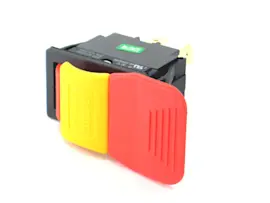
- Won’t start or cuts out: faulty switch, loose wiring, damaged power cord, or a tripped breaker.
- Unplug the saw and open the covers.
- Spin the upper and lower wheels by hand; they should turn smoothly with minimal wobble.
- Check blade condition (missing teeth, cracks, heavy pitch buildup).
- Verify guide blocks/bearings are close to the blade (not squeezing it) and thrust bearing engages only under load.
- Inspect tires for glazing, cracks, flat spots, or separation.
- Confirm the table is square to the blade and the fence is aligned.
| Problem | Most likely cause | Typical fix |
|---|---|---|
| Blade won’t stay centered | Tracking/tension off | Set tracking, then tension; recheck guides |
| Rough, shaky operation | Tires, belt, bearings, loose hardware | Tighten, replace wear parts, balance/alignment |
| No power | Switch/cord/wiring | Test continuity; repair wiring or replace switch |
A band saw that is properly tensioned, tracked, and guided cuts straighter, runs cooler, and is far less likely to throw a blade. That protects the wheels, guides, and motor and improves safety.
For electrical diagnosis steps (like checking a switch or cord), use a meter and follow a proven process such as how to use a multimeter to test electrical parts video.
Last updated: March 2026
What are the specs of the Craftsman 12 inch bandsaw 11324290?
The Craftsman 11324290 is a 12-inch band saw; the core “12-inch” spec refers to the saw’s cutting capacity class (commonly tied to throat size). For exact factory specs (motor HP, table size, max cut height, blade length range), we match parts and diagrams to your specific 11324290 configuration on Sears PartsDirect.
Because band saws in the 12-inch class can vary by production run, we recommend confirming these items directly on your saw:
- Throat (depth of cut): measure from blade to frame column
- Max resaw height: measure from table to the highest guide clearance
- Table size and tilt: measure table top; check tilt scale and stops (often 0° to 45°)
- Blade length and width range: check the blade currently installed; measure length if unknown
- Motor and electrical: read the motor nameplate (HP, amps, voltage)
These are common ranges for many 12-inch vertical band saw designs and help you sanity-check what you have.
| Spec | Typical range (12-inch class) | Where to confirm on your saw |
|---|---|---|
| Throat depth | About 12 in. | Blade to frame column |
| Max cut height | About 6 in. | Table to upper guide clearance |
| Table tilt | 0° to 45° | Trunnion scale and stops |
| Blade width range | About 1/8 in. to 1/2 in. | Blade guides and wheel tracking |
Correct specs prevent common problems like poor tracking, excessive vibration, burning, and premature blade wear. Matching the right blade length, guide setup, and motor requirements also keeps cuts accurate and safer.
- Check the data plate on the frame or stand for electrical and model details
- Measure throat and resaw height with a tape measure (power off)
- If you’re buying a blade, confirm blade length before ordering
- Use the model number 11324290 when searching diagrams and parts lists
Last updated: February 2026
What is the 3-tooth rule for bandsaws?
The 3-tooth rule means you choose a bandsaw blade tooth pitch (TPI) so at least 3 teeth are in the cut at all times. On a Craftsman 11324290 12" band saw, this reduces tooth snagging, improves cut control, and helps the blade last longer.
- Measure the material thickness where the blade is cutting.
- Pick a TPI that keeps 3 to about 10 teeth engaged in that thickness (3 is the minimum).
- If you are between sizes, choose the finer TPI for thin material and the coarser TPI for thick material.
| Material thickness | Typical blade pitch (TPI) | Best use |
|---|---|---|
| 1/8 in (3 mm) and thinner | 18 to 24 TPI | Sheet metal, thin plastics |
| 1/8 to 1/4 in | 14 to 18 TPI | Light stock, thin hardwood strips |
| 1/4 to 1/2 in | 10 to 14 TPI | General purpose wood cutting |
| 1/2 to 2 in | 6 to 10 TPI | Thicker hardwoods, resawing |
| Over 2 in | 3 to 6 TPI | Heavy resawing, thick stock |
- Too few teeth in the cut (TPI too low): teeth hook and chatter, the blade can grab the work, and the cut wanders.
- Too many teeth in the cut (TPI too high): gullets pack with sawdust, the blade overheats, and it dulls faster.
- More vibration: increases wear on guides, tires, and bearings.
Keeping at least 3 teeth engaged spreads the cutting load across multiple teeth. That improves safety, reduces vibration, and helps your Craftsman band saw track straighter, especially on curves and during resaw cuts.
If you are shopping for blades, tires, guides, or other wear items for model 11324290, start with the model parts list, then search by model number on Sears PartsDirect for additional options.
Last updated: February 2026