Owner’s manual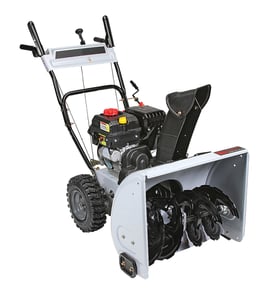



How many years should a snowblower last?
A Craftsman snow thrower like model 247889704 typically delivers about 7 years of average useful life (or around 60 hours of operation) when maintained and used normally; with consistent seasonal maintenance and timely part replacement, many owners keep a machine running longer. See the owner's manual for the maintenance schedule and storage steps.
What “should last” means for this model
The manual for Craftsman 247889704 defines an Average Useful Life of 7 years or 60 operating hours, and it also calls for annual inspections after that point to keep mechanical and safety systems working properly.
What extends snowblower life the most
- Change engine oil on schedule (this model uses 5W-30, about 20 oz capacity).
- Use fresh fuel; gasoline is best used within 30 days to reduce stale-fuel problems.
- Clear snow from the machine after use to help prevent freeze-up.
- Lubricate key moving parts at least once per season (the hex shaft is commonly serviced).
- Replace wear items before they fail (belts, shear pins, cables, skid shoes).
Common wear items that affect lifespan
If performance drops, these parts are frequent culprits on two-stage snowblowers:
| Symptom | Most common cause | What to check/replace |
|---|---|---|
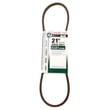
| Auger stops under load | Belt slipping or stretched | Snowblower auger drive belt 256963 |
| Auger jams after hitting ice/objects | Shear pin broken (designed to break) | Shear pin(s) and auger alignment |
| Auger engagement feels weak | Cable out of adjustment or stretched | Auger clutch cable adjustment/replacement |
Why it matters
A snowblower can still run past its “average useful life,” but worn belts, cables, and drive components reduce throwing distance and can strain the drivetrain. Staying ahead of maintenance and replacing wear parts keeps your Craftsman 247889704 safer, more reliable, and easier to start.
You can order replacement parts for your Craftsman 247889704 from the parts list for this model, or search by model number on Sears PartsDirect.
Last updated: February 2026
How to tell year of Craftsman snowblower by serial number?
For a Craftsman snow thrower like model 247889704, the build year is encoded in the serial number, but the exact format depends on who manufactured the unit. We use the decoding steps in the 247889704 owner's manual to confirm the correct model, then match your serial number pattern to the correct date code style.
Step 1: Find the right numbers to decode
Look for the model and serial label on the snowblower frame (commonly near the rear housing, under the handle area, or on the auger housing).
- Confirm the model number reads 247889704
- Write down the full serial number exactly as shown
- Note any prefixes, letters, or dashes (they matter)
- If there is also an engine label, keep that information separate (engine date codes are different)
Step 2: Decode the serial number (most common Craftsman formats)
Craftsman snowblowers were produced by different manufacturers over the years, so you will typically see one of these patterns:
- Format A (character-based date code):
- 1st character: product identifier
- next characters: month and day code
- 5th character: year within a decade (example: “1” can indicate 2001 or 2011; you confirm the decade by the machine’s features and styling)
- Format B (MTD-style date code):
- a month letter (A = Jan through L = Dec)
- followed by digits that indicate day and year within a decade
Quick comparison
| What you see in the serial | Likely decoding method | What it tells you |
|---|---|---|
| Mostly letters and numbers in fixed positions | Format A | Month, day, year-in-decade |
| A month letter (A to L) followed by digits | Format B (MTD-style) | Month, day, year-in-decade |
Step 3: Confirm the decade (the part that trips people up)
Because many serial systems use a single digit for the year, we confirm the decade using practical clues:
- Approximate age based on condition and design
- Whether it has modern control features (chute controls, panel style)
- Parts and assemblies used on the machine (for example, the auger housing and gearbox style)
- Service history or original purchase timeframe
Why it matters
Knowing the correct year helps us match the right diagrams and replacement parts (belts, cables, skid shoes, shear pins) so you avoid ordering a look-alike part that does not fit.
If you are ordering common wear items, you can start with the parts list for this model or search by model number on Sears PartsDirect.
Last updated: February 2026
Is it worth fixing a snowblower?
Yes, it’s worth fixing a Craftsman snow thrower model 247889704 when the problem is a normal wear item (belt, shear pin, cable, skid shoes) and the machine is still within its typical service life. This model’s operator guidance cites an average useful life of 7 years or 60 hours, so repairs that restore safe operation usually make sense.
Quick way to decide (repair vs. replace)
We use these practical checkpoints:
- Repair it when the issue is a wear part (belt, shear pin, cable) and the engine runs normally.
- Repair it when the auger stopped because a shear pin broke after hitting ice or debris.
- Repair it when drive performance is poor due to a worn belt or a cable that needs adjustment.
- Replace it when the machine has repeated major failures (engine compression issues, severe gearbox damage, or chronic drive system problems).
- Replace it when the repair cost approaches half the cost of a comparable new snowblower.
Common “worth fixing” repairs for model 247889704
These are the fixes we see most often on this Craftsman unit:
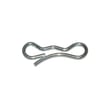
- Replace a broken shear pin with the correct part (never substitute bolts or hardened pins): Craftsman snowblower shear pin 738-04124A
- Replace a worn auger belt if the auger won’t engage or slips under load: snowblower auger drive belt 256963
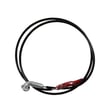
- Adjust or replace an auger clutch cable if engagement is inconsistent: snowblower auger clutch cable 946-04230A
- Replace worn skid shoes when scraping performance drops or the housing rides too low: mtd snowblower skid shoe 731-06439
Cost-to-value guide
| Situation | Typical outcome | Usually worth it? |
|---|---|---|
| Shear pin(s) sheared, auger won’t turn | Low-cost safety repair | Yes |
| Belt slipping or broken | Moderate-cost wear repair | Yes |
| Cable out of adjustment | Low-cost adjustment | Yes |
| Gearbox or major drive damage | High-cost repair | Sometimes |
Why it matters (safety and preventing bigger damage)
Using the correct parts and doing basic maintenance protects the auger gearbox and drive system. The manual specifically warns against using parts that don’t meet original specifications, and it also calls out using the correct shear pins to avoid expensive component damage.
Helpful resources we recommend
- Confirm maintenance intervals, lubrication points, and adjustment steps in the owner's manual.
- If you’re pricing parts beyond what’s listed for this model, search by model number on Sears PartsDirect.
Last updated: February 2026
How to tell if a snowblower auger belt is bad?
On our Craftsman snow thrower model 247889704, a bad auger belt shows up as augers that hesitate, stop under load, or throw snow weakly; you may also notice squealing or a hot rubber smell. Confirm by inspecting for cracks, fraying, glazing, or slack when the auger control is engaged.
Quick symptoms checklist
- Augers do not turn when you squeeze the auger control
- Augers turn but slow down or stop in heavy snow (belt slipping)
- Snow discharge is weak even with the engine running strong
- Squealing noise when engaging the auger
- Burning rubber smell near the belt cover area
- Visible belt damage (cracks, frayed edges, shiny glazed spots, missing chunks)
What to check first (common look-alikes)
- Shear pins: If the auger hit ice or a foreign object, a shear pin can break so the gearbox is protected. Use the correct replacement listed in the 247889704 owner's manual.
- Auger control cable adjustment: The manual calls for very little slack when disengaged (not tight), and the augers must stop completely when you release the control.
- Belt tension and routing: A stretched belt can look “fine” but still slip under load.
Fast comparison: belt vs. shear pin failure
| What you see | More likely cause | What it means |
|---|---|---|
| Engine runs, auger lever feels normal, but augers do not move | Shear pin(s) sheared | Auger is disconnected to prevent damage |
| Augers move at first, then slip or stop in deep snow | Auger belt worn or stretched | Belt cannot grip the pulley under load |
| Loud squeal when engaging auger | Belt slipping or cable misadjusted | Belt is sliding instead of driving |
If you need the correct replacement belt
For this model, the auger belt is the snowblower auger drive belt 256963 (part number 954-04050).
Why it matters
A slipping auger belt reduces throwing distance and overheats, which speeds up belt failure and increases wear on pulleys and idlers.
You can order replacement parts from the parts list for this model, or search by model number on Sears PartsDirect.
Last updated: February 2026
Should I spray my snowblower with WD-40?
Yes, for a Craftsman snow thrower model 247889704, spraying a light coating on the chute and auger housing surfaces can help reduce snow sticking and clogging. For routine care, our recommended approach is a light oil or silicone coating on rust-prone areas and following the lubrication steps in the 247889704 owner's manual.
Where spraying helps (and where it does not)
Use a light spray only on non-drive, non-friction surfaces.
- OK areas: inside the discharge chute, chute opening, auger housing interior (light coat)
- OK for storage: light film on painted or bare-metal areas prone to rust
- Avoid: belts, pulleys, friction wheel area, drive plate, tires, and controls
- Avoid: hot engine and muffler surfaces
- Avoid: soaking bearings or cables; use proper lubrication instead
What the manual recommends instead (best practice)
The manual’s maintenance guidance focuses on targeted lubrication and rust prevention rather than coating everything.
- Lubricate the hex (gear) shaft with a light coating of engine oil (or 3-in-1 oil)
- Keep oil off the aluminum drive plate and rubber friction wheel because it can cause drive problems
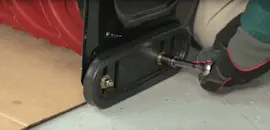
- Lubricate the auger shaft by removing shear pins and spraying lubricant inside the shaft and around spacers and flange bearings
- For off-season storage, coat the equipment with light oil or silicone, especially chains, springs, bearings, and cables
For a step-by-step visual, use how to lubricate a snowblower auger shaft video.
Quick decision guide
| Goal | Best product type | Where to apply |
|---|---|---|
| Reduce chute clogging | Silicone spray or light water-displacing spray | Chute interior, chute opening |
| Prevent rust in storage | Light oil or silicone | Rust-prone metal surfaces |
| Fix squeaks or stiff movement | Proper grease or oil (per manual) | Axles, pivot points, specified lube points |
| Restore drive performance | No spray; clean and keep dry | Friction wheel and drive plate area |
Why it matters
Overspray on the drive system can cause slipping and poor traction, while correct lubrication (hex shaft, auger shaft, axles) keeps the snowblower throwing and driving consistently through the season.
If you are troubleshooting auger engagement or belt slip, a worn belt is a common cause; the snowblower auger drive belt 256963 is one of the model-matched replacement parts.
You can also order replacement parts for model 247889704 from the parts list for this model, or search by model number on Sears PartsDirect.
Last updated: February 2026