Owner’s manual
 Error Codes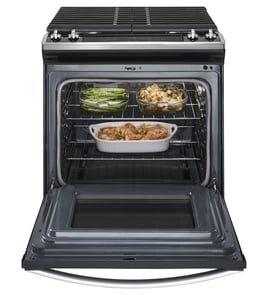




What does JGBS18DET1WW mean on a stove?
JGBS18DET1WW is the GE model number for your gas range, not an error code. We use that model number to match the correct replacement parts and diagrams for your exact stove; check the rating label and compare it to the JGBS18DET1WW owner's manual.
What you are probably seeing (model number vs. fault code)
Model numbers like JGBS18DET1WW identify the appliance. Error or fault codes usually look like F7, F8, or similar and show up on the oven control display.
- Model number: printed on a label (often on the oven frame behind the storage drawer or on the door frame area)
- Serial number: identifies the production unit (helpful for service history)
- Error code: appears on the control display and points to a specific failure
- Part number/part ID: identifies a replacement part (example: range oven temperature sensor WB20K10015)
If you meant an “F” code on the display
On GE ranges, codes such as F7 or F8 typically relate to the touch panel/keypad or the electronic oven control. Before replacing parts, we start with a safe reset and a quick inspection.
Quick checks we recommend
- Turn off power at the breaker for 1 minute, then restore power
- If the code returns, note the exact code and when it happens (bake, broil, preheat)
- Check for stuck or unresponsive keys on the control panel
- If the oven temperature seems inaccurate, test the sensor circuit and consider replacing the sensor
Common parts tied to “oven not heating right” symptoms
If the issue is temperature related (not a keypad error), the oven sensor is a common fix.
| Symptom | Common cause | Example part for JGBS18DET1WW |
|---|---|---|
| Oven too hot or too cool | Temperature sensor out of range | WB20K10015 |
| Oven light not working | Bulb or socket failed | 40A15 or WB08T10026 |
Why it matters
Using the exact JGBS18DET1WW model number prevents ordering the wrong GE range parts (sensor, light bulb, knobs, orifices) and helps you troubleshoot the right system (display code vs. normal operation issue).
Last updated: February 2026
Why are gas stoves being discontinued?
Gas stoves are not being universally discontinued, but many areas and builders are shifting away from gas in new construction due to indoor air-quality concerns and broader electrification goals. Your GE JGBS18DET1WW gas range can still be maintained and repaired using the correct replacement parts and care steps in the JGBS18DET1WW owner's manual.
What is driving the shift away from gas cooking
Several factors are pushing more homes toward electric and induction cooking, especially in new builds:
- Local building codes in some areas limit or discourage new gas hookups
- Indoor air-quality concerns from combustion byproducts (especially without good ventilation)
- Climate and energy-policy goals that favor electrification
- Newer electric and induction ranges offering fast, precise heating
- Builders simplifying utilities by standardizing on electric appliances
What this means for owners of GE JGBS18DET1WW
If you already own a GE JGBS18DET1WW, the practical takeaway is maintenance and safe operation, not replacement.
- Use the range hood or vent fan whenever you cook
- Keep burner ports and caps clean so flames burn steady and blue
- Address weak ignition, uneven flames, or gas odor immediately
- Replace worn knobs, orifices, or burner tubes when performance drops
- Follow the lighting, cleaning, and safety instructions in the manual
Common symptoms and the most likely fix
| Symptom | Most common cause | What to check first |
|---|---|---|
| Yellow, lazy flames | Dirty burner ports or incorrect air mix | Clean burner head and ports; verify proper assembly |
| Burner heats unevenly | Clogged ports or misaligned burner tube | Clean and reseat burner parts |
| Burner won’t light or clicks | Dirty igniter area or moisture | Dry/clean around igniter; confirm cap placement |
| Oven temp seems off | Sensor or calibration issue | Review calibration steps; test sensor if needed |
If oven temperature accuracy is the issue, the range oven temperature sensor WB20K10015 is a common part involved in temperature regulation.
Why it matters
Good ventilation and proper burner operation reduce odors, soot, and irritation while helping your GE gas range cook more evenly. Keeping ignition and burner components clean also prevents nuisance no-light problems and helps you spot real gas-supply issues faster.
Last updated: February 2026
What is the life expectancy of a GE oven?
A GE oven in a GE gas range like model JGBS18DET1WW typically lasts 15 years. Keeping burners clean, avoiding overheating, and fixing small issues early (like temperature inaccuracy or a torn door seal) helps you reach that lifespan.
Typical lifespan and what affects it
Most household ovens fall into a predictable range; your results depend mainly on heat stress, cleaning habits, and how often you cook.
- Typical life expectancy: about 15 years
- Heavy daily use can shorten life; light use can extend it
- Heat leaks from a worn door gasket can overwork the oven
- Temperature problems can cause longer bake times and extra wear
- Electrical issues (wiring, switches, controls) can create intermittent failures
Quick checks that help your oven last longer
Use these practical checks on your JGBS18DET1WW before problems become expensive.
- Keep the oven cavity and burner area free of grease buildup
- If baking is inconsistent, test/replace the oven temperature sensor (range oven temperature sensor WB20K10015)
- If the door does not seal tightly, inspect the gasket (oven door gasket WB32K10036)
- Confirm the range is level so the door closes evenly (leveling legs matter)
- Replace a failed oven light bulb instead of running with a broken socket or loose wiring (40a15bulb 40A15)
Common “end of life” symptoms vs. repairable issues
| Symptom | Often caused by | Usually worth checking first |
|---|---|---|
| Oven temperature swings | Sensor or calibration | Range oven temperature sensor WB20K10015 |
| Heat escaping around door | Worn gasket or hinge alignment | Oven door gasket WB32K10036 |
| No oven light | Bulb or socket | 40a15bulb 40A15 |
Why it matters
A gas range that holds temperature and seals properly cooks faster, uses less energy, and puts less stress on components like the sensor, controls, and wiring. That is the difference between replacing a part and replacing the whole range.
For model-specific operating and care guidance, follow the cleaning and use recommendations in the owner's manual.
Last updated: February 2026