Installation guide
 Owner’s manual
 Error Codes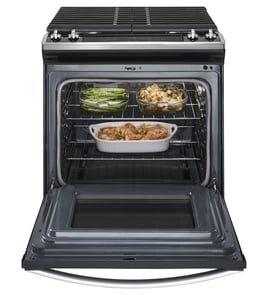
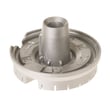


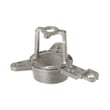
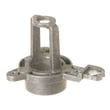


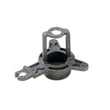
How to fix GE gas stove burner?
On a GE JGB660EP1ES gas range, most burner problems are caused by a mis-seated burner cap/head, clogged burner ports, or a dirty electrode. We fix it by letting everything cool, cleaning and drying the burner parts, then reassembling them correctly and testing ignition.
- Turn all knobs to OFF and let grates and burners cool completely.
- Do not operate a burner with any parts missing (cap, head, grate).
- Keep flames under cookware; never let flames extend past the pan.
- If you smell gas, stop and ventilate the area before troubleshooting.
- Remove grates, then lift off the burner cap and burner head.
- Clean burner ports/slots and the lighter port (oval burner) so they are fully open.
- Check the electrode area for burned-on food or grease; clean carefully.
- Dry parts thoroughly; moisture can prevent ignition.
- Reinstall the burner head in the correct location and seat the cap flat and centered.
- Test: push and turn the knob to LITE. Clicking is normal; the burner should light within about 4 seconds once air is purged.
For diagrams and correct burner placement, use the JGB660EP1ES installation guide.
| Symptom | Most common cause | What we do |
|---|---|---|
| Clicks but won’t light | Wet/dirty burner ports or electrode | Clean and dry; polish electrode tip lightly if needed |
| Uneven flame | Cap not seated, ports clogged | Reseat cap; clear ports |
| Very large or yellow flames | Air-to-gas ratio issue (often after conversion) | Have the installer/technician correct the setup |
If cleaning and correct assembly do not restore normal lighting, these parts are frequent fixes for ignition problems:
- Range spark module WB13X24741 (controls sparking to the electrodes)
- Range surface burner cap WB28K10222 (a warped/damaged cap can disrupt flame)
Correct burner assembly and clean ports give you fast ignition, stable flame, and safer operation. A cap that is even slightly off-center can cause delayed ignition, uneven heating, or clicking with no flame.
Last updated: February 2026
What if I can't find my part on Sears PartsDirect?
If you can’t find a part for your GE JGB660EP1ES gas range, we recommend confirming the full model number first, then using the exploded-view diagrams and part lists in the JGB660EP1ES owner’s manual. If it’s still not showing, a parts specialist can match your description to the correct OEM part.
- Recheck the model number tag and enter JGB660EP1ES exactly (letters and numbers matter).
- Use the part diagrams and lists in the JGB660EP1ES owner’s manual to identify the correct part name.
- Search by the part ID or part number if you have it (for example, range spark module WB13X24741).
- Try searching by the functional description (example: “spark module”, “oven igniter”, “burner cap”).
- If the part is cosmetic, confirm color/finish variants before ordering.
- If the part is gas-related (valves, regulator), match it by model and position, not by appearance alone.
| What you see | What it usually means | What to do next |
|---|---|---|
| No results for your search | Search term is too specific or misspelled | Search by part ID/number or a shorter name |
| Similar part appears, but not exact | Multiple revisions or position-specific parts | Match by diagram location and description |
| You only have a photo | Photos can look identical across versions | Use model-based lookup and diagram callouts |
| Part is for installation | Some items are referenced in setup docs | Check the JGB660EP1ES installation guide |
Using the exact model number and diagram callouts prevents ordering a part that fits a different GE range revision. That is especially important for ignition parts, burner components, and gas valve assemblies.
Last updated: February 2026
What is the average lifespan of JGB660EP1ES?
A GE gas range like model JGB660EP1ES typically lasts 15 years with normal home use and basic maintenance (keeping burners clean, ensuring proper gas ignition, and avoiding overheating the control area). For care and operating guidance specific to your range, use the owner's manual.
- Burner and igniter health: weak ignition can increase wear and cause delayed lighting
- Cleaning habits: spills and grease buildup shorten the life of burner parts and knobs
- Ventilation and heat exposure: poor airflow can stress wiring and electronic controls
- Gas supply quality: incorrect pressure or a failing regulator can cause poor combustion
- Door and drawer use: slamming can damage hinges, switches, and panels
| System | Typical service life | Common wear signs |
|---|---|---|
| Surface burners and caps | 5 to 10 years | uneven flame, clogged ports, corrosion |
| Oven ignition system | 5 to 10 years | slow preheat, no bake/broil ignition |
| Electronic controls | 8 to 15 years | dead display, erratic temps, nonresponsive keys |
| Gas valve and regulator | 10 to 15 years | weak flame, inconsistent heat, gas odor |
- Clean burner caps and ports regularly; keep them dry before relighting
- Verify flames are steady and mostly blue; address yellow, lifting, or noisy flames promptly
- Keep the oven bottom area free of heavy debris that can affect airflow and ignition
- Replace worn ignition parts when symptoms start; for example, a failing range oven burner igniter WB13X40206 can cause delayed ignition and longer heat cycles
- Follow leveling and anti-tip guidance during installation or moves using the installation guide
A range that is lighting quickly and burning cleanly runs cooler at the controls, uses fuel more efficiently, and puts less stress on parts like igniters, valves, and the oven control board. That is what most directly determines whether you get the full 15-year lifespan.
Last updated: March 2026