Installation guide
 Owner’s manual
 Error Codes



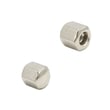
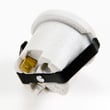
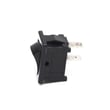
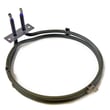
Where to find model number on Kenmore gas range?
On Kenmore dual-fuel range model 79074503992, the model and serial number plate is typically on the drawer side frame (inside the storage drawer area). You can also find it on the left side of the range, visible when the oven door is open; see the 79074503992 owner's manual.
Pull the storage drawer out and open the oven door; then look for a metal or foil identification plate.
- Inside the storage drawer opening on the drawer side frame (most common)
- Left side of the range frame visible when the oven door is open
- Behind the lower panel (if your unit has a removable lower panel)
- Near the back of the range on the frame (less common, but worth a quick look)
When you find the plate, record these items exactly as shown:
- Model number (for this page: 79074503992)
- Serial number
- Lot number or lot letter (often printed near the serial)
| Item on the ID plate | What it’s used for |
|---|---|
| Model number | Matches your exact range design and parts list |
| Serial number | Helps confirm production run details |
| Lot number/letter | Helps narrow down correct part variations |
Kenmore ranges can look similar across model series, but parts like a bake element, oven rack, or control components can vary by production run. Using the exact model and serial information helps us match the correct replacement parts the first time.
Last updated: February 2026
How do I troubleshoot my 79074503992?
To troubleshoot your Kenmore dual-fuel range model 79074503992, start by matching the symptom to the system (gas burners vs. electric oven), then check the simplest causes first: power, gas supply, settings, and visible damage. Use the 79074503992 installation guide for electrical and hookup checks.
- No power or dead display: check the house breaker, then inspect the power cord connection area.
- Oven not heating: confirm Bake is selected and preheat starts; then suspect a failed bake element or temperature sensing issue.
- Uneven baking: verify rack position, avoid blocking vents, and confirm convection fan operation.
- Burner won’t ignite or clicks: clean and dry the burner area; confirm the burner cap is seated.
- Self-clean won’t start or door won’t unlock: door latch mechanism or control conditions may be preventing the cycle.
- Disconnect power at the breaker before removing panels or touching wiring.
- Confirm gas supply is on (for cooktop issues) and that other gas appliances work.
- Check for obvious heat damage at connections; a burned connection often points to a failing terminal block.
- Test likely parts with a multimeter when symptoms match (element continuity, sensor resistance).
- Reassemble and restore power, then retest.
| Symptom | Likely part to check | Example part on this model |
|---|---|---|
| Oven won’t heat | Bake element | Bake element 318255201 |
| Temps inaccurate | Sensor probe | Sensor probe 316217002 |
| No power, burning smell at cord | Terminal block | Terminal block 5304409888 |
| Door won’t lock/unlock for self-clean | Door latch | Door latch 318090310 |
Troubleshooting by system prevents unnecessary part swaps. Gas-top ignition problems are usually cleaning or alignment; oven heat problems are more often the bake element, sensor probe, or airflow from the convection fan.
Last updated: March 2026
What is the average lifespan of 79074503992?
A Kenmore dual-fuel range like model 79074503992 typically lasts 15 years with normal household use and basic maintenance. Keeping burners clean, ensuring proper electrical connections, and avoiding overheating the oven cavity helps you reach that lifespan.
- Heat stress from frequent self-clean cycles and high-temperature broiling
- Power quality and wiring at the terminal block and receptacle
- Gas burner cleanliness (clogged ports cause delayed ignition and extra wear)
- Door seal and latch condition (heat leaks make components run hotter)
- Fan operation during convection (poor airflow shortens control and wiring life)
| Component area | Common wear sign | Typical time frame |
|---|---|---|
| Oven heating | Slow preheat, uneven baking | 8 to 12 years |
| Temperature sensing | Temps drift, over/underheats | 8 to 15 years |
| Ignition and knobs | Clicking issues, hard-to-turn knobs | 5 to 12 years |
| Door hardware | Won’t latch, loose handle | 7 to 15 years |
- Wipe spills quickly to prevent baked-on residue and corrosion.
- Keep burner caps seated correctly; replace damaged caps when flames look uneven.
- Use self-clean sparingly; high heat is hard on wiring, sensors, and door latches.
- Verify the range is level and has proper airflow around the oven.
- Follow the care and cleaning schedule in the 79074503992 owner’s manual.
A dual-fuel range combines gas-top components (igniters, burner caps, manifold) with electric-oven components (bake element, sensor probe, convection fan). Preventive care reduces heat and electrical stress, which are the main drivers of early failures.
Last updated: March 2026