 Error Codes




What is the average lifespan of a GE dishwasher?
A GE dishwasher typically lasts about 10 years with normal household use and basic maintenance. For your GE GDT650SMV1ES, keeping the wash system clean and fixing small issues early helps you reach (and often exceed) that average.
Typical lifespan and what affects it
Most GE dishwashers land in this range:
| Usage and care level | Typical lifespan |
|---|---|
| Heavy use, minimal maintenance | 7 to 9 years |
| Average use, basic maintenance | About 10 years |
| Light to average use, consistent maintenance | 10 to 12 years |
Maintenance that extends dishwasher life
These steps reduce strain on the pump, heater, and spray system:
- Clean the filter and sump area regularly so debris does not restrict water flow.
- Run a monthly cleaning cycle to reduce grease and mineral buildup.
- Check spray arms for clogs and cracks; replace if they stop spinning freely.
- Use the right detergent amount; too much can cause residue, too little can reduce cleaning.
- Address draining issues quickly (standing water overworks the drain pump).
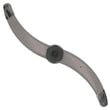
If cleaning performance drops, a worn or clogged spray arm is a common, fixable cause; see the spray arm WD22X33499.
Signs your dishwasher is nearing end of life
A single symptom is often repairable, but multiple issues at once usually signal overall wear:
- Frequent draining problems or loud pump noise
- Poor cleaning even after cleaning the filter and spray arms
- Water not heating or dishes staying wet (heater or control related)
- Leaks around the tub or door area (gaskets/seals)
- Repeated cycle interruptions or error beeps
For code-related problems, use the GE electronic dishwasher error codes guide to match symptoms to likely causes.
Why it matters
Knowing the average lifespan helps you decide when maintenance and targeted part replacement make sense versus planning for a replacement. Many performance problems are caused by a single worn part, not the whole dishwasher.
Last updated: February 2026
What is the most common problem with a GE dishwasher?
The most common GE dishwasher problem we see is a no-start or won’t-run condition. On the GE GDT650SMV1ES, the most frequent causes are a door that is not latching fully, a power issue, or a control-related fault that stops the cycle from beginning.
Quick checks we recommend first
- Confirm the dishwasher door closes firmly and clicks into the latch.
- Check the kitchen breaker; reset it fully OFF then back ON.
- Make sure the control panel is not locked (control lock can mimic a no-start).
- Cancel and drain, then try a normal cycle again.
- If the unit has power but won’t run, look for an error code and follow the code’s steps.
Parts that commonly cause a “won’t start” symptom
If basic checks don’t help, these parts are common fixes on this model family:
| Symptom | What it points to | Example part on this model page |
|---|---|---|
| Door closes but cycle won’t begin | Latch not engaging or switch not proving closed | Dishwasher door latch lock WD01X29878 |
| Lights respond but cycles act “dead” or erratic | Control not sending power to loads | Configured machine control board WD21X35479 |
| Starts then stops, fills/drains oddly | Water level sensing issue | GE dishwasher pressure sensor WD21X25468 |
Why it matters
A dishwasher that won’t start is often protecting you from running with an unsafe condition (door not proven closed) or from continuing with a detected fault. Fixing the root cause prevents repeat shutdowns and incomplete washes.
Helpful troubleshooting resources
- Use GE electronic dishwasher error codes to interpret beeps/blinks and narrow the failure quickly.
- If the unit powers up but never begins washing, follow the steps in dishwasher wont start video.
Last updated: February 2026
What are the commonly replaced parts in a dishwasher?
For a GE dishwasher like model GDT650SMV1ES, the most commonly replaced parts are the ones tied to leaking, poor cleaning, no-drain, no-heat, or no-start symptoms. In many repairs, we see seals and spray components first, then pumps, latches, and electronic controls.
Commonly replaced dishwasher parts (and what they fix)
- Door and tub seals: help stop leaks around the door opening and tub edge (example: dishwasher tub gasket WD08X23477).
- Spray arms and wash distribution parts: restore cleaning performance when holes clog or the arm cracks (example: spray arm WD22X33499).
- Drain system parts: fix standing water and slow draining (examples: dishwasher drain pump WD19X25461, dishwasher drain hose WD24X10062).
- Heating parts: improve drying and help maintain wash temperature (example: heating element WD05X35098).
- Door latch and switches: address “won’t start” or stopping mid-cycle when the door is not sensed as closed (example: dishwasher door latch lock WD01X29878).
- Controls and sensors: help with fill, wash, and cycle logic issues (examples: GE dishwasher pressure sensor WD21X25468, configured machine control board WD21X35479).
Quick symptom-to-part guide
| Symptom | Parts we check first | Example part on this model page |
|---|---|---|
| Leaking at the front | Door seal, tub gasket | WD08X23477 |
| Not cleaning well | Spray arms, wash pump, diverter | WD22X33499, WD19X32518 |
| Not draining | Drain pump, drain hose | WD19X25461, WD24X10062 |
| Not drying | Heating element | WD05X35098 |
| Won’t start | Door latch lock, control | WD01X29878, WD21X35479 |
Why it matters
Replacing the right part the first time saves time and prevents repeat failures. For example, a “not draining” complaint is often a clog or hose routing issue, but a weak drain pump can produce the same symptom.
Helpful DIY references
- Use GE electronic dishwasher error codes to match an error display to likely causes.
- If the unit runs but dishes stay dirty, follow dishwasher not cleaning dishes video for step-by-step checks.
Last updated: February 2026
Is it worth repairing a GE dishwasher?
Yes, repairing a GE dishwasher like model GDT650SMV1ES is worth it when the problem is isolated (drain, wash, heat, or a latch issue) and the tub and door seal surfaces are in good shape; targeted part replacement usually costs far less than replacing the dishwasher.
Quick way to decide
We use these practical checkpoints to decide whether repair makes sense:
- The dishwasher is under about 10 years old and has been reliable overall.
- The failure is a single system (not multiple symptoms at once).
- There is no recurring leak from the tub seam or severe rust damage.
- The racks still roll smoothly and the door closes and latches consistently.
- The repair is a common, straightforward part swap (pump, sensor, latch, spray arm).
Common repairs that are usually worth it on GDT650SMV1ES
These are frequent causes of “won’t drain,” “not cleaning,” or “won’t start” complaints, and they are often cost-effective fixes:
| Symptom | Likely area | Example part for this model |
|---|---|---|
| Water left in bottom | Drain system | Dishwasher drain pump WD19X25461 or dishwasher drain hose WD24X10062 |
| Poor cleaning, weak spray | Spray system | Spray arm WD22X33499 |
| Not drying well | Heating circuit | Heating element WD05X35098 |
| Won’t start or stops mid-cycle | Door latch or sensing | Dishwasher door latch lock WD01X29878 or GE dishwasher pressure sensor WD21X25468 |
When replacement is the better call
Repair is usually not the best value when you see any of the following:
- Repeated breakdowns in different systems within a year
- Persistent leaking that continues after replacing gaskets
- Heavy corrosion on the tub, inner door, or mounting points
- Multiple major parts needed at once (for example, pump plus control plus diverter)
Why it matters
A dishwasher repair is most cost-effective when it restores normal wash performance and prevents secondary damage (like leaks that can harm flooring). A quick diagnosis also helps you avoid replacing good parts.
Helpful troubleshooting next step
If your dishwasher is showing a code or beeping pattern, use our GE electronic dishwasher error codes guide to narrow the failure to a specific circuit or component before ordering parts.
Last updated: February 2026





