 Error Codes



Are all dishwashers 600mm wide?
No. Many full-size built-in dishwashers are about 600 mm (roughly 24 inches) wide, but not all dishwashers are. Compact and slim models are commonly about 450 mm (roughly 18 inches) wide, and portable or specialty units can vary. For your GE PDT715SBN4TS, plan around a standard 24-inch opening unless your cabinet cutout measures differently.
Common dishwasher width categories
- Standard built-in (most common): about 600 mm (24 inches)
- Slim built-in: about 450 mm (18 inches)
- Compact countertop: often 550 mm (22 inches) or less
- Portable (rolling): often near 600 mm (24 inches) but can vary by design
How we recommend you confirm the right fit
Measure the cabinet opening before ordering a replacement dishwasher or trim pieces:
- Measure width at the front and back of the opening
- Measure height from floor to underside of countertop
- Measure depth to the back wall, noting plumbing and wiring clearance
- Check for level floors; a sloped floor changes usable height
- Confirm the door swing clearance with adjacent cabinets
Quick conversion guide
| Metric | Approx. inches | Typical use |
|---|---|---|
| 600 mm | 23.6 in | Standard built-in |
| 450 mm | 17.7 in | Slim built-in |
Why it matters
Dishwasher width affects more than “will it slide in.” A mismatch can prevent proper mounting, cause door alignment issues, and lead to leaks around the tub and door area. If you are troubleshooting leaks or fitment after an install, checking seals and mounting is just as important as the opening size.
If you are dealing with leaking at the door or tub edge, a worn seal can also be a factor; the dishwasher tub gasket WD08X23477 is one of the model-matched seals used on GE PDT715SBN4TS.
Last updated: February 2026
How do you force a PDT715SBN4TS dishwasher to drain?
To force your GE PDT715SBN4TS dishwasher to drain, start a Cancel/Drain function from the control panel, then wait for the drain pump to run (typically 1 to 2 minutes). If it will not drain, the most common causes are a blockage in the drain path or a failing drain pump.
Quick ways to trigger a drain
Try these in order (stop when the tub empties):
- Press Start/Reset (or Cancel) once, then close the door and listen for draining.
- If your model uses a press-and-hold cancel, hold Start/Reset for about 3 seconds, then close the door.
- If the dishwasher is mid-cycle and unresponsive, turn power off at the breaker for 1 minute, restore power, then try Cancel/Drain again.
Check the drain path (most common fix)
A forced drain will fail if water cannot leave the tub. Check these items:
- Air gap (if installed): remove the cap and clear debris.
- Garbage disposal inlet: confirm the knockout plug was removed (new disposal installs often miss this).
- Drain hose routing: make sure it has a high loop and is not kinked.
- Filters and sump area: remove standing debris that can restrict flow.
- Sink drain connection: clear grease or sludge at the dishwasher branch.
Parts that commonly fix “won’t drain”
If the drain path is clear but the unit still will not pump out, these parts are the most likely:
| Symptom | Most likely part | What it affects |
|---|---|---|
| Hums but little or no water exits | Dishwasher drain pump WD19X25461 | Pushes water out through the drain hose |
| Intermittent draining, odd fill/drain behavior | GE dishwasher pressure sensor WD21X25468 | Helps the control detect water level/pressure |
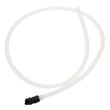
| Slow drain or leaks under unit | Dishwasher drain hose WD24X10062 | Drain flow path to sink/disposal |
Why it matters
Standing water can cause odors, poor cleaning, and can trigger drain-related error conditions. If you see an error code while troubleshooting, use our GE electronic dishwasher error codes guide to match the code to the most likely drain or control issue.
Last updated: February 2026
Which dishwasher to stay away from?
If you’re trying to “stay away” from a dishwasher, we recommend avoiding any model line with a pattern of the same failure in your home (leaks, won’t drain, won’t start, poor cleaning) and focusing on proven reliability signals: simple controls, strong parts availability, and serviceable design. For GE PDT715SBN4TS owners, the practical approach is to judge by symptoms and repair history, not brand rumors.
What to avoid (practical red flags)
- Frequent control or UI glitches (random beeping, dead buttons, cycles stopping)
- Repeated leaking at the door or tub seal area
- Chronic draining problems (standing water after every cycle)
- Persistent poor cleaning even after cleaning filters and spray arms
- Hard-to-source parts or long backorders for common repairs
Quick “buy or avoid” checklist
Use this as a fast screen when comparing dishwashers.
| What you see | Usually means | What we recommend |
|---|---|---|
| Lots of electronics features, few physical buttons | More failure points | Choose simpler controls when possible |
| Many reviews mention leaks | Seal, alignment, or install sensitivity | Prioritize solid door/tub sealing and correct leveling |
| Many reviews mention “won’t drain” | Drain path clogs or pump issues | Confirm drain hose routing and pump access |
| Many reviews mention “won’t start” | Latch, UI, or control issues | Check door latch design and serviceability |
If you already own a dishwasher and want to avoid repeat problems
For GE PDT715SBN4TS, these are common “fixable” areas that often get blamed on the whole dishwasher:
- Not draining: check the drain path and consider the dishwasher drain pump WD19X25461 if the pump is noisy, seized, or not moving water.
- Won’t start or stops mid-cycle: a misaligned or failing latch can prevent operation; the GE dishwasher door latch lock WD21X10490 is a common suspect when the door won’t reliably latch.
- Not cleaning well: clogged or cracked spray arms reduce wash pressure; inspect the dishwasher spray arm, lower WD22X33499 for blocked jets or damage.
Why it matters
“Brands to avoid” lists mix personal experiences, installation issues, and maintenance habits. A dishwasher that’s level, has a clear drain hose, and has clean spray arms often performs reliably, and when it doesn’t, having the right replacement parts available makes ownership much easier.
For troubleshooting patterns (especially if you see a code), use our GE electronic dishwasher error codes guide.
Last updated: February 2026
What is the most common problem with a GE dishwasher?
The most common GE dishwasher problem is a “won’t start” complaint, usually caused by a door that is not fully latched, a power issue, or a control-related fault. On GE model PDT715SBN4TS, start problems often trace back to the door latch system or the user interface/control.
Most common symptoms and what they usually mean
- Won’t start or seems dead: door not latched, power supply issue, or control/UI problem
- Won’t drain: drain path restriction, drain hose routing issue, or a weak drain pump
- Not cleaning well: clogged spray arm holes, low water flow, or wash system issue
- Leaks: door seal/tub gasket sealing issue or over-sudsing
- Detergent cup not opening: dispenser mechanism sticking or blocked by dishes
Quick checks we recommend first (fast, no parts)
- Confirm the door closes firmly and clicks; inspect the latch area for obstruction.
- Cancel the cycle and restart; listen for fill and wash motor activity.
- Check the sink drain/disposal for a clog if the dishwasher is not draining.
- Inspect spray arms for blocked holes and make sure they spin freely.
- Use the correct detergent and avoid hand soap; over-sudsing can cause poor washing and leaks.
Common part-related fixes for this model
If basic checks do not resolve the issue, these are frequent repair paths on PDT715SBN4TS:
| Symptom | Likely area | Example part on this model |
|---|---|---|
| Won’t start, beeps, or stops when door moves | Door latch system | GE dishwasher door latch lock WD21X10490 |
| Not draining or water left in tub | Drain system | Dishwasher drain pump WD19X25461 or dishwasher drain hose WD24X10062 |
| Poor cleaning, lower rack dirty | Lower spray pattern | Dishwasher spray arm, lower WD22X33499 |
| Fills/drains oddly or shows fill/drain related behavior | Water level sensing | GE dishwasher pressure sensor WD21X25468 |
Why it matters
Start, drain, and cleaning complaints are often connected. A small issue (like a weak drain pump or restricted spray arm) can trigger longer cycles, poor results, and repeated resets. Fixing the root cause protects the wash pump, heating system, and control from unnecessary strain.
For code-based troubleshooting, we use the model’s error information to narrow the failure quickly; see GE electronic dishwasher error codes.
Last updated: February 2026
How do I fix the E4 error on my dishwasher?
On your GE PDT715SBN4TS dishwasher, an E4 error points to water where it should not be (leak/overflow in the base) or a drain problem that leaves water behind. We fix it by stopping the leak or clearing the drain path, drying the base pan, then resetting power.
Step-by-step checks (in order)
- Cancel the cycle and let the dishwasher drain.
- Turn off power at the breaker for 2 minutes; restore power after the issue is corrected.
- Remove the toe-kick and check the base pan for water; dry it completely so the float/leak circuit clears.
- Inspect the door area for drips and debris; wipe the gasket and mating surfaces.
- Check the drain hose routing for kinks or crushing; confirm a proper high loop.
Drain path items that commonly cause E4
A slow or blocked drain can trigger overflow or leak detection.
- Clear the sink/disposal connection (if connected).
- Check the hose for clogs; replace it if it is split or permanently kinked.
- If you hear the dishwasher hum but it will not pump out, the drain pump is the likely failure.
Helpful model-matched parts:
When it looks like a water-level sensing issue
If the dishwasher overfills, underfills, or fills erratically, the pressure sensor can misread the water level.
- Look for abnormal fill behavior during the first few minutes of a cycle.
- If draining and leaks are corrected but E4 returns, check the level-sensing circuit.
Part to consider:
Why it matters
E4 is a protection response; clearing the water in the base pan and fixing the leak or drain restriction prevents repeat shutdowns and helps avoid cabinet or floor damage.
| What you notice | Most likely cause | What to do |
|---|---|---|
| Water in base pan | Leak or recent overflow | Dry pan; find leak source |
| Standing water in tub | Clog or weak pump | Clear hose; consider pump |
Last updated: February 2026





