 Installation guide
 Owner’s manual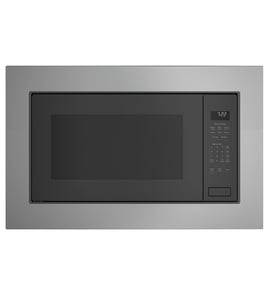


What's the average lifespan of a GE microwave?
Most GE microwaves last about 8 years on average, and many need major repair or replacement in the 5 to 10 year range. For your GE CVM1790SS4SS microwave, lifespan depends most on daily run time, ventilation, and keeping the cavity and door seals clean; see the CVM1790SS4SS owner’s manual for care and cleaning guidance.
- Light to moderate use (1 to 5 short cycles/day): about 8 to 10 years
- Heavy use (many cycles/day, reheating all day): about 5 to 8 years
- Best-case with excellent care: 10+ years
| Usage pattern | What wears faster | Common “end-of-life” symptom |
|---|---|---|
| Heavy daily reheating | Door interlocks, control components | Won’t start, stops when door moves |
| Grease and steam exposure | Venting and cooling airflow | Overheats, shuts off, loud fan |
| Frequent high-power cooking | High-voltage system | Runs but does not heat |
- Keep the cavity, waveguide cover area, and door edges clean and dry.
- Run the vent fan when cooking on the range to reduce heat and grease buildup.
- Never run the microwave empty; it stresses internal components.
- Use microwave-safe containers to prevent arcing and interior damage.
- If the door feels loose or the unit only runs with the door “just right”, address it early (door switch issues can cascade).
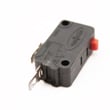
Repair is usually worth it when the problem is a wear item or a simple electrical safety part, such as a door interlock switch. On this model, examples include the primary switch WB24X10047 and monitor switch WB24X25397.
Replacement is usually the better value when the microwave has repeated heating failures, severe interior damage, or multiple expensive parts needed at once.
Microwaves rely on proper airflow and a tight, correctly latching door to run safely and consistently. Good cleaning habits and early fixes help your CVM1790SS4SS avoid heat stress, nuisance shutdowns, and premature no-start or no-heat failures.
Last updated: February 2026
What model GE microwave do I have?
On your GE over-the-range microwave, the model number is printed on the rating label visible when you open the door. For this appliance, the model is CVM1790SS4SS; write down both the model and serial number so you can match the correct parts and instructions in the CVM1790SS4SS owner’s manual.
- Open the microwave door fully.
- Look along the door frame area for a printed label.
- Find the lines that say Model and Serial.
- Copy the model number exactly (letters and numbers).
- Take a clear photo of the label for future reference.
The model number ensures you get parts and diagrams that fit your exact GE microwave configuration (finish, control layout, and door style can vary by model).
| What you need | Where it’s used | Example for this microwave |
|---|---|---|
| Model number | Selecting correct parts lists and diagrams | CVM1790SS4SS |
| Serial number | Identifying production details for service | From the same door label |
Microwave parts are model-specific; even similar-looking GE units can use different door interlock switches, control panels, or glass trays. Using CVM1790SS4SS prevents ordering the wrong component and speeds up troubleshooting.
Last updated: February 2026
Do all over-the-range microwaves have the same dimensions?
No. Over-the-range microwaves are not all the same dimensions; many are built around a common 30-inch cabinet opening, but height and depth vary by model and venting design. For the GE CVM1790SS4SS, our installation requirements call for a 30-inch-wide space between cabinets and specific clearances.
Most OTR microwaves are designed to fit a 30-inch-wide opening, but these dimensions commonly vary:
- Height: standard vs. low-profile designs
- Depth: door and handle projection, plus ducting space
- Mounting pattern: wall plate and top-cabinet hole locations
- Clearances: cooktop-to-microwave spacing and cabinet depth limits
- Venting: recirculating vs. outside venting can change duct needs
Use the CVM1790SS4SS installation guide to confirm your exact cutouts and clearances. Key requirements called out for this model include:
- 30-inch-wide space between cabinets (free of obstructions)
- Bottom of cabinet 30 inches or more above the cooking surface
- Top of the oven 66 inches or more above the floor
- Maximum cabinet depth above and beside the unit: 13 inches
- Must be connected to at least one wall stud
| What to measure | What to look for | Why it matters |
|---|---|---|
| Cabinet opening width | 30-inch opening is common | Prevents side gaps and mounting issues |
| Cooktop to cabinet bottom | 30 inches or more (for this model) | Heat clearance and safe use |
| Cabinet depth | 13 inches max (for this model) | Avoids interference with airflow and fit |
| Vent path | Outside duct or recirculation | Impacts installation steps and parts |
OTR microwaves mount to a wall plate and the top cabinet; even small differences in height, depth, or hole locations can turn a “close” fit into a rework. Matching the model’s installation specs helps avoid cabinet damage and venting problems.
Last updated: February 2026
Are over the oven microwaves worth it?
Yes, an over-the-range microwave like the GE CVM1790SS4SS is worth it when you want to free up counter space and get built-in ventilation over the cooktop. It is also a good fit when you prefer a cleaner, integrated kitchen look and can meet the cabinet and venting requirements in the installation guide.
- You have limited counter space and want it back for prep.
- You want a built-in appearance that matches other GE appliances.
- You already have (or can add) proper venting, ducting, and a solid mounting location.
- You cook often and want the convenience of a cooktop light and vent fan in one unit.
- You are comfortable with a more involved install than a countertop microwave.
- You want the simplest replacement; countertop models are usually faster to swap.
- Your cabinet depth, mounting surface, or duct alignment would require significant changes.
- You want the strongest, quietest ventilation; a dedicated range hood often performs better.
| Feature | Over-the-range microwave | Countertop microwave |
|---|---|---|
| Counter space | Saves space | Uses space |
| Installation | More complex; mounting plate, cabinet holes, vent alignment | Plug in and go |
| Venting | Built-in fan; can be recirculating or ducted (setup dependent) | None |
| Service access | Typically harder (mounted above range) | Easier |
Over-the-range models trade convenience and space savings for a more demanding installation. For the CVM1790SS4SS, the install process is designed for a two-person lift and careful cord routing so the unit mounts securely and vents correctly; following the CVM1790SS4SS owner’s manual helps you use features safely (turntable operation, hot surfaces, and handling hot containers).
Last updated: February 2026
What are the parts of a microwave?
A GE microwave like model CVM1790SS4SS is built from a cooking cavity and door system, a control system, and a high-voltage heating system that generates microwave energy to heat food. It also uses airflow parts (fans and ducts) to cool components and vent heat.
- Control panel and controls: lets you select time, power level, and sensor programs
- Door and interlock switches: confirm the door is closed so the oven can run safely
- Cooking cavity: the metal interior where food sits and energy is contained
- Turntable system: glass tray and support that rotate food for more even heating
- Microwave energy system: magnetron, high-voltage capacitor, and related wiring that create microwave energy
- Airflow and cooling: cooling fan blade, vent motor, and air tunnel that move air through the unit
Here are examples of real parts used on this model that match the major systems above:
| System | Example part on this model | What you may notice when it fails |
|---|---|---|
| Door safety (interlock) | Primary switch WB24X10047 | Unit will not start, stops when door is moved |
| Door safety (monitor) | Monitor switch WB24X25397 | Blown fuse symptoms, won’t run, intermittent power |
| Turntable | Glass tray WB49X10176 | No rotation support, rattling, broken tray |
| Cooling/airflow | Microwave cooling fan blade WB38X10005 | Loud fan noise, poor cooling, overheating shutdown |
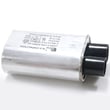
| Heating circuit | Microwave high-voltage capacitor WB27X10808 | Runs but doesn’t heat (often with other HV issues) |
Knowing the “big groups” of parts helps you troubleshoot faster. For example, if the microwave runs but food stays cold, the issue is usually in the high-voltage heating circuit; if it will not start, the door interlock switches are a common place to check.
We recommend using the CVM1790SS4SS owner’s manual to match features (like sensor cooking and power level changes) to the correct control and heating components before ordering parts.
Last updated: February 2026


