Owner’s manual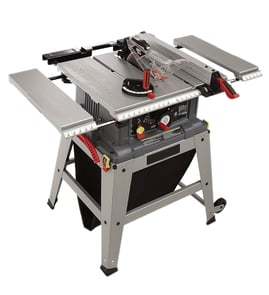

Where is the reset button on a Craftsman table saw?
On the Craftsman table saw model 137415030, the reset is the overload reset button on the ON/OFF switch assembly (not on the motor end caps). If the motor shuts off from overload or low voltage, let it cool about 5 minutes, then press the reset button and restart.
- Turn the saw OFF.
- Unplug the power cord.
- Wait about 5 minutes for the motor to cool.
- Press the overload reset button on the switch.
- Plug the saw back in.
- Insert the safety switch key, then turn the saw ON.
For the switch layout and overload protection details, use the 137415030 owner's manual.
Overload trips usually mean the motor is working too hard or the power supply is weak. Check these common causes:
- Dull or dirty blade (forces the motor to draw more current)
- Blade height too low for the cut (too much tooth engaged)
- Fence or blade misalignment causing binding and burn marks
- Material issues (wet lumber, warped stock, knots)
- Extension cord problems (too long, too small gauge, or damaged)
If the blade bogs down before it trips, follow the troubleshooting steps in table saw blade spins too slow.
| Item | Where it is | What it does |
|---|---|---|
| Safety switch key | In the ON/OFF switch | Prevents the saw from being turned on without the key |
| Overload reset button | On/near the ON/OFF switch | Resets the motor after an overload or low-voltage shutdown |
Using the correct reset procedure helps prevent accidental starting and reduces repeat overload trips that can overheat the motor, damage the blade, and lead to poor cut quality.
Last updated: February 2026
What not to do with a table saw?
For the Craftsman 137415030 table saw, do not cut freehand, do not use the rip fence and miter gauge together, and do not rip warped or twisted boards; these mistakes are leading causes of kickback and severe injury. Follow the safety rules and setup checks in the owner's manual.
- Never perform freehand cutting; always guide the work with the rip fence or the miter gauge.
- Never use the miter gauge and rip fence at the same time.
- Never stand with your body in line with the blade path.
- Never rip lumber that is warped, bowed, or twisted, or that lacks a straight edge against the fence.
- Never reverse out of a cut with the blade running.
- Never pull the workpiece backward during a cut.
- Never leave the saw running unattended; wait for the blade to stop completely.
Before each session, we recommend:
- Confirm the blade is tight on the arbor and the lock knob is tightened.
- Lock the rip fence and verify it is parallel to the blade and aligned correctly.
- Make sure the blade guard, riving knife, and anti-kickback pawls are installed, aligned, and working.
- Set blade height appropriately (a common target is about 1/8 inch above the workpiece for many cuts).
- Support long or wide stock at the rear and sides to prevent tipping and binding.
Kickback happens when the workpiece binds or contacts the back of the blade and gets thrown toward you. The most common contributors are freehand cuts, poor alignment, and unstable stock. Keeping the fence parallel, using the guard and riving knife, and feeding the work fully past the blade greatly reduces risk.
| Situation | Don’t do this | Do this instead |
|---|---|---|
| Ripping | Use miter gauge with fence | Use the rip fence only; keep it parallel |
| Crosscutting | Pull stock backward mid-cut | Use the miter gauge; push through and stop after the blade |
| Stock condition | Rip twisted/warped boards | Joint or select straight stock with a true edge |
| Cut control | Freehand guide by hand | Use fence or miter gauge; keep hands out of blade path |
Last updated: February 2026
Does Craftsman make a good table saw?
Yes; Craftsman table saws are a good choice for many DIYers because they deliver solid cutting capability and practical features at a reasonable price. On the Craftsman 137415030 10-inch portable table saw, “good” mostly comes down to correct setup, alignment, and using the built-in safety system as shown in the 137415030 owner's manual.
A table saw is performing well when it starts reliably, holds blade height and bevel settings, and cuts straight without burning or binding.
Common strengths:
- Good value for ripping and crosscutting
- Portable size for small shops and jobsites
- Straightforward upkeep (cleaning, blade changes)
- Capable results when tuned and used correctly
Common limitations:
- Fence and miter gauge accuracy may need careful tuning
- Lightweight saws can shift if not mounted securely
- A dull or wrong blade makes any saw cut poorly
The manual calls out several items that directly affect accuracy and safety:
- Mount the saw to a bench or stand before cutting
- Use a dedicated 120 V, 15-amp circuit with proper protection
- Use the blade guard, anti-kickback pawls, and riving knife for through-cuts
- Clear sawdust often; use dust collection when possible
| Use case | Fit for a portable Craftsman saw | Main focus |
|---|---|---|
| DIY projects | Strong fit | Setup, blade choice, safe technique |
| Hobby woodworking | Good fit | Fence alignment, repeatability |
| Daily production | Mixed | Stand stability, adjustment speed |
- Confirm the saw is firmly mounted and not rocking
- Replace a dull blade
- Re-check fence alignment and miter technique
- Verify blade height and bevel mechanisms move smoothly
For symptom-based troubleshooting, use table saw bad angle cuts.
Most “bad saw” complaints come from alignment, blade condition, or unsafe feeding that causes binding and kickback. When the guard system and riving knife are set correctly, the 137415030 can produce clean, repeatable cuts for typical DIY work.
Last updated: February 2026
What are the parts of a table saw?
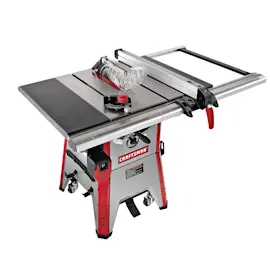
On the Craftsman 137415030 table saw, the main parts include the table saw assembly plus key cutting and safety components like the rip fence, miter gauge, blade, and blade guard system (riving knife and anti-kickback pawls). For the complete parts breakdown, use the 137415030 owner's manual.
These are the primary components called out in the loose-parts list for the Craftsman 137415030:
- Table saw assembly (tabletop and base)
- Rip fence (guides rip cuts parallel to the blade)
- Miter gauge (guides crosscuts at set angles)
- Blade (the cutting tool)
- Blade guard assembly (covers the blade during cutting)
- Riving knife assembly (helps reduce kickback by keeping the kerf open)
- Anti-kickback pawls assembly (helps resist workpiece kickback)
- Push stick (keeps hands safely away from the blade)
Most portable table saws like this Craftsman use these parts to set cut depth and angle:
- Handwheel and handle (used to raise and lower the blade mechanism)
- Bevel and height mechanisms (gears, worm gear, and related hardware that move the blade)
- Blade wrenches and hex wrench (used for blade changes and adjustments)
| Part | What it’s for | When you use it |
|---|---|---|
| Rip fence | Straight rip cuts | Ripping boards to width |
| Miter gauge | Crosscuts and miters | Cutting to length or angles |
| Riving knife | Kickback reduction | Anytime the blade is installed |
| Blade guard | Contact protection | Most through-cuts |
| Push stick | Safer feeding | Narrow rips and small stock |
Knowing the names of the rip fence, miter gauge, riving knife, and blade guard parts helps you set the saw up correctly, troubleshoot issues (like bad cuts or binding), and use the right safety accessories for each cut.
If you are diagnosing cut quality or alignment issues, use our table saw bad angle cuts guide.
Last updated: February 2026