 Owner’s manual



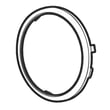


How do I tell what model Electrolux washer I have?
Your Electrolux washer’s model number is on the rating label inside the door opening. On model ELFW7337AW0, open the door and look around the door frame area; the label lists the model number and serial number for parts lookup and service.
Where to look on an Electrolux front-load washer
Check these common label locations first:
- Around the door opening on the cabinet frame (most common)
- On the back side of the door itself (near the hinge or latch area)
- Along the inside edge of the front panel near the door opening
- On the rear panel of the washer (less common)
For the exact label location and how Electrolux formats model and series numbers, use the ELFW7337AW0 use & care manual.
What to write down (and why)
Record the full model number and serial number exactly as shown.
| What you see on the label | Example | Why it matters |
|---|---|---|
| Model number | ELFW7337AW0 | Ensures you get the correct Electrolux washer parts list |
| Serial number | (varies) | Helps match production changes and service bulletins |
| Series info (if shown) | (varies) | Some features and parts vary by series |
Tips to avoid mix-ups when ordering parts
- Copy every character; do not drop the last digit or letter
- Use the model number (not the cycle name like “LuxCare Wash”)
- If the label is worn, take a clear photo and zoom in
- Match the model number on the label to the one shown on your parts list page
Why it matters
Electrolux uses model and series information to identify the correct door lock, water-level sensor, control board, and other washer components. Using the exact model number prevents ordering a part that fits a similar looking washer but will not install or function correctly.
Last updated: February 2026
Is Electrolux expensive to repair?
Electrolux repairs are usually mid-to-high cost because labor is the biggest driver, and some assemblies (like control boards, motors, and door-lock components) are higher-priced. For the Electrolux washer model ELFW7337AW0, we recommend checking coverage and approved service guidance in the ELFW7337AW0 owner's manual before paying out of pocket.
Typical repair cost drivers (what makes it feel “expensive”)
- Labor time: front-load washer disassembly can be time-consuming.
- Electronics: control boards and motor controls cost more than hoses or clamps.
- Door lock and latch issues: common “won’t start/door won’t lock” complaints often involve multiple parts.
- Leak and boot repairs: door boot replacement is parts plus labor.
- Service call add-ons: after-hours, weekend, and travel surcharges can raise the total.
Common ELFW7337AW0 repairs and parts that affect price
If your symptom matches one of these, pricing often depends on whether it is a quick adjustment, a single part swap, or a deeper teardown.
| Symptom | Often involved | Example part for this model |
|---|---|---|
| Door won’t lock, won’t start | Door lock system | Washer door lock assembly 5304514774 |
| Door won’t stay closed | Latch/strike alignment | Frigidaire washer door strike 5304505088 |
| Leaks at the door | Door boot and clamps | Frigidaire washer door boot 5304510094 |
| Excessive vibration during spin | Suspension/shocks, leveling | Washer single stage shock absorber 137412601 |
How to keep repair costs down
- Use the built-in troubleshooting and installation checks in the ELFW7337AW0 owner's manual.
- Confirm basics first: power, cycle selection, load size, and proper leveling.
- For fill/drain complaints, verify the drain standpipe height is at least 23.6 in (60 cm) to prevent siphoning.
- Replace only the failed component (for example, strike vs. full lock assembly) when diagnosis supports it.
- If the washer is within coverage, use approved service and genuine Electrolux parts.
Why it matters
A “simple” symptom can point to either a low-cost fix (alignment, clamp, hose) or a higher-cost assembly (control board, motor control). A quick, step-by-step diagnosis prevents buying the wrong part and paying labor twice.
Last updated: February 2026
What are the common problems with Electrolux washing machines?
Common problems we see on Electrolux front-load washers like model ELFW7337AW0 include no-start conditions (power, paused cycle, door not fully latched), slow or no draining from pump clogs, excess vibration/noise during spin, and residue or odor issues from detergent and moisture left in the door gasket. For model-specific operating checks, use the ELFW7337AW0 owner's manual.
Most common symptoms and what usually causes them
- Washer will not start: loose power cord, tripped breaker, water faucets off, motor overheated, or the door not closed and locked.
- Door will not lock or cycle stops: worn strike or a failing lock mechanism.
- Slow drain or no drain: debris in the drain pump or a kinked/blocked drain hose.
- Loud rattling or clanking: coins or small items in the drum or pump.
- High-pitch “jet engine” sound in spin: normal motor whine during high-speed spin.
- Residue on dark clothes or excess lint: too much detergent, wrong water temperature, or overloading.
- Odor or mildew: moisture left in the gasket fold, too much detergent, or leaving the door closed between loads.
Quick checks we recommend first (before replacing parts)
- Confirm the washer is not paused; press Start/Pause with a bare fingertip (touch consoles can miss gloved/wet touches).
- Verify both water supply faucets are fully open.
- Reduce load size and redistribute items to prevent out-of-balance spin.
- Check pockets and remove foreign objects; rattling often comes from coins in the drum or pump.
- Use HE detergent only and measure carefully; excess detergent commonly causes residue and odor.
- After the cycle, dry the gasket fold and leave the door vented open for a few hours.
Parts that commonly relate to these problems on ELFW7337AW0
| Symptom | Likely area | Example part for this model |
|---|---|---|
| Door won’t latch/lock | Door strike or lock | Frigidaire washer door strike 5304505088 or washer door lock assembly 5304514774 |
| Excess vibration/banging | Suspension/damping | Washer single stage shock absorber 137412601 |
| Water level or fill behavior seems off | Pressure sensing | Washer water-level sensor 5304505436 |
Why it matters
Catching simple issues early (overloading, excess detergent, blocked draining, poor gasket drying) prevents repeat error conditions, reduces odor buildup, and helps protect the door lock system and spin components.
Last updated: February 2026
What is the life expectancy of an Electrolux washer?
Most Electrolux washers, including the Electrolux ELFW7337AW0, have a typical life expectancy of 10 to 15 years with normal household use and basic maintenance. Your actual lifespan depends most on load size, detergent use (HE only), and keeping the door boot area clean and dry; see the ELFW7337AW0 use and care manual for model-specific care and warranty details.
What affects washer lifespan the most
- Overloading increases stress on the tub, shocks, and motor.
- Too much detergent (or non-HE detergent) causes oversudsing and residue buildup.
- Moisture left in the door boot promotes odor and grime that can damage seals over time.
- Unbalanced loads increase vibration and wear on suspension components.
- Installation issues (drain height, leveling) can cause repeated performance problems.
What you can do to help ELFW7337AW0 reach 10 to 15 years
- Leave the door slightly open between loads so the drum and boot can dry.
- Wipe the door boot and glass after the last load of the day.
- Run a monthly cleaning cycle (or hot wash) to reduce residue.
- Use the correct amount of HE detergent for your water hardness.
- Keep the washer level to reduce vibration during spin.
Warranty coverage vs. expected lifespan (quick comparison)
| Item | What it tells you | Why it matters |
|---|---|---|
| Standard parts coverage | Short-term defect protection | Helps early-life failures get addressed |
| Drive motor coverage | Longer coverage on a major component | Motor issues can be costly |
| Inner wash tub coverage | Functional-life coverage (parts only) | Tub failures are major repairs |
Why it matters
A front-load washer can last well into the 10 to 15 year range when it stays clean, runs balanced, and avoids chronic oversudsing. Those habits reduce wear on high-cost systems like the motor control, suspension, and door sealing surfaces.
Last updated: February 2026


