Owner’s manual
 Error Codes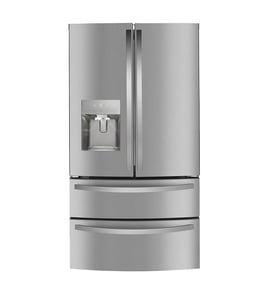



What is the average lifespan of a Kenmore Elite refrigerator?
Most Kenmore Elite refrigerators, including model 79579049312, typically last 12 to 15 years with normal household use. Consistent maintenance (clean airflow, stable temperatures, and timely part replacement) helps you reach the high end of that range; see the 79579049312 owner's manual for model-specific care guidance.
What affects refrigerator lifespan most
- Condenser airflow and cleanliness (dust buildup makes the compressor work harder)
- Door seal condition (warm air leaks increase run time)
- Ice maker and water system health (clogs and leaks create secondary damage)
- Stable power (surges and repeated outages stress the control board)
- Room temperature and ventilation clearance around the cabinet
Maintenance checklist (simple, high impact)
- Vacuum and brush the condenser area regularly; keep vents unobstructed.
- Confirm doors close fully and gaskets seal all the way around.
- Replace water filters on schedule and flush the dispenser after changes.
- Keep refrigerator at about 37°F and freezer at about 0°F (common targets for food safety and efficiency).
- Address unusual noises quickly (fan rubbing, clicking, or buzzing).
When a repair makes sense vs replacement
| Situation | Usually worth repairing | Usually points to replacement planning |
|---|---|---|
| Cooling issue | Fan motor, sensor, door switch | Sealed-system or repeated compressor failures |
| Water/ice issue | Inlet valve, ice maker assembly, line leaks | Chronic internal leaks causing cabinet damage |
| Age | Under ~10 years | 12 to 15+ years with major sealed-system work |
If you are troubleshooting cooling performance, common wear items on this model include the lg refrigerator evaporator fan motor 4681JB1027C and the lg refrigerator water inlet valve AJU73753101 for water and ice symptoms.
Why it matters
A refrigerator that is nearing end-of-life often shows up as longer run times, temperature swings, and recurring ice maker or water dispenser problems. Catching airflow, sealing, and fan issues early reduces compressor strain and helps your Kenmore Elite refrigerator last longer.
Last updated: January 2026
What year did the Kenmore Elite come out?
Kenmore Elite appliances first launched in 1999 (late 1999). That date applies to the Kenmore Elite product line overall; your Kenmore Elite refrigerator model 79579049312 was released later as part of the ongoing Elite lineup, and the exact model release year is best confirmed in the 79579049312 owner's manual.
Quick timeline (what “came out” means)
When customers ask this, it usually refers to one of these milestones:
- Kenmore Elite line debut: late 1999
- Specific model release (79579049312): varies by model and production run
- Your unit’s build date: tied to the serial number on the rating label
How to find the year for your exact refrigerator
To pinpoint when your specific refrigerator was made (or when that model run started), we use the model and serial information.
- Locate the rating label (commonly inside the fresh food compartment on a side wall)
- Write down the serial number exactly
- Check the date code guidance in the 79579049312 owner's manual
- If you are ordering parts like a control board, ice maker, or water inlet valve, match by model number and serial range
Common “year” answers at a glance
| What you want to know | What we can answer confidently | What to check next |
|---|---|---|
| When Kenmore Elite started | Late 1999 | N/A |
| When model 79579049312 came out | Model-specific | Rating label and 79579049312 owner's manual |
| When your exact unit was built | Serial-specific | Serial/date code on rating label |
Why it matters
The production year and serial range can affect which refrigerator parts fit, especially for items like the refrigerator electronic control board, ice maker assembly, evaporator fan motor, and water inlet valve.
Last updated: January 2026
How to find Kenmore Elite model number?
On Kenmore Elite refrigerators, we typically find the model number on the rating label inside the fresh food compartment, often on a side wall near the crisper drawers. For your Kenmore Elite refrigerator model 79579049312, the exact label locations and diagrams are shown in the 79579049312 owner's manual.
Common places to check on Kenmore Elite refrigerators
Look in these spots first (use a flashlight and wipe dust or condensation off the label):
- Inside the refrigerator compartment on the left or right side wall
- On the wall behind or just above the lower crisper drawers
- On the ceiling of the fresh food compartment (near the light cover)
- Along the door frame (hinge side) when the door is open
- Behind the lower front kick plate or toe grille (some designs)
What the label looks like (and what to write down)
The rating label usually includes multiple identifiers. We recommend recording all of these:
- Model number (example format: 795.7904xxxx)
- Serial number (used to identify production date and revision)
- Electrical ratings (volts/amps)
- Sometimes a manufacturing code or product code
| Item on label | Why it matters |
|---|---|
| Model number | Ensures you get the correct parts list and diagrams |
| Serial number | Helps match the correct version of parts used during production |
| Electrical ratings | Useful when diagnosing compressor, fan, or control issues |
Why it matters
Kenmore Elite model numbers can look very similar, and a single digit difference can change which parts fit (for example, an ice maker assembly, water inlet valve, or electronic control board). Using the exact model number helps us match the right Kenmore refrigerator parts the first time.
Last updated: January 2026
What are the common problems with Kenmore Elite refrigerators?
Common problems we see with the Kenmore Elite refrigerator model 79579049312 include not cooling (or warm temperatures), ice maker failures, water dispenser issues, unusual noises, and frost buildup. These symptoms often trace back to the compressor, evaporator fan, control board, sensors, or the water inlet system; confirm model-specific checks in the 79579049312 owner's manual.
Most common symptoms and what usually causes them
- Not cooling or weak cooling: compressor or sealed system issue, airflow problem, dirty condenser area, or a control problem
- Freezer cold but fridge warm: evaporator fan not moving air, iced-up evaporator, or air duct blockage
- Ice maker not making ice: ice maker assembly issue, water inlet valve problem, or temperature too warm
- Water dispenser slow or not dispensing: filter restriction, frozen water line, or inlet valve issue
- Clicking, buzzing, or rattling noises: fan motor, compressor start components, or loose panels
Parts that commonly relate to these problems on model 79579049312
The parts below are frequently involved when troubleshooting the symptoms above:
| Symptom | Likely system | Example part for this model |
|---|---|---|
| Not cooling | Sealed system / compressor | Refrigerator compressor TCA38091801 |
| Warm fresh food section | Air circulation | Lg refrigerator evaporator fan motor 4681JB1027C |
| Ice maker not working | Ice maker / water supply | Lg refrigerator ice maker assembly model AEQ72909603 AEQ72909603 |
| No water to dispenser/ice | Water inlet | Lg refrigerator water inlet valve AJU73753101 |
| Erratic temps / defrost issues | Sensors / defrost | Refrigerator defrost sensor assembly 6615JB2005N |
Quick checks we recommend before replacing parts
- Verify the temperature settings and allow 24 hours after changes.
- Make sure door seals close fully and doors are not held open by bins or drawers.
- Listen for the evaporator fan in the freezer; no fan sound often points to a fan or frost issue.
- Check for heavy frost on the freezer back panel (common sign of a defrost problem).
- If ice and water both fail, confirm the house water supply is on and the line is not kinked.
Why it matters
Catching the symptom pattern early helps you avoid replacing the wrong part. For example, a “warm fridge” complaint is often an airflow or defrost issue, while a “no ice and no water” complaint more often points to the inlet valve, supply, or a restriction.
Last updated: January 2026