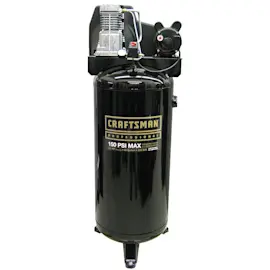
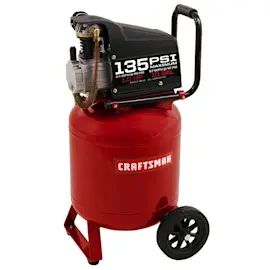
Owner’s manual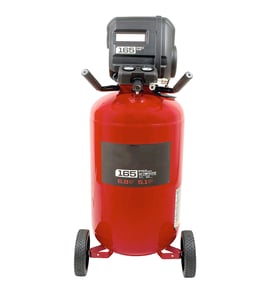

What does 4.0 scfm at 90 psi mean?
“4.0 SCFM at 90 PSI” means an air compressor can deliver about 4 standard cubic feet of air per minute while maintaining 90 pounds per square inch of pressure. For your Craftsman 919167812, SCFM is the usable airflow for tools, and PSI is the force behind that airflow (see the owner's manual glossary).
When you match tools to a compressor, SCFM is usually the limiting factor.
- Find your tool’s air requirement (often listed as SCFM at 90 PSI)
- Compare that number to the compressor’s SCFM rating at the same pressure
- If the tool needs more SCFM than the compressor can supply, the tank pressure drops and the tool slows down
- PSI must meet the tool’s minimum; most air tools are designed around 90 PSI
- Set the regulator while air is flowing (trigger pulled) for the most accurate setting
SCFM is a standardized airflow measurement so you can compare compressors more fairly than with plain CFM.
| Spec | What it tells you | Why it matters |
|---|---|---|
| SCFM | Airflow delivery rate | Determines whether a tool can run continuously |
| PSI (PSIG) | Pressure available at the outlet/tank | Determines whether the tool has enough force |
| Tank size (gallons) | Stored air volume | Affects run time before the motor cycles |
If your tool requires more SCFM at 90 PSI than the compressor can deliver, you will see excessive pressure drop under use. The Craftsman 919167812 manual specifically notes to check the accessory air requirement and reduce air usage if it exceeds the compressor’s SCFM or pressure capability.
- Tool requires 4.0 SCFM @ 90 PSI
- Compressor delivers 4.0 SCFM @ 90 PSI (or higher)
Result: the tool runs normally. If the compressor delivers less than 4.0 SCFM at 90 PSI, the compressor will run more often and pressure will fall during continuous use.
Last updated: February 2026
What is the most common cause of air compressor failure?
For the Craftsman 919167812 air compressor, the most common cause of failure is preventable wear from poor maintenance and air leaks: restricted intake (dirty filter), loose fittings, and valve problems that make the pump run hot and work harder until components wear out.
These issues show up repeatedly because they directly affect pressure control, airflow, and heat:
- Air leaks at fittings: you hear hissing; tank pressure drops faster than normal.
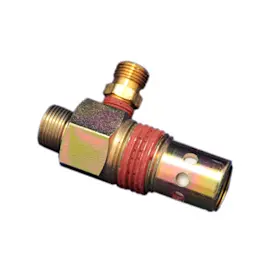
- Check valve leaking or restricted: constant leaking at the pressure release valve after shutoff; hard restarting.
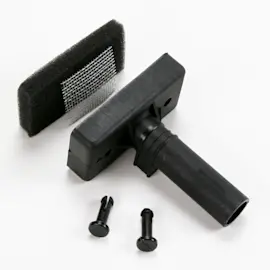
- Restricted air intake or dirty filter: low output, longer run time, overheating.
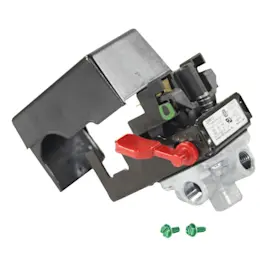
- Pressure switch problems: unit does not shut off at cut-out; safety valve may pop.
- Safety valve leaking: valve continues to leak after you pull the ring to test it.
Follow safe service steps before touching anything: unplug power, bleed tank pressure, and let the unit cool.
- Listen for leaks around fittings and the check valve area.
- Use soapy water on fittings to spot bubbles; tighten only until the leak stops (do not over-tighten).
- Watch the shutoff behavior: if it will not shut off and pressure keeps climbing, move the switch to Off.
- Inspect the intake path (filter and openings) for dust buildup or blockage.
- Test the safety valve by pulling the ring briefly; replace it if it still leaks.
| Symptom | Most likely cause | Best next step |
|---|---|---|
| Safety valve pops off | Pressure switch not shutting off | Turn Off; service pressure switch system |
| Constant leak after shutoff | Check valve seat damaged | Clean or replace check valve |
| Low air delivery | Dirty/restricted intake, leaks | Clean intake, fix leaks |
| Tank won’t hold air | Tank leak or weld leak | Replace the air tank (do not repair) |
Leaks and restricted airflow force the pump to run longer and hotter, which accelerates wear. The manual also calls out tank safety: drain condensation daily or after each use to reduce rust that can weaken the tank.
For model-specific operating and maintenance steps, use the owner's manual.
Last updated: February 2026
Is it worth it to repair a compressor?
For a Craftsman air compressor model 919167812, repair is worth it when the problem is a normal wear part (like a check valve, pressure switch, or safety valve) and the tank is sound. It is not worth repairing if the air tank leaks or has damaged welds; the tank must be replaced or the entire compressor replaced.
- Repair it when the compressor runs but has a control or air-delivery issue (won’t start, won’t build pressure, leaks at fittings).
- Repair it when the fix is a single component and the unit is otherwise in good condition.
- Replace it when the air tank leaks or leaks at tank welds (do not attempt a tank repair).
- Replace it when repeated failures keep happening and downtime matters more than the repair cost.
- Replace it when the compressor is undersized for your tools (it cannot keep up with SCFM demand).
| What you’re seeing | Most likely cause | Best next step |
|---|---|---|
| Air leak in tank or at tank welds | Defective air tank | Replace the air tank or replace the compressor |
| Safety valve hisses or pops | Defective safety valve or overpressure condition | Test and replace the safety valve if it still leaks |
| Won’t build tank pressure | Check valve issue, air leaks, intake restriction | Diagnose leaks and check valve, then repair |
| Pressure drops when using a tool | Normal drop or regulator needs adjustment | Adjust regulator under flow conditions |
A leaking or damaged air tank is a hard stop. The tank is a pressure vessel; drilling, welding, or modifying it can weaken it and create a serious bursting hazard. The manual also calls for draining the tank daily (or after each use) to reduce internal rust that can lead to tank failure.
- Use the 919167812 owner's manual for safety rules, maintenance, and troubleshooting steps.
- If the unit won’t run at all, follow air compressor won't start.
- If it runs but won’t reach cut-out pressure, use air compressor won't build tank pressure.
- If you suspect a valve problem, follow how to replace an air compressor check valve.
A smart repair keeps a good compressor running for years, but a compromised tank is a safety risk and a money pit. Focusing on tank condition first prevents wasted parts and avoids unsafe repairs.
Last updated: February 2026
Are Craftsman air compressors guaranteed for life?
No. Craftsman air compressors are not guaranteed for life, and the Craftsman model 919167812 specifically includes a written limited warranty with a defined time period. The warranty section in the 919167812 owner's manual lists one year of coverage for defects in material or workmanship, and 90 days if used for commercial or rental purposes.
A time-limited warranty covers manufacturing defects during the stated period; it does not turn the compressor into a lifetime-covered product.
- Keep your proof of purchase; the warranty period runs from the purchase date
- Warranty coverage focuses on defects in materials or workmanship
- Maintenance and operating practices still matter (draining the tank, correct duty cycle)
- Commercial or rental use changes the warranty length for this model
- For repair decisions after the warranty period, troubleshooting helps pinpoint the failed component
| How the compressor is used | Warranty length stated in manual | Coverage type |
|---|---|---|
| Household use | 1 year | Defects in material or workmanship |
| Commercial or rental use | 90 days | Defects in material or workmanship |
Knowing the warranty term helps you decide whether a no-start, low-pressure, or air-leak problem should be handled as a warranty issue or as a normal repair. For common post-warranty symptoms, our DIY guides like air compressor won't start can speed up diagnosis.
Last updated: February 2026
What company makes Craftsman air compressors?
Craftsman air compressors are built by different manufacturers over time. For Craftsman model 919167812, the owner documentation is branded for Sears and Craftsman; use the identification details in the 919167812 owner's manual and the data plate on your tank to confirm the original builder used for service parts.
Craftsman is a brand name; the actual manufacturer varies by model series. The most reliable way to confirm yours is to match the model number and specifications in the manual to the unit’s data plate.
- Verify the model number on the tank data plate is 919167812
- Compare voltage, tank size, and cut-in/cut-out pressures to the specification chart in the manual
- Check for a separate manufacturer label or code on the tank, pump shroud, or motor plate
- Use the manual’s repair parts section when matching components like the pressure switch, check valve, or regulator
These prefixes are commonly used to group designs and parts layouts across many Craftsman compressors.
| Craftsman model prefix | Common association | What it helps with |
|---|---|---|
| 919 | DeVilbiss Air Power family designs | Parts diagrams and service procedures often follow similar layouts |
| 106 | Campbell Hausfeld designs | Pump and control components often follow similar patterns |
Knowing the correct builder and design family helps you match the right pressure switch style, check valve configuration, and pump parts. That prevents ordering the wrong components when troubleshooting hard starting, low pressure, or air leaks.
Last updated: February 2026