Installation guide
 Owner’s manual
 Error Codes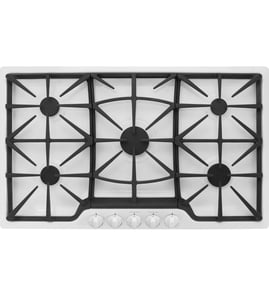


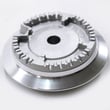
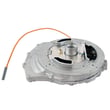

How long do KitchenAid gas stoves last?
A KitchenAid gas cooking appliance typically lasts 13 to 15 years with normal household use and basic maintenance. For the KitchenAid KFGS366VSS02 36-inch gas cooktop, keeping burners clean and fixing ignition or gas-flow issues early helps you reach (and often exceed) that range.
Typical lifespan and what affects it
Most gas cooktops and ranges land in a similar lifespan window, but these factors make the biggest difference:
- Cleaning habits (spillovers that clog burner ports shorten life)
- Ignition wear (frequent clicking, delayed lighting, or weak spark)
- Gas quality and pressure stability (steady supply helps burners run correctly)
- Ventilation and heat exposure (excess heat can stress wiring and controls)
- Timely part replacement (small fixes prevent bigger failures)
Maintenance that extends the life of KFGS366VSS02
We recommend these practical steps for a 36-inch KitchenAid gas cooktop:
- Keep burner heads and caps seated correctly after cleaning
- Clean burner ports gently (avoid enlarging ports)
- If a burner takes longer than about 4 seconds to light, address it promptly
- Verify the cooktop has power (electronic ignition needs electricity)
- Use the correct cookware size to reduce overheating around knobs and grates
| What you notice | Common cause | What to check first |
|---|---|---|
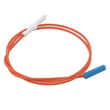
| Burner clicks but won’t light | Misaligned cap, dirty ports, weak igniter | Cap position, burner head cleanliness, surface igniter W10854967 |
| Burner lights slowly | Air in line, dirty burner, weak spark | Burner cap fit, burner head, ignition strength |
| Yellow or lifting flame | Gas/air mix issue, pressure issue | Burner condition, installation guide gas supply requirements |
Why it matters
A cooktop can look “fine” while small issues (like a weak igniter or partially blocked burner head) force longer lighting times and extra heat stress. Fixing those early protects the spark system, valves, and wiring so the cooktop reaches its full service life.
Last updated: January 2026
Can I install a gas cooktop myself?
Yes, you can install a KitchenAid KFGS366VSS02 gas cooktop yourself in many areas, as long as you follow local codes and the installation steps exactly. Because this is a gas connection with leak testing requirements, many homeowners still choose a qualified installer for safety and compliance.
What the installation instructions require
The installation guidance for this 30-inch and 36-inch built-in gas cooktop series calls out code compliance, proper gas supply, and leak testing as required steps. Use the KFGS366VSS02 installation guide as your checklist.
Key requirements include:
- Follow all governing codes and ordinances.
- Use a new CSA International approved gas supply line.
- Install an accessible manual shut-off valve.
- Securely tighten all gas connections and leak test per the instructions.
- Use pipe-joint compound rated for Natural and LP gas (not Teflon tape).
When we recommend using a qualified installer
Some parts of a gas cooktop install are straightforward (mounting, electrical plug-in), but gas supply and conversion work should be handled by a qualified person when needed.
Use a qualified installer if any of these apply:
- You need to convert from Natural gas to LP gas.
- You are not set up to perform a proper leak test.
- Your shut-off valve or supply piping needs modification.
- You are unsure about regulator orientation or fittings.
Quick DIY readiness checklist
Before you start, confirm these basics:
- Gas and electrical supplies are located so they are accessible without removing the cooktop.
- The cabinet cutout and clearances match the specified minimums.
- All wall and floor openings around the cutout are sealed.
- You have the correct fittings for your flexible connector.
- You can keep the rating label visible as required.
Common install items and what they do
| Item | Purpose | Common DIY issue |
|---|---|---|
| Shut-off valve | Lets you stop gas flow quickly | Not accessible after install |
| Flexible gas supply line | Connects house gas to regulator | Reusing an old line |
| Gas pressure regulator | Controls inlet pressure to the cooktop | Overtightening can crack it |
| Pipe-joint compound | Seals threaded gas fittings | Using the wrong sealant |
Why it matters
A built-in gas cooktop installation is about more than getting the burners to light. Correct regulator setup, wrench-tight connections, and leak testing help prevent gas leaks, ignition problems, and unsafe operation.
Last updated: January 2026
Which brand makes the best gas cooktop?
There is no single “best” gas cooktop brand for everyone; the best choice depends on your cooking style, budget, and service support in your area. If you already own a KitchenAid KFGS366VSS02 36-inch gas cooktop, you are in a premium category known for strong burner performance and durable grates when the cooktop is installed and maintained correctly (see the KFGS366VSS02 installation guide).
How we recommend choosing the best brand
We focus on the factors that most affect day-to-day results and long-term reliability:
- Burner performance and control: steady low simmer plus strong high-heat output
- Ignition reliability: consistent sparking and quick lighting
- Build quality: grate stability, burner head fit, and knob feel
- Serviceability: parts availability (igniters, valves, spark module) and technician familiarity
- Installation compatibility: correct gas type, regulator use, and shutoff valve access
Brand comparison checklist (quick scoring)
Use this to compare KitchenAid, GE, Café, LG, Frigidaire, Whirlpool, and others on the same criteria.
| What to compare | What “best” looks like | What to check before buying |
|---|---|---|
| Burner layout | Fits your pan sizes and cooking habits | Center burner size, spacing, grate design |
| Ignition system | Lights quickly and repeats reliably | Sealed burners, spark behavior, warranty |
| Gas compatibility | Correct for Natural or LP gas | Conversion support and local code compliance |
| Parts support | Common parts stay available | Igniters, spark module, valves, knobs |
Why installation and gas setup matter (more than the logo)
Even a top-tier cooktop can perform poorly if gas supply pressure is wrong or the regulator is not used. For cooktops like the KitchenAid KFGS366VSS02, proper setup includes using the supplied gas pressure regulator, having a manual shutoff valve, and following leak-testing steps in the installation instructions.
Common symptoms of a setup or maintenance issue
- Burners click but do not light consistently
- Weak flame or flame that lifts off the burner
- Uneven flame around the burner head
- Clicking continues after the burner lights
- Flame changes when other burners turn on
Parts that often restore “like-new” performance
If your cooktop is acting up, these model-compatible parts are commonly involved:
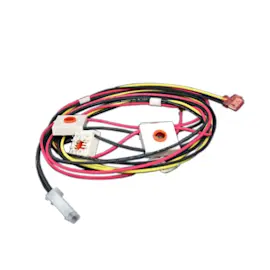
- Surface igniter W10854967 (no spark or weak spark)
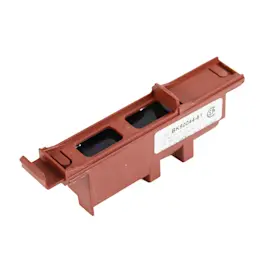
- Spark module WP8286828 (multiple burners not sparking correctly)
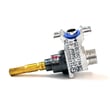
- Cooktop gas pressure regulator W11087445 (flame issues tied to pressure regulation)
Last updated: January 2026