




What is the most common problem with a GE dishwasher?
For the GE PDT715SYV1FS dishwasher, the most common problems we see are draining issues (water left in the tub), poor cleaning from low spray pressure, and “won’t start” symptoms caused by a door-latch or control-related fault. Many cases are fixed with cleaning and a few quick checks before replacing parts.
Most common symptoms and what they usually mean
- Not draining: clogged drain path, kinked hose, or a failing drain pump
- Not cleaning well: blocked spray arm jets, low water fill, or a wash pump/sump issue
- Won’t start or stops mid-cycle: door not latching, latch switch problem, or an electronic error
- Leaks at the door: worn tub gasket or door not closing squarely
- Odd fill or wash behavior: pressure sensing or water valve problems
Quick checks we recommend first (no parts needed)
- Turn off power at the breaker for 2 minutes, then restart the cycle.
- Confirm the door closes firmly; remove any rack or dish interference.
- Clean the filter area and check the sump for debris (labels, glass, bones).
- Inspect the drain hose routing for kinks and a proper high loop.
- Spin the spray arms by hand; clear clogged jets with warm water.
Parts that commonly solve these problems on PDT715SYV1FS
If the symptom matches, these model-specific parts are frequent fixes:
| Symptom | Common fix part | What it does |
|---|---|---|
| Water won’t drain | Dishwasher drain pump WD19X25461 | Pumps water out to the drain |
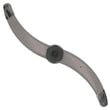
| Poor cleaning | Spray arm WD22X33499 | Restores proper spray pattern and pressure |
| Won’t start (door issue) | Dishwasher door latch lock WD01X29878 | Confirms the door is closed so the cycle can run |
| Fill or level sensing problems | GE dishwasher pressure sensor WD21X25468 | Helps the control detect water conditions |
Error codes: the fastest way to narrow it down
If your display shows an error, match it to the symptom before replacing anything. Use our GE electronic dishwasher error codes reference to pinpoint the likely circuit or component.
Why it matters
Drain, fill, and spray problems can look similar, but the fix is different. A quick inspection of the drain path, spray arms, and door latch prevents unnecessary part replacement and gets your GE dishwasher back to normal cycle performance.
Last updated: February 2026
What is the average lifespan of a GE dishwasher?
A GE dishwasher typically lasts 10 to 12 years. For your GE PDT715SYV1FS, lifespan depends most on water quality, how often it runs, and routine care like keeping spray arms clear and fixing small leaks early.
Typical lifespan range (what to expect)
Most household dishwashers fall into this range:
| Usage and care level | Typical lifespan | What usually ends it |
|---|---|---|
| Light use, good maintenance | 12 to 15 years | Wear in pumps, seals, controls |
| Average use | 10 to 12 years | Drain or wash pump issues, leaks |
| Heavy use, hard water, little maintenance | 8 to 10 years | Mineral buildup, heater and seal wear |
What extends the life of a PDT715SYV1FS
We see the biggest gains from a few simple habits:
- Clean the filter area and remove debris that can strain the wash system.
- Keep the spray holes clear; a clogged arm reduces cleaning and overworks the pump (see spray arm WD22X33499).
- Use the right detergent amount; too much can cause residue and poor draining.
- Run hot water at the sink before starting so the dishwasher fills with hotter water.
- Check for slow drains and address them early to avoid pump damage (see dishwasher drain pump WD19X25461).
- Inspect the door seal area for food buildup and wipe it clean to prevent leaks.
Quick “repair or replace” guide
Use this as a practical rule of thumb:
- Under 8 years: repairs usually make sense unless there is major tub damage.
- 8 to 12 years: compare repair cost to replacement; pumps, heaters, and control boards are common decision points.
- Over 12 years: replacement often makes more sense if multiple issues show up.
Why it matters
Knowing the expected lifespan helps you plan maintenance and avoid surprise breakdowns. Catching early symptoms like weak spray, standing water, or a door that will not latch can prevent secondary damage to the wash pump, heating system, and seals.
Last updated: February 2026
Is it worth fixing a GE dishwasher?
Yes, it’s usually worth fixing a GE dishwasher like model PDT715SYV1FS when the unit is under about 10 years old and the repair is a common, mid-cost failure (drain, fill, latch, spray). Replacement makes more sense when multiple major systems are failing or repair cost approaches half the price of a comparable new dishwasher.
Quick decision checklist
- The dishwasher is under ~10 years old and has been reliable overall.
- The problem is isolated (won’t drain, won’t fill, won’t start, poor cleaning).
- You can confirm a clear symptom and likely part (pump, valve, latch, spray arm).
- The tub is in good shape (no major rust, cracks, or chronic leaks).
- Repair cost is well under 50% of a new unit’s cost.
Common repairs that are often worth it on PDT715SYV1FS
These are typical “single-part” fixes that can restore normal operation:
| Symptom | Often-related part | Example part for this model |
|---|---|---|
| Not draining | Drain pump or drain hose restriction | Dishwasher drain pump WD19X25461 |
| Not filling or fills slowly | Water valve issue or supply restriction | Water valve assembly WD15X27703 |
| Door won’t latch or won’t start | Latch/strike alignment or failure | Dishwasher door latch lock WD01X29878 |
| Poor cleaning | Clogged or damaged spray arm | Spray arm WD22X33499 |
When replacement is the better call
Replacement is the smarter choice when you see any of the following patterns:
- Repeated breakdowns in different systems (wash, drain, heat, controls).
- Major electronic failures plus other symptoms (intermittent power, random stopping).
- Multiple leaks or a long-term leak that has damaged flooring or cabinetry.
- The dishwasher is 10+ years old and needs a high-cost repair (pump plus control, multiple assemblies).
Why it matters
A dishwasher repair is most cost-effective when it restores reliability with one targeted fix. Once you’re stacking repairs (for example, draining plus heating plus control issues), the total cost and downtime usually outweigh the value of keeping the unit.
Helpful troubleshooting resource
If you’re seeing a code or blinking pattern, use GE electronic dishwasher error codes to narrow the failure before buying parts.
Last updated: February 2026
Which dishwasher to stay away from?
We recommend staying away from any dishwasher with a consistent pattern of poor cleaning, chronic leaks, or repeated control failures in owner reviews and service history, regardless of brand. For a GE dishwasher like model PDT715SYV1FS, focus on proven reliability signals (parts availability, error history, and common failure points) instead of brand-only “avoid” lists.
What to check before you buy (works for any brand)
- Look for repeated complaints about leaks, not draining, or won’t start.
- Confirm common wear parts are easy to get (spray arms, pumps, door latch, water valve).
- Avoid models with frequent reports of standing water or burnt smell (often tied to wash or drain issues).
- Prefer models with clear diagnostics; error codes speed up troubleshooting.
- Check that the tub and door seal design is solid; chronic door leaks are a deal-breaker.
Quick reliability screen: symptoms and likely culprits
| Red flag in reviews | What it often points to | Example part on PDT715SYV1FS |
|---|---|---|
| “Dishes still dirty” | Poor spray coverage, wash circulation | Spray arm WD22X33499, wash pump WD19X32518 |
| “Water left in bottom” | Drain restriction or weak drain pump | Dishwasher drain pump WD19X25461, dishwasher drain hose WD24X10062 |
| “Door won’t latch / stops mid-cycle” | Latch not engaging consistently | Dishwasher door latch lock WD01X29878, dishwasher door latch strike WD13X10071 |
| “Not drying well” | Heater or heat control issues | Heating element WD05X35098 |
Use GE-specific diagnostics to avoid bad surprises
If you are comparing GE models, we use error-code history as a practical filter. A unit that repeatedly throws the same fault after basic maintenance is one we avoid.
- Reference: GE electronic dishwasher error codes
- Also helpful: GE dishwasher error codes
Why it matters
“Stay away from” decisions are usually about repeat repairs and downtime, not the logo on the door. Checking for the specific failure patterns above helps you avoid a dishwasher that will need a drain pump, wash pump, latch, or heater sooner than expected.
Last updated: February 2026
What if I can't find my part on Sears PartsDirect?
If you cannot find a part for your GE dishwasher model PDT715SYV1FS, we recommend confirming the model number and then searching by the exact part ID or part name. If the part still does not appear, our parts specialists can help match the correct replacement.
Quick checks that solve most “missing part” searches
- Recheck the full model number on the rating label: PDT715SYV1FS (letters and numbers must match exactly).
- Search using the part ID (example: WD19X25461) instead of a description.
- Try a simpler keyword (example: “drain pump” instead of “won’t drain motor”).
- Look for alternate naming: “wash pump” vs. “circulation pump”, “door latch” vs. “latch lock”.
- If you are replacing a leak or drain issue part, confirm the symptom first so you do not order the wrong item.
Use a known part to confirm you are in the right place
If you see parts that match your dishwasher’s symptoms, you are likely on the correct model page. For example:
| Symptom | Common part to check | Example part on this model page |
|---|---|---|
| Not draining | Drain pump, drain hose | Dishwasher drain pump WD19X25461, dishwasher drain hose WD24X10062 |
| Not cleaning well | Spray arm, wash pump | Spray arm WD22X33499, wash pump WD19X32518 |
| Door will not latch | Latch lock, strike | Dishwasher door latch lock WD01X29878, dishwasher door latch strike WD13X10071 |
When the part still does not show up
Sometimes the fastest path is to identify the failure first, then match the part. If your dishwasher is showing a code or beeping pattern, use our GE code resources to narrow the search:
Why it matters
Ordering by symptom alone can lead to the wrong replacement (for example, a drain problem can be caused by a drain hose routing issue, a drain pump, or a control-related drain fault). Matching by model number and part ID prevents returns and downtime.
Last updated: February 2026
Can I replace dishwasher parts myself?
Yes, for the GE PDT715SYV1FS dishwasher, we can replace many common parts ourselves if we shut off power and water first and work carefully. Simple mechanical items (like spray arms and door latches) are usually DIY-friendly; electrical controls and pumps take more skill.
Good DIY repairs for this model
These jobs are typically straightforward with basic hand tools:
- Replace a worn or cracked spray arm: spray arm WD22X33499
- Replace a damaged mid-level sprayer: mid spray arm WD22X33498
- Fix a door that will not latch: dishwasher door latch lock WD01X29878
- Replace a bent or broken latch strike: dishwasher door latch strike WD13X10071
- Replace a leaking or loose drain hose: dishwasher drain hose WD24X10062
Repairs that are more advanced
These often involve wiring, tight access, or water seals; we recommend taking photos as we disassemble and labeling connectors.
- Drain problems that point to a failing pump: dishwasher drain pump WD19X25461
- No heat or poor drying tied to the heater circuit: heating element WD05X35098
- Fill issues related to the inlet valve: water valve assembly WD15X27703
- Wash performance issues tied to circulation: wash pump WD19X32518
Quick safety checklist (do this first)
- Turn off the breaker to the dishwasher (do not rely on the control panel)
- Shut off the dishwasher water supply valve
- Protect the floor with towels; keep a shallow pan ready
- Take a photo of wire locations and hose routing before removal
- Run a short test cycle and check carefully for leaks after reassembly
DIY difficulty guide
| Repair type | Typical difficulty | Common symptoms |
|---|---|---|
| Spray arm replacement | Easy | Poor cleaning, no spray pattern |
| Door latch/strike replacement | Easy to medium | Will not start, door pops open |
| Drain hose replacement | Medium | Leaks, slow drain, water under unit |
| Pump or heater replacement | Medium to hard | Not draining, not drying, error beeps |
| Control board/UI replacement | Hard | Dead panel, random stopping, error codes |
Why it matters
Replacing the right part restores cleaning, draining, and drying performance and prevents leaks that can damage cabinets and flooring. When the dishwasher shows an error, using a code guide helps us avoid replacing good parts.
For code-based troubleshooting, use GE electronic dishwasher error codes.
Last updated: February 2026
What are the commonly replaced parts in a dishwasher?
For the GE PDT715SYV1FS dishwasher, the most commonly replaced parts are the wash and drain components, door-latching and sealing parts, and water-heating and fill parts. These items wear from normal use, mineral buildup, and clogs, and they are also the parts most likely to cause leaks, poor cleaning, or no-drain symptoms.
Most common dishwasher parts that get replaced
- Spray arms and related water distribution parts (clogged jets, cracks, poor rotation)
- Drain parts (slow drain, standing water, humming pump)
- Door latch and strike parts (won’t start, stops mid-cycle, door won’t stay latched)
- Water inlet valve (won’t fill, fills slowly, water level issues)
- Heating and drying parts (wet dishes, poor drying, cooler wash water)
- Seals and gaskets (leaks at the door or tub edge)
- Electronic controls (dead unit, unresponsive keys, intermittent operation)
Model-matched examples for PDT715SYV1FS
These are examples of commonly replaced parts we see for this model:
| Symptom | Part that often fixes it | Example part for this model |
|---|---|---|
| Not cleaning well | Clogged or damaged spray arm | Spray arm WD22X33499 |
| Not draining | Failed drain pump or restricted drain path | Dishwasher drain pump WD19X25461 |
| Won’t start or won’t stay running | Door not latching consistently | Dishwasher door latch lock WD01X29878 |
| Not filling | Inlet valve not opening fully | Water valve assembly WD15X27703 |
| Not drying | Heater circuit problem | Heating element WD05X35098 |
Quick checks before you buy a part
- Clean the filter area and check for broken glass or labels blocking the sump
- Spin spray arms by hand; clear debris from the jets with warm water
- Confirm the door closes squarely; check for a loose strike or latch alignment
- Verify the sink drain and garbage disposal inlet are clear (new disposals often have a knockout plug)
- Look for kinks in the drain hose and ensure the hose routing has a high loop
Why it matters
Replacing the right part restores wash pressure, proper draining, and safe heating. That prevents repeat clogs, reduces leaks, and helps the dishwasher complete cycles normally.
For electronic issues, we use error information to narrow the failure quickly; see GE electronic dishwasher error codes.
Last updated: February 2026





