Owner’s manual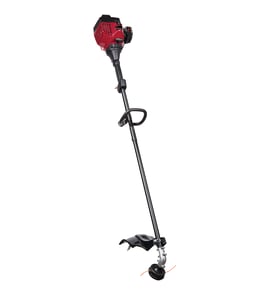



How to replace line on Craftsman gas trimmer?
To replace the cutting line on your Craftsman gas line trimmer model 358791510, remove the old line and line glide plate, clean the cutting head, reinstall the line glide plate, then feed a new length of Craftsman replacement line through the correct holes in the head as shown in the 358791510 owner's manual.
Steps to replace the trimmer line
- Shut the engine off and let it cool.
- Disconnect the spark plug boot before maintenance.
- Remove the old line and the line glide plate from the cutting head.
- Clean the entire surface of the cutting head.
- Reinstall the line glide plate and align the arrow to the correct position for your line size.
- Insert both ends of the new line through the proper holes in the side of the cutting head.
Choosing the right line (what the manual calls out)
The manual for model 358791510 specifies using only Craftsman replacement line (never wire, rope, or string). It also describes line types by color:
| Line type | Typical use | Notes |
|---|---|---|
| Red (medium) | Grass and small weeds | General trimming |
| Black (large) | Larger weeds and light brush | Heavier cutting |
Tips to prevent tangles and feeding problems
- Use the correct holes for the line diameter (the line glide plate shows the correct routing).
- Keep both line ends even when you feed them through the head.
- Replace line that is brittle, flattened, or fused from heat.
- Keep the cutting line at the proper length; an overlong line can overload the clutch and head.
Why it matters
Correct line routing and the correct line size help the bump head feed smoothly, reduce tangles, and prevent extra vibration that can wear the trimmer head parts faster.
Last updated: February 2026
What type of oil and gas for Craftsman 2-cycle 25cc 17 trimmer?
For the Craftsman 358791510 2-cycle trimmer, use fresh unleaded gasoline mixed with synthetic 2-cycle oil labeled for air-cooled engines at a 40:1 ratio. That mix is 3.2 oz of oil per 1 gallon of gas; do not use automotive or marine oil.
Correct fuel mix for model 358791510 (40:1)
Use this quick chart to measure accurately:
| Gasoline amount | 2-cycle oil amount | Mix ratio |
|---|---|---|
| 1 gallon | 3.2 oz | 40:1 |
| 1/2 gallon | 1.6 oz | 40:1 |
| 1 quart | 0.8 oz | 40:1 |
How we recommend mixing and fueling
- Use a clean, approved fuel container (not the trimmer tank).
- Add the measured oil first, then add gasoline.
- Cap the container and shake briefly to fully blend.
- Refuel outdoors with the engine off and cool.
- Remove the fuel cap slowly to relieve pressure.
Fuel tips that prevent hard starting
- Mix only what you will use within about 30 days.
- Alcohol-blended fuel can attract moisture during storage; use fresh fuel and store it tightly sealed.
- If storing the trimmer, using fuel stabilizer helps reduce gum deposits.
Why it matters
A 40:1 mix provides the lubrication this 2-cycle engine needs. Too little oil damages the piston and cylinder; too much oil increases smoke and can foul the spark plug.
For the exact fueling and safety steps for this model, follow the 358791510 owner's manual.
Last updated: February 2026
What's the difference between a whipper, snipper, and a line trimmer?
A “whipper snipper” and a “line trimmer” are the same tool; the name changes by region. For your Craftsman 358791510, it is a line trimmer designed to cut grass and weeds with rotating trimmer line (not a blade), mainly for trimming, scalping, mowing, and sweeping.
Quick definitions (common usage)
- Line trimmer: Standard name for a string trimmer that cuts with nylon line.
- Whipper snipper: Regional nickname for a line trimmer (often used in Australia and New Zealand).
- Snipper: Informal shorthand; usually still means a line trimmer.
- Brush cutter (often confused with the above): Heavier-duty tool that may use a metal blade for thick brush.
What matters for model 358791510
Your Craftsman 358791510 is intended for line trimmer use only. We recommend following the safety and use limits in the owner's manual.
- Use trimmer line, not blades or flailing attachments.
- Use it for trimming, scalping, mowing, and sweeping.
- Do not use it for edging, pruning, or hedge trimming.
- Keep bystanders and pets 50 feet (15 m) away.
Line trimmer vs brush cutter (at-a-glance)
| Feature | Line trimmer (like 358791510) | Brush cutter (typical) |
|---|---|---|
| Cutting method | Nylon line | Line or metal blade |
| Best for | Grass, weeds, touch-up work | Thick weeds, brush, saplings |
| Attachment safety | Line only | Blade-capable (model-specific) |
Why the terminology matters
Using the wrong attachment or treating a line trimmer like a brush cutter increases the risk of injury and can damage the trimmer head, clutch, or engine. Sticking to line-only operation also helps reduce wear and improves cutting control.
Last updated: February 2026