Installation guide





Is it worth replacing a compressor on an AC unit?
Replacing the compressor in your Icp TCA236AKA1 condensing unit is worth it when the rest of the system is in good condition and the unit is not near end-of-life; it is usually not worth it when the system is older and you are likely to face additional major repairs soon. Use the installation guide to confirm correct start-up and charging practices because installation issues can shorten compressor life.
- Age of the system: Under about 10 to 12 years typically favors compressor replacement; 15+ years typically favors replacing the outdoor unit (or full system) for reliability and efficiency.
- Cause of failure: A one-time event (power issue, wiring failure, overheated contactor) supports replacement; repeated overheating or contamination points to bigger system problems.
- Condition of the coil and fan: A weak condenser fan motor, blocked coil, or damaged wiring can overwork a new compressor.
- Refrigerant circuit cleanliness: Burnout and acid contamination often require extra cleanup steps (filter drier, deep evacuation) to protect the new compressor.
- Total repair cost vs. replacement: If compressor replacement approaches a large share of a new system cost, replacement usually wins.
A compressor rarely fails alone. Before committing, we recommend checking common contributors that are serviceable on this model:
| What to check | Why it matters | Example part on this model |
|---|---|---|
| Contactor contacts and coil | Pitted contacts can cause low voltage and hard starts | Contactor (part number 1050699) |
| Condenser fan operation | Poor airflow raises head pressure and overheats the compressor | Fan 1086407 |
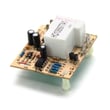
| Low-voltage/control issues | Short cycling and miscommands can stress the compressor | Board 1088977 |
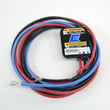
| Wiring condition | Loose/burnt connections create voltage drop and heat | Plug wire 1083654 |
The TCA236AKA1 installation guidance emphasizes practices that directly protect the compressor and refrigerant system:
- Keep refrigerant lines sealed until you are ready to connect; do not leave lines open to the atmosphere.
- Use proper copper refrigeration tubing and avoid kinks that can restrict flow.
- Protect service valves from overheating during brazing (do not overheat the valve body).
- Perform a thorough evacuation and do not use refrigerant for purging or leak testing.
A new compressor is a major investment. If airflow, electrical controls, or refrigerant charging and evacuation are not correct, the replacement compressor can fail early, turning a “repair” into repeated downtime and added cost.
Last updated: February 2026
What are the common problems with central air conditioners?
Common problems with central air conditioners like the Icp TCA236AKA1 condensing unit include restricted airflow, dirty outdoor coils, electrical control failures, and installation issues such as poor clearances or an unlevel pad. Many symptoms trace back to maintenance, wiring, or component wear.
- Warm air or weak cooling: dirty outdoor coil, restricted airflow, incorrect refrigerant charge, or poor airflow across the indoor coil
- Outdoor unit will not start: failed contactor, control board issue, blown fuse, tripped breaker, or low-voltage wiring problem
- Outdoor fan runs but cooling is poor: condenser coil blocked, fan motor or blade issue, or airflow recirculation from tight placement
- Short cycling (starts and stops often): airflow restriction, electrical control problem, or overheating from blocked coil
- Excessive noise or vibration: unit not level, pad settling, or supports contacting the structure
Your installation clearances and support matter because poor placement can cause recirculation, noise, and performance loss. The installation guidance for split system condensers calls out:
- Keep the unit in a well-drained location and supported above grade
- Avoid recessed or confined areas where discharge air can recirculate
- Keep shrubs, fences, snow drifts, and obstructions at least 2 feet from coil air inlets
- Set the unit on a level, permanent pad or platform (concrete, blocks, steel, or pressure-treated timbers)
For model-specific placement and wiring notes, use the installation guide.
If the outdoor unit is not starting or is acting intermittent, these parts are common suspects:
| Symptom | Part to check | What it does |
|---|---|---|
| No start, clicking, or buzzing | Contactor | Switches high voltage to the compressor and fan |
| Random operation, no response to calls | Electronic control board | Manages control logic and signals |
| Fan not spinning or poor heat rejection | Fan | Moves air through the condenser coil |
Model-matched parts on this page include the board 1088977 and fan 1086407.
Restricted airflow and dirty coils force the system to run hotter and longer, which increases energy use and can shorten compressor life. Correct clearances, a level pad, and clean coils are the fastest ways to prevent repeat failures.
Last updated: February 2026
Can I replace AC spare parts myself?
Yes, you can replace some parts on your Icp TCA236AKA1 condensing unit yourself, but only for tasks that stay on the electrical and mechanical side (not refrigerant handling). For safety and warranty protection, follow the steps and cautions in the installation guide.
These are common homeowner-level repairs when you shut off power and verify it is off with a meter:
- Contactor (a frequent no-cool culprit when it’s pitted or stuck)
- Condenser fan motor/blade assembly if the fan won’t spin or is noisy
- Control board if diagnostics point to a failed board
- Wiring/terminals repairs when a connector is burned or loose (match wire gauge and routing)
If you’re sourcing parts for this model, examples on this page include the board 1088977 and fan 1086407.
The TCA236AKA1 is a refrigerant-based system; certain work requires specialized tools and safe handling.
- Opening the sealed refrigerant system (lines, coils, compressor)
- Changing refrigerant charge or correcting leaks
- Leaving refrigerant lines open to the atmosphere (moisture contamination risk)
- Any work you cannot complete cleanly in one session
The installation guidance for this unit emphasizes electrical and mechanical safety.
- Shut off power at the disconnect and breaker; never assume power is disconnected
- Confirm voltage is absent with a meter before touching wiring
- Keep hands clear of the fan area whenever power could be present
- Wear safety eyewear and work gloves; sheet metal edges are sharp
- Use copper conductors only for wiring connections (no aluminum)
| Task | DIY level | Why |
|---|---|---|
| Replace contactor | Moderate | High voltage wiring; must be landed correctly |
| Replace fan assembly | Moderate | Mechanical fit plus correct wiring and rotation |
| Replace control board | Moderate to advanced | Miswiring can damage the board |
| Refrigerant line work | Pro-only | Contamination, charging, and leak risks |
A central air conditioner condensing unit combines high voltage and refrigerant pressure. Staying within safe, accessible component replacement (like a contactor, fan, or control board) prevents bigger failures and helps keep the system reliable.
Last updated: February 2026
How much should a central air conditioning unit cost?
A typical installed central air conditioning system costs about $3,000 to $15,000+. Your final price for an Icp TCA236AKA1 condensing unit setup depends on system size (tons/BTU), efficiency, installation complexity, and whether the indoor coil, ductwork, or electrical needs upgrades.
- System size (tonnage): larger capacity equipment and matched indoor components cost more.
- Efficiency level: higher SEER equipment raises equipment cost.
- Installation complexity: difficult access, rooftop placement, or tight clearances increase labor.
- Refrigerant line length and vertical rise: longer runs add materials and require charge adjustment.
- Electrical and controls: replacing controls or wiring adds parts and labor.
The installation requirements for this model family can change labor time and materials. The guidance includes:
| Item | Typical guidance | Why it affects cost |
|---|---|---|
| Operating clearances | About 60 in. above for discharge air and 24 in. around the coil on three sides (one side may be reduced) | May require relocating the unit or modifying the pad/area |
| Refrigerant line guidance | Factory charge commonly matches an indoor unit plus 15 ft of line; longer lines require adjustment | Longer line sets increase materials and commissioning time |
| Airflow target | 350 to 450 CFM per ton across the indoor coil | May require blower setup changes or duct improvements |
For the exact clearance and setup steps used for Icp TCA236AKA1 installations, use the installation guide.
If you are comparing repair vs. replacement, these common outdoor-unit parts can influence the total:
- Board 1088977 (control issues, intermittent operation)
- Fan 1086407 (condenser fan not running, overheating)
- Plug wire (wiring damage or poor connection)
Central AC pricing is not just the outdoor condenser. Proper matched components, correct airflow, verified refrigerant charge, and required clearances determine performance, reliability, and whether the system reaches rated capacity.
Last updated: February 2026
What is the most expensive part to replace on an AC unit?
On an Icp central AC condensing unit like model TCA236AKA1, the compressor is the most expensive component to replace because it is part of the sealed refrigerant system and the job includes significant labor for refrigerant recovery, evacuation, leak checks, and recharging.
Compressor replacement is expensive because it typically includes multiple specialized steps:
- Electrical troubleshooting to confirm the compressor is actually failed
- Refrigerant recovery and sealed-system opening
- Brazing refrigerant lines and replacing related sealed-system components as needed
- Deep vacuum evacuation and standing vacuum test
- Correct refrigerant charge and performance verification
If the compressor is not the issue, these repairs can still be high-cost on many central AC systems:
- Condenser coil or evaporator coil leak repair
- Refrigerant line-set repairs (kinks, rub-through, or poor joints)
- Electrical control diagnosis and replacement of major controls
For this model, common electrical parts you may see in the parts list include the central air conditioner condenser electronic control board 1088977 and the fan 1086407.
Costs vary by region and system condition, but the usual ranking looks like this:
| Repair item | Typical cost level | Main cost driver |
|---|---|---|
| Compressor | Highest | Sealed-system labor plus refrigerant work |
| Coil leak repair or coil replacement | High | Labor time and access |
| Control board | Medium to high | Part cost plus diagnosis |
| Fan motor or contactor | Low to medium | Faster electrical repair |
A compressor failure is often tied to underlying issues (airflow problems, electrical faults, or refrigerant problems). Confirming the root cause first prevents repeat failures and protects the new compressor.
For safety precautions, clearances, and service-valve handling during installation and service, follow the installation guide.
Last updated: February 2026