Installation guide
 Owner’s manual
 Error Codes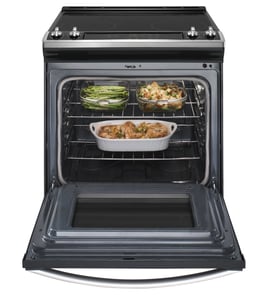





Are JennAir ovens gas or electric?
Jenn-Air ovens can be gas, electric, or dual-fuel, depending on the model. For JENN-AIR model JES9800CAS01, the documentation identifies it as an electric range, so the oven in this model is electric (it uses electric heating elements for baking and broiling). See the JES9800CAS01 owner's manual for model-specific operation details.
How to tell what type your Jenn-Air oven is
We recommend checking the model tag and the fuel connections; this quickly confirms whether you have a gas range, an electric range, or a dual-fuel range.
- Look up the exact model number on the rating label (often behind the storage drawer or on the oven frame).
- Check for a gas supply line and shutoff valve (gas or dual-fuel models).
- Check for a heavy-duty power cord and 240V outlet (electric and dual-fuel models).
- In the manual, look for references to bake element and broil element (electric oven indicators).
- If the cooktop is gas but the oven is electric, that is typically dual-fuel.
What “electric oven” means on JES9800CAS01
On an electric range like JES9800CAS01, the oven heat is produced by electric elements.
| Oven type | Primary heat source | What you typically see |
|---|---|---|
| Electric oven | Bake and broil elements | Element-based heating, electronic controls |
| Gas oven | Gas burner and igniter | Gas line connection, burner ignition |
| Dual-fuel | Electric oven, gas cooktop | Gas burners on top, electric elements in oven |
If you are troubleshooting weak baking or uneven temperatures, the bake element is a common wear item; for this model, the range bake element WPW10310274 is the listed replacement.
Why it matters
Fuel type affects installation requirements (gas line vs. 240V power), troubleshooting steps (igniter vs. element), and which replacement parts fit your range.
Last updated: January 2026
How long should a JennAir oven last?
A Jenn-Air electric range like model JES9800CAS01 typically lasts 15 to 20 years with normal household use and basic maintenance. Heavy daily cooking, frequent self-clean cycles, and heat-related wear on components can shorten that lifespan.
Typical lifespan and what affects it
Most electric ovens and ranges fall into a predictable service-life range, but real-world results depend on how hard the appliance works and how hot it runs.
- Usage frequency: daily high-heat cooking wears heating and control components faster
- Self-cleaning habits: frequent self-clean cycles add extreme heat stress to wiring, door parts, and electronics
- Ventilation and cooling: restricted airflow can overheat the control area and shorten component life
- Cleaning and spills: baked-on spills can cause smoke, odors, and extra heat cycling
- Timely part replacement: replacing a failed wear part early can prevent secondary damage
What “wear parts” usually fail first
On an electric range, the oven cavity itself often lasts a long time; the parts that cycle on and off tend to determine when repairs start.
| Component | What you may notice | Common next step |
|---|---|---|
| Bake heating circuit | Slow preheat, uneven baking | Test and replace the bake element if failed |
| Door sealing system | Heat escaping, longer cook times | Inspect and replace the door gasket if torn or flattened |
| Temperature safety/control | Temperature swings, shutdowns | Diagnose sensor/thermostat/control issues |
If baking performance is poor, a common repair is replacing the range bake element WPW10310274.
Maintenance that helps it reach 15 to 20 years
The goal is steady temperatures and reduced heat stress on the door and control area.
- Remove loose soil before running self-clean to reduce smoke and overheating
- Avoid lining the oven with foil (it can damage surfaces and airflow)
- Keep the door seal clean and intact so heat stays in the cavity
- Use cookware that fits the rack space to promote even airflow
- Follow the cleaning and care steps in the JES9800CAS01 use and care guide
Why it matters
A range that is sealed well and heats evenly cycles less, which reduces strain on the bake element, thermostat/safety devices, and electronic controls. That is the difference between an oven that feels “worn out” at 12 years versus one that keeps cooking reliably past 20.
Last updated: January 2026
What are common problems with JennAir stoves?
Common problems we see with Jenn-Air electric ranges like model JES9800CAS01 include the oven not heating, uneven baking, broil not working, a door that leaks heat, and control or display issues. Many symptoms trace back to a failed heating element, a temperature-sensing or safety issue, or a wiring/connection problem.
Most common symptoms and what they usually point to
- Oven will not heat in Bake: failed bake element, loose wire connection, or control issue
- Broil will not heat: failed broil element or control issue
- Uneven baking or long preheat: weak bake element, heat loss at the door gasket, or airflow problems
- Oven shuts off or overheats: safety thermostat opening, cooling fan issue, or control problem
- Buttons do not respond or display acts up: control board or keypad/control panel problem
Quick checks we recommend before replacing parts
- Confirm power: electric ranges need full power; a tripped breaker can leave the unit partially powered.
- Try a simple reset: turn the breaker off for 1 minute, then back on.
- Inspect the oven cavity: look for visible damage on the bake element (blisters, cracks, burn spots).
- Check the door seal: a flattened or torn gasket can cause heat loss and poor temperature control.
- Review model-specific troubleshooting: follow the steps in the JES9800CAS01 owner's manual.
Parts that commonly solve these problems on JES9800CAS01
| Problem | Common part involved | What it affects |
|---|---|---|
| No bake heat | Range bake element WPW10310274 | Primary heat for baking |
| Heat leaking, uneven temps | Range oven door gasket WPW10162384 | Seals heat inside the oven |
| Oven shuts down on heat | Safety thermostat (varies) | Protects from overheating |
Why it matters
Catching a weak element or leaking door gasket early helps the oven hold temperature, improves baking results, and reduces strain on the oven control and wiring.
Last updated: January 2026
Why is my JennAir electric oven not heating?
If your Jenn-Air range model JES9800CAS01 isn’t heating, the most common causes are a failed bake heating circuit (often the bake element), a temperature safety device opening, or a control problem. Start with basic settings and power checks, then inspect the heating components.
Quick checks first (no tools)
- Confirm you selected Bake (not Delay Start, Sabbath, or Keep Warm).
- Make sure the oven door is fully closed and the oven is not in a self-clean cycle.
- Verify the range has full power (electric ovens typically need 240V; a tripped breaker can leave you with partial power).
- Check that the oven vent area is not blocked (restricted venting can cause overheating and shutdown).
- Review the troubleshooting section in the JES9800CAS01 owner's manual.
Most likely parts that stop heating
On this model, these parts are common suspects when the oven won’t heat:
- Bake element: if it’s cracked, blistered, or open electrically, the oven will not heat in Bake. Consider the range bake element WPW10310274.
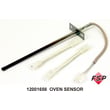
- Safety thermostat: if it opens due to overheating or failure, it can interrupt heat. Consider the thermostat 74008265.
- Oven control: if the control isn’t sending power to the element, heating can fail (especially if other functions act erratically).
What symptoms point to which issue?
| Symptom | Most likely cause | What to check |
|---|---|---|
| Broil works, Bake does not | Bake element or bake relay/control | Bake element condition; wiring at element |
| Neither Bake nor Broil heats | Power supply or control/safety device | Breaker, terminal block, safety thermostat |
| Heats sometimes, then stops | Overheat condition or failing thermostat/control | Cooling airflow, thermostat, control behavior |
Why it matters
An oven that won’t heat is usually an electrical interruption in the heating circuit. Finding whether the problem is power, the heating element, a safety thermostat, or the control helps you replace the right part the first time and restore normal baking temperatures.
Last updated: January 2026