Error Codes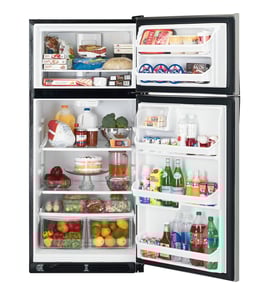





Are Amana refrigerators good quality?
Amana refrigerators, including the ART318FFDB10 top-mount style, are a solid choice when you want dependable, straightforward cooling at a budget-friendly price. They typically deliver good day-to-day performance, but they are usually lighter on premium features and may use more basic interior plastics than higher-end brands.
We see Amana as a practical, value-focused brand. For many households, fewer electronics and simpler controls can also mean fewer complicated repairs over time.
Common strengths:
- Consistent cooling for everyday use
- Simple design that is easy to live with
- Good value for the purchase price
- Widely available replacement parts for common wear items
Common tradeoffs:
- More basic features and storage options
- Interior bins and drawers can feel lighter-duty
- Noise complaints are often tied to airflow and fan operation
Quality is easiest to judge by performance and condition, not the badge on the door.
- Temperature stability: Fresh food near 37°F; freezer near 0°F
- Door seal condition: No gaps, rips, or warm air leaks
- Fan noise: A steady hum is normal; grinding or rattling points to a fan issue
- Frost pattern: Heavy frost can signal airflow or defrost problems
- Compressor run time: Long run times often trace back to dirty coils, door leaks, or airflow restrictions
If your ART318FFDB10 is noisy, warm, or inconsistent, these parts are common culprits:
| Symptom | Often related to | Example part for this model |
|---|---|---|
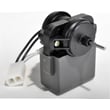
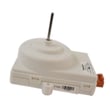
| Warm fridge, freezer OK (or vice versa) | Evaporator airflow | Refrigerator evaporator fan motor WP2315539 |
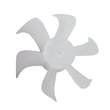
| Rattling or ticking from freezer area | Fan blade interference or wear | Refrigerator evaporator fan blade WP2163777 |
| Temps swing up and down | Temperature sensing | Thermistor, refrigerator W11438736 |
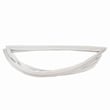
| Moisture, frost, or warm spots at door | Door seal leak | Refrigerator door gasket (white) W10861499 |
A “good quality” refrigerator is one that holds safe temperatures, seals tightly, and moves air correctly. When any of those basics slip, food life drops fast and the compressor works harder, which increases noise and energy use.
Last updated: February 2026
How do I find out what model fridge I have?
For an Amana refrigerator, we find the model number on the appliance’s rating label; on ART318FFDB10-STYLE top-mount units it’s typically inside the fresh food section or freezer, or on the cabinet frame behind a drawer. Once you have it, match it exactly (letters and numbers) when ordering parts.
Check these common spots first (use a flashlight and look for a sticker or metal plate):
- Inside the refrigerator compartment on a side wall
- Inside the freezer compartment on a side wall or back wall
- On the cabinet frame behind the lower crisper drawer (remove the drawer to see the frame)
- Along the door frame area (near the hinge side)
- Behind the front kick plate or lower toe grille (if your unit has one)
We recommend copying the information exactly as shown on the label.
- Model number (example format: ART318FFDB10)
- Serial number (helps identify production run)
- Brand (Amana)
- Any suffix letters/numbers after the model (they matter)
| Item | What it identifies | Example format |
|---|---|---|
| Model number | The exact refrigerator you own | ART318FFDB10 |
| Part ID | The ordering ID used on parts pages | WP2315539 |
| Part number | Manufacturer number for the part | 2315539 |
We use the model number to filter to the correct diagrams and compatible parts for your refrigerator. Even one wrong character can lead to ordering the wrong door gasket, evaporator fan motor, or control component.
If you’re troubleshooting cooling after you confirm the model, we use these steps often: how to fix your evaporator cooling fan.
Last updated: February 2026
What are the disadvantages of a top mount fridge?
A top-mount refrigerator like the Amana ART318FFDB10 is usually affordable and reliable, but the main disadvantages are less convenient fresh-food access (you bend more), fewer premium storage features, and fewer built-in dispenser options compared with many bottom-freezer designs.
- More bending for fresh food: the refrigerator compartment sits lower, so you reach down more often.
- Less “eye-level” organization: produce drawers and shelves can be harder to see and sort quickly.
- Fewer built-in features: many top-mount models skip exterior water and ice dispensers.
- Freezer access can be tight: smaller door bins and shelf layouts can limit bulky items.
- Door-seal sensitivity: if doors are slightly out of alignment, you can get warm spots, frost, or moisture.
| Feature | Top mount (like ART318FFDB10) | Bottom freezer |
|---|---|---|
| Fresh-food access | Lower, more bending | Higher, less bending |
| Freezer access | Eye-level | Lower drawer style |
| Typical storage features | More basic | Often more flexible |
| Dispenser options | Less common | More common |
- Set shelves so your most-used items sit at mid-height.
- Keep heavier items on lower shelves to reduce lifting strain.
- If you see moisture or frost, inspect and clean the door gasket; a worn gasket is a common cause. For a replacement option, use the refrigerator door gasket (white) W10861499.
- If temperatures vary between sections, check airflow; an evaporator fan issue can make the fresh-food section warm. The refrigerator evaporator fan motor WP2315539 is a common repair part when the fan is not running.
- Use our DIY guidance for sealing issues: how to fix a fridge door seal.
Most “top mount disadvantages” show up as convenience and organization issues, but door sealing and airflow problems can also affect food safety, energy use, and frost buildup if they are not corrected.
Last updated: February 2026
What is the life expectancy of a top freezer refrigerator?
A top-freezer (top-mount) refrigerator like Amana model ART318FFDB10 typically lasts 10 to 15 years. With steady temperatures, clean condenser airflow, and good door sealing, it commonly reaches the upper end of that range.
Most top-freezer refrigerators have a simpler cooling design than many other styles, so they tend to be durable and cost-effective to keep running.
- Typical service life: 10 to 15 years
- Common “wear” items over time: door gaskets, fan motor, temperature sensor (thermistor)
- Most important maintenance habit: keep airflow clear around the unit and keep coils clean
These factors have the biggest impact on how long your ART318FFDB10 runs reliably:
- Dirty condenser area causing higher compressor run time
- Warm kitchen location or tight cabinet clearance reducing ventilation
- Door not sealing well (moisture, frost, longer run times)
- Overpacking that blocks air vents inside the fresh food or freezer section
- Power issues (frequent outages or surges)
| What you notice | What it usually means | What we recommend |
|---|---|---|
| Frost buildup, sweating, or warm spots | Air leaks or poor airflow | Inspect and clean the gasket; consider replacing the refrigerator door gasket (white) W10861499 if it is torn or warped |
| Fridge warm but freezer cold | Weak airflow from freezer to fridge | Check the evaporator fan area; replace the refrigerator evaporator fan motor WP2315539 if the fan is not running |
| Temps swing up and down | Sensor or control issue | Test the sensor circuit; replace the thermistor, refrigerator W11438736 if readings are out of range |
Knowing the expected lifespan helps you decide whether to repair or replace. If your ART318FFDB10 is under 10 years old, repairs like a door gasket or evaporator fan are often practical; past 15 years, repeated cooling-system issues usually signal end-of-life.
Last updated: February 2026
Which is better, top mount or bottom mount refrigerator?
A “better” choice depends on how you use your kitchen. For an Amana top-mount like model ART318FFDB10, the big advantages are typically lower purchase cost, simpler design, and good efficiency; bottom-mount models usually win for everyday convenience because fresh food sits at eye level.
| Feature | Top-mount refrigerator | Bottom-mount refrigerator |
|---|---|---|
| Fresh-food access | You bend more | More eye-level access |
| Freezer access | Easy, at top | You bend more |
| Typical price | Lower | Higher |
| Complexity | Simpler | More parts/features |
| Best for | Value, basics | Convenience, organization |
- You want a reliable, straightforward refrigerator with fewer “extras” to maintain.
- You use the freezer often and prefer it at chest or eye level.
- You are replacing an older unit and want a familiar layout.
- You want to keep repair costs predictable (common wear items are usually straightforward).
- You have tighter kitchen clearance and prefer simpler door swing and storage.
- You cook often and want fresh-food shelves and crisper drawers at eye level.
- You prefer wider refrigerator compartments and easier organization.
- You access the freezer less frequently than the refrigerator.
Layout affects both convenience and what you maintain over time. A simpler top-mount design often means fewer feature-related issues; if cooling performance ever drops, we typically start by checking airflow components like the refrigerator evaporator fan motor WP2315539 and the door seal condition (gaskets).
- Top-mount: simpler, often lower cost; fresh-food bending is the main downside.
- Bottom-mount: better fresh-food ergonomics; typically higher cost and more feature complexity.
Last updated: February 2026
Why don't high end refrigerators have water dispensers?
Many high-end refrigerators skip built-in water dispensers because the dispenser system adds complexity, takes up door space (reducing usable storage and insulation), and increases the chance of leaks or service calls. On an Amana top-mount like model ART318FFDB10, a simpler door design also helps keep cooling performance consistent.
- Cleaner design and more usable space: No dispenser housing means more room for insulation and door bins.
- Better temperature stability: Fewer openings and less warm air intrusion through the dispenser area.
- Lower maintenance risk: Dispensers add tubing, valves, and seals that can clog, freeze, or leak.
- Fewer cosmetic issues: No trim pieces, paddles, or bezels to crack, scratch, or discolor.
- More flexibility: Some owners prefer a dedicated under-sink filter or countertop dispenser instead.
A door dispenser is not just a spout. It typically includes a water inlet valve, filter path, reservoir or coil, door tubing, switches, and seals. Any one of these can cause symptoms like slow flow, warm water, dripping, or ice buildup.
| Feature choice | What you gain | What you give up |
|---|---|---|
| No dispenser | Simpler cooling system, fewer leak points | No on-demand door water |
| In-door dispenser | Convenience, filtered water at the door | More parts to maintain, less door insulation |
These options work well for many top-mount refrigerators:
- Install an inline filter on the supply line (if your setup supports it); see how to install an inline refrigerator water filter.
- Use a pitcher filter or under-sink filtration system.
- Add an ice maker kit if the model supports it; see whirlpool refrigerator ice maker kit W11729596.
- Keep door seals in top shape to protect efficiency; see how to fix a fridge door seal.
With a top-mount refrigerator, keeping the doors well-sealed and the airflow steady usually delivers the best day-to-day performance. Fewer door cutouts and fewer water components generally means fewer nuisance problems and more consistent temperatures.
Last updated: February 2026