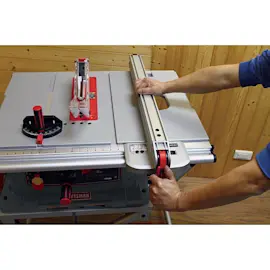
Owner’s manual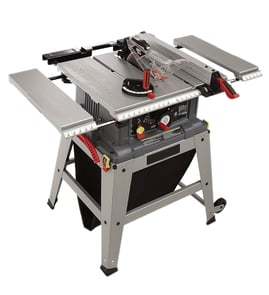

Are all table saw arbor nuts the same size?
No. For the Craftsman 113299142 10-inch table saw, arbor nuts are not “one-size-fits-all” across brands and models because the arbor thread size and direction can vary. Blade bore size is often standardized (commonly 5/8 inch on many 10-inch blades), but the nut and arbor threads are not.
What is usually standardized (and what is not)
Many 10-inch saw blades are sold with a 5/8-inch arbor hole, but that does not guarantee the arbor nut will match another saw.
- Often similar: blade arbor hole size (blade bore)
- Not standardized: arbor thread diameter, thread pitch, and left-hand vs right-hand threads
- Not interchangeable: arbor nut thickness, flange/collar fit, and wrench flats
- Model-specific: how the nut tightens relative to blade rotation
How to confirm the correct arbor nut for Craftsman 113299142
We recommend confirming the arbor nut by using the parts breakdown and blade removal procedure in the Craftsman 113299142 owner’s manual.
Practical checks you can do (with the saw unplugged):
- Verify whether the arbor uses right-hand or left-hand threads
- Measure arbor thread outside diameter (calipers help)
- Identify thread pitch (thread gauge helps)
- Compare the nut’s wrench size and thickness to the original
- Confirm the blade is installed with teeth facing the correct direction (per the manual)
Quick comparison: blade bore vs arbor nut
| Item | What it affects | Typical situation on 10-inch saws |
|---|---|---|
| Blade arbor hole (bore) | Whether the blade fits on the arbor shaft | Often 5/8 inch, sometimes with bushings |
| Arbor nut threads | Whether the nut will screw onto the arbor | Varies by manufacturer and model |
Why it matters
Using the wrong arbor nut (wrong thread or direction) can prevent proper tightening, damage the arbor threads, and increase the risk of blade wobble or loosening during operation.
Last updated: January 2026
How do I get rid of an old table saw?
If you are getting rid of a Craftsman 113299142 10-inch table saw, the best options are to sell or donate it if it still runs, or recycle it as scrap metal if it is beyond repair. Before it leaves your shop, disable it so it cannot be started accidentally.
Safe steps before disposal (important for any 10-inch table saw)
Use these steps to make the saw safer to move, donate, or recycle; they align with the basic safety approach in the Craftsman 113299142 owner’s manual.
- Unplug the power cord; never rely on the switch alone.
- Remove the switch key (if equipped) and store it separately.
- Lower the blade fully below the table surface.
- Remove the blade and pack it separately (or label it clearly).
- Secure loose items (rip fence, miter gauge, blade guard) so they do not shift in transport.
- If the cord is cut or damaged, do not tape it up; keep the saw unplugged and tag it “do not use.”
Best disposal options (from most value to least)
- Sell: Local classifieds, woodworking groups, estate sales.
- Donate: Tool libraries, vocational programs, maker spaces, Habitat ReStore (varies by location).
- Recycle: Scrap metal recycler; many will take cast iron tops, steel stands, and motors.
- Junk removal: Useful if you cannot move it safely.
What to keep vs. what to send with the saw
| Item | Send with saw? | Why it matters |
|---|---|---|
| Rip fence and miter gauge | Yes | Makes the saw usable for the next owner. |
| Blade guard/spreader/anti-kickback parts | Yes | Helps reduce kickback risk during use. |
| Saw blade | Optional | Many people prefer a new blade; blades can be recycled as metal. |
| Switch key | Yes | Prevents unsafe “hot-wiring” or bypassing the switch. |
Why it matters
A table saw can be started accidentally during moving or after donation if the switch is bumped or the cord is plugged in. Disabling and securing the saw reduces injury risk and helps the next owner set it up correctly.
Last updated: January 2026
Are Craftsman table saws good?
Yes, Craftsman table saws can be a good choice for DIY and general home-shop work when they are set up and maintained correctly. For the Craftsman 113299142 10-inch table saw, overall “good” usually comes down to alignment (blade-to-slot and fence-to-blade), a solid stand/bench mount, and using the guard and anti-kickback parts as intended (see the 113299142 owner's manual).
What “good” means for the 113299142
This model is a classic belt-driven, contractor-style Craftsman saw design. It can deliver reliable ripping and crosscutting performance for common lumber and sheet goods when the fence, miter gauge, and blade are tuned.
Strengths you can expect
- Strong basic cutting capability with a properly sized 10-inch blade
- Belt drive helps smooth cutting compared to many direct-drive benchtop saws
- Adjustable rip fence system (accuracy depends on alignment and technique)
- Serviceable design with replaceable wear parts (belt, pulleys, switch, etc.)
Common limitations (and why people complain)
- Fence can drift out of parallel if not adjusted and locked consistently
- Miter gauge is “good enough” for general cuts but may need a wood facing for repeatability
- Vibration or burn marks often trace back to belt condition, pulley alignment, or a dull blade
Quick setup checklist (biggest accuracy wins)
Use these checks before judging the saw’s quality:
- Confirm the blade is square (90°) to the table at the stop
- Verify blade is parallel to the miter gauge groove (reduces burning and kickback risk)
- Align the rip fence parallel to the blade and miter slots
- Set the table insert flush with the tabletop
- Use a sharp, appropriate blade for the material (rip vs. crosscut)
Upgrade vs. repair: what’s worth doing?
| Symptom | Most likely cause | Best next step |
|---|---|---|
| Cuts not straight | Fence not parallel, technique | Align fence; use consistent pressure against fence |
| Burning | Dull blade, misalignment | Replace/clean blade; re-check alignment |
| Excess vibration | Belt/pulley issues, mounting | Inspect belt and pulleys; bolt saw down |
| Kickback tendency | Fence/blade not parallel, poor support | Correct alignment; add outfeed support |
Why it matters
A table saw can feel “bad” even when nothing is broken if the fence and blade are slightly out of alignment. On the 113299142, proper alignment and using the blade guard/spreader and anti-kickback pawls are key to both cut quality and safety.
Last updated: January 2026
How to date a Craftsman table saw?
To date a Craftsman table saw, we start with the model and serial number on the saw. On Craftsman model 113299142, the owner’s manual says the model and serial number are found on the left-hand side of the base; the serial number format is what you use to estimate the build timeframe. See the Craftsman 113299142 owner’s manual for the exact ID-plate location.
Where to find the numbers on model 113299142
Look for a metal plate or label on the cabinet/base.
- Check the left-hand side of the base (called out for this model)
- Write down the full model number (113299142)
- Write down the entire serial number exactly as shown
- Note any prefix letters or extra codes (they can matter)
- Take a clear photo before cleaning or repainting the base
How to interpret the serial number (what usually works)
Craftsman serial number formats changed over the years, so we cannot identify a single guaranteed “date code rule” for every 113-series saw just from the model number alone. Once you have the serial number, these are the most common approaches people use:
- Look for a week/year style code at the start of the serial number
- Look for a month/year style code (sometimes embedded)
- Compare the serial format to other known Craftsman/Sears production patterns for that era
- Use the saw’s original configuration (guard style, switch/key style, fence system) as supporting clues
Quick guide to common date-code patterns
| What you see in the serial | What it often means | What to do next |
|---|---|---|
| 4 digits that look like WWYY or YYWW | Week and year (order varies) | Try both interpretations and sanity-check against features |
| Letters + numbers | Plant/line code + date segment | Record the full string; don’t drop the letters |
| No obvious date pattern | Serial is sequential only | Use feature clues and documentation era |
Why it matters
Knowing the approximate manufacture timeframe helps us match the right safety parts and wear items (blade guard/spreader, arbor hardware, belts, switch components) because Craftsman table saw designs and part revisions can vary even within the 113 family.
Last updated: January 2026
What is the best table saw on the market?
There is no single “best” table saw for everyone; the right choice depends on how you work (jobsite vs. shop), the cuts you make most, and your safety expectations. For owners of Craftsman model 113299142, we recommend using your saw’s capabilities as the baseline when comparing upgrades in the Craftsman 113299142 owner’s manual.
How to choose the best table saw for your needs
Focus on the features that change accuracy, safety, and day-to-day usability.
- Safety system: riving knife or splitter, anti-kickback pawls, blade guard quality
- Fence quality: stays parallel, locks solid, easy micro-adjustments
- Power and drive: direct-drive (portable) vs. belt-drive (contractor/cabinet)
- Rip capacity: enough for your typical sheet goods and cabinetry work
- Dust collection: port size and how well the cabinet contains dust
- Stability: stand/legs, vibration control, and table flatness
Quick comparison: which “best” category fits you?
| If you want the best for... | Saw type to prioritize | What to look for |
|---|---|---|
| Portability and value | Jobsite saw | Rack-and-pinion style fence, rolling stand |
| Maximum safety | Jobsite or cabinet with advanced safety | Fast blade-stop tech, strong guard system |
| Shop accuracy on a budget | Contractor saw | Belt drive, cast-iron top, better fence |
| Production cabinetry | Cabinet saw | Heavy trunnions, strong dust collection, premium fence |
How this relates to Craftsman 113299142
Your Craftsman 113299142 is a classic 10-inch table saw design with a guard/spreader system and belt-drive style setup described in the manual. When comparing “best on the market” options, use your current saw as the reference point for:
- Fence repeatability and ease of alignment
- Guard/spreader setup and kickback control
- Table flatness and vibration
- Motor performance for thick hardwood ripping
Why it matters
The “best” saw is the one that helps you cut accurately while reducing kickback risk and improving workflow. Matching the saw type to your projects usually matters more than chasing the highest-priced model.
Last updated: January 2026
Where can I get Craftsman replacement parts?
For Craftsman model 113299142 (10-inch table saw), you can get replacement parts by searching with the exact model number at Sears PartsDirect and other authorized parts sellers. We recommend confirming the part name and diagram location in the 113299142 owner's manual before ordering to avoid mismatches.
Best ways to buy the right part
- Use the full model number 113299142 when searching (not just “Craftsman table saw”).
- Cross-check the part in the exploded view and parts list in the manual.
- Match the part by description and where it installs (guard, rip fence, switch, belt guard, etc.).
- If your saw has optional legs, table extensions, or a motor, verify which configuration you have.
- Replace safety-related items (blade guard, spreader, anti-kickback pawls) with correct-fit parts only.
What to verify before you order
On this Craftsman 113299142 table saw, the manual indicates the model and serial tag is on the left-hand side of the base. Use that tag to confirm you are ordering for the correct model.
| What to match | Why it matters | Example on this saw |
|---|---|---|
| Model number | Prevents wrong-fit parts | 113299142 vs similar 113.x models |
| Assembly style | Some versions include legs/extensions/motor | “Saw only” vs “saw with legs” |
| Electrical requirements | Avoids unsafe or incompatible electrical parts | 110-120V, grounded plug |
Common parts people replace on this model
- Switch and switch key
- Rip fence components and guide bars
- Miter gauge
- Table insert
- Belt and pulley guard pieces
- V-belt and pulley (when equipped)
Why it matters
Table saw parts are highly model-specific; even small differences in fence rails, guards, or mounting holes can cause poor alignment, kickback risk, or unsafe operation. Using the manual to confirm the exact part and placement helps keep your Craftsman saw cutting accurately and safely.
Last updated: January 2026