Owner’s manual
 View engine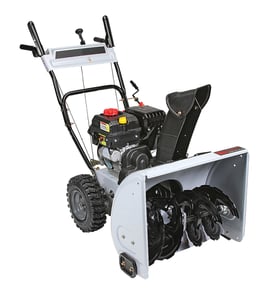


Where can I find the Craftsman snowblower model number?
On Craftsman snow thrower model 917881062, we list the model and serial number on a decal attached to the rear of the snow thrower housing. Use that decal information when ordering parts or matching diagrams in the owner's manual.
Where to look on the machine
Check these common spots on the snowblower frame and housing:
- Rear of the snow thrower housing (primary location for model 917881062)
- Back side of the main frame near the wheels
- Side of the auger housing (outer housing around the auger)
- Near the engine mounting area (on the frame, not on the plastic shrouds)
- On a metal tag or durable decal (wipe snow, oil, and grime off before reading)
What information to write down
Record the details exactly as shown so we can match the correct Craftsman parts list.
| Item | What it’s used for | Tip |
|---|---|---|
| Model number | Matching the correct parts diagrams | Copy every digit (example: 917881062) |
| Serial number | Identifying production run details | Take a photo for backup |
| Date of purchase | Maintenance and reference | Keep with your manual |
If the label is hard to read
A faded decal is common on outdoor power equipment. These steps usually make it readable:
- Clean the area with mild soap and water; dry completely
- Use a flashlight at a low angle to highlight embossed or worn printing
- Take a close-up photo and zoom in
- Look for a second label on the frame if the rear housing decal is damaged
Why it matters
Craftsman snowblower parts (belts, skid shoes, chute components, and hardware) can vary by production run. Using the exact model number helps ensure the right fit and avoids ordering the wrong auger drive belt or control parts.
Last updated: February 2026
How to tell year of Craftsman snowblower by serial number?
For Craftsman snow thrower model 917881062, the year is determined by decoding the serial number on the rear housing decal; the exact format varies by production run, so we match your serial number pattern to the correct date code chart in the 917881062 owner's manual.
Where to find the serial number (917881062)
The model and serial numbers are on a decal attached to the rear of the snow thrower housing.
- Look on the back of the auger housing (rear panel area)
- Wipe off snow, salt, and grime so every character is readable
- Write the serial number exactly as shown (include letters and dashes)
- Take a clear photo before the decal fades further
- Record the purchase date too (helpful for maintenance history)
How to decode the year from the serial number
Craftsman serial numbers have used more than one format over the years. The quickest way is to identify what your serial number looks like, then decode accordingly.
| What your serial number looks like | What it usually means | What to do |
|---|---|---|
| All numbers (often 6+ digits) | Often includes a date sequence (year, month, day) | Compare the first 6 digits to a date pattern chart |
| Starts with a letter, then numbers | Often uses a letter to represent the year | Use the year-letter key, then confirm month/day positions |
| Has multiple groups or dashes | May include plant/line codes plus a date segment | Focus on the segment that matches the date chart |
A reliable cross-check: engine date code
This model uses a Briggs and Stratton engine (1450 series). If the snowblower serial number is hard to interpret, the engine code label often includes a manufacture date code you can use as a close reference point (the snowblower build date is typically near the engine build date).
Why it matters
Knowing the build year helps us match the correct parts diagrams and avoid ordering the wrong belt, chute hardware, or drive components for your Craftsman 917881062.
- Common wear items include belts, skid shoes, and springs
- Correct year and serial range can affect part revisions
- Accurate identification speeds up troubleshooting and repairs
Last updated: February 2026
What are common gas snow blower problems?
Common problems on the Craftsman 917881062 gas snow thrower include a no-start condition (often fuel, ignition key, choke/primer, or spark plug related), loss of traction drive, and poor snow discharge from a clogged chute or a worn drive system. Our owner's manual troubleshooting table helps you match symptoms to the most likely cause.
Most common symptoms and what usually causes them
- Engine will not start: ignition key not inserted, out of fuel, throttle/stop switch set to STOP/OFF, choke set wrong, engine flooded, spark plug wire disconnected, bad spark plug, stale fuel, or water in fuel.
- Engine runs rough or stalls: choke left on too long, fuel restriction, stale fuel, water in fuel.
- Loss of traction drive: drive system out of adjustment, worn friction components, or linkage/spring issues.
- Auger/impeller not moving or weak snow discharge: chute packed with snow, shear bolts/pins damaged, belt slipping or broken.
- Excessive vibration: loose fasteners, damaged auger/impeller components.
Quick checks we recommend (safe, fast, and high-impact)
- Shut the engine off and disconnect the spark plug wire before inspecting or adjusting anything.
- Confirm the ignition key is fully inserted and controls are set correctly (throttle, choke, primer).
- If it sat for 30+ days, drain/replace old fuel and refill with fresh fuel.
- Inspect the discharge chute for packing; never clear a clogged chute by hand. Use a clean-out tool and wait about 10 seconds after shutdown for rotation to stop.
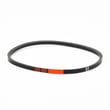
- Check for obvious belt wear; a common fix for no-auger or weak discharge is replacing the auger drive belt such as the snowblower auger drive belt 532408007.
Problem-to-fix guide
| Problem | What you’ll notice | What to check first |
|---|---|---|
| Won’t start | No ignition or no fuel | Key, fuel level, choke/primer, spark plug wire |
| Runs rough | Surging, sputtering | Choke position, fuel quality, fuel line restriction |
| Poor discharge | Snow dribbles out, clogs | Chute clog, belt slip, shear bolts/pins |
| No traction | Wheels don’t pull | Drive adjustment, linkage/spring condition |
Why it matters
Most snowblower failures are simple setup, fuel, or safety-control issues. Catching them early prevents belt damage, broken shear hardware, and unsafe chute-clearing situations.
Last updated: February 2026
What is the typical lifespan of a gas snowblower?
A gas snowblower typically lasts 10 to 20 years. For your Craftsman 917881062 snow thrower, lifespan depends most on off-season storage, fuel care, and routine maintenance like oil changes, cleaning, and replacing wear items (belts, skid shoes, and shear bolts) on schedule; see the owner's manual.
Typical lifespan ranges (what to expect)
Most gas snowblowers fall into these real-world ranges:
- Light use (a few storms per year): 15 to 20 years
- Moderate use (regular winters): 10 to 15 years
- Heavy use (long driveways, wet snow, frequent use): 8 to 12 years
- Poor storage or stale fuel: shortened life due to carburetor and fuel-system issues
Maintenance that extends life the most
The Craftsman 917881062 manual emphasizes regular upkeep and proper storage. These steps make the biggest difference:
- Change oil on schedule; use the recommended oil type (SAE 5W-30 or 10W-30; synthetic SAE 5W-30 is also listed)
- Use fresh unleaded regular fuel; avoid storing with old fuel for extended periods
- After each use, run the machine a few minutes to help prevent collector or impeller freeze-up
- Clean the housing after use; avoid spraying water into the engine area
- Check fasteners and shear bolts often for tightness and condition
Wear parts that commonly determine “end of life”
A snowblower often feels “worn out” because a few key parts are worn, not because the whole machine is done.
| Symptom | Common cause | Typical fix |
|---|---|---|
| Auger does not pull snow in well | Worn or stretched belt | Replace the snowblower auger drive belt 532408007 |
| Poor scraping, leaves snow behind | Skid shoes set too high or worn | Adjust or replace skid shoes (example: snowblower skid shoe, left 532174762) |
| Excess vibration or clunking | Loose hardware or worn drive components | Inspect and tighten; replace worn parts as needed |
Why it matters
A gas snowblower is a seasonal machine; storage mistakes and skipped maintenance do more damage than normal winter use. Following the storage and maintenance steps in the manual helps prevent fuel-system gum deposits, corrosion, and premature engine wear.
Last updated: February 2026
What is the best rated gas snow blower?
The “best rated” gas snowblower is the one sized for your snowfall and driveway, but in general two-stage, power-propelled machines earn the highest satisfaction for heavy, plowed, or wet snow. Your Craftsman 917881062 is a 30-inch, two-stage, power-propelled snow thrower; use the owner's manual to match features and maintenance to your conditions.
What “best rated” usually means (and what to compare)
When we compare gas snow throwers, these factors drive real-world ratings:
- Stage type: single-stage for light snow; two-stage for deeper, heavier, end-of-driveway piles
- Clearing width: wider clears faster but needs more storage space
- Drive system: power-propelled/self-propelled for slopes and long runs
- Chute control: easy rotation and deflector control for accurate throwing
- Cold starting: reliable choke/primer and electric start (if equipped)
How Craftsman 917881062 fits the “top performer” category
Your model is a 30-inch two-stage unit with a Briggs and Stratton engine series listed in the manual. That configuration is the most common “best rated” style for mixed winter conditions because it balances intake capacity, traction, and throwing performance.
Quick comparison
| Need | Best match | Where 917881062 fits |
|---|---|---|
| Heavy, wet, plowed snow | Two-stage, power-propelled | Strong match |
| Tight storage, quick touch-ups | Single-stage | Not the ideal fit |
| Faster clearing on large areas | 24 to 30 inch two-stage | Strong match |
Keep performance high (ratings follow reliability)
Most “great” snowblowers stay great by keeping wear items in shape:
- Replace a slipping auger belt such as the snowblower auger drive belt 532408007
- Keep skid shoes adjusted so the housing glides without scraping
- Replace shear bolts immediately if one breaks
- Change oil on schedule (manual lists 18 oz capacity and common oil grades)
Why it matters
Choosing the right stage type and keeping belts, skid shoes, and shear bolts maintained prevents the most common mid-storm problems: poor throwing distance, loss of auger drive, and hard starting.
Last updated: February 2026