Installation guide
 Owner’s manual
 Error Codes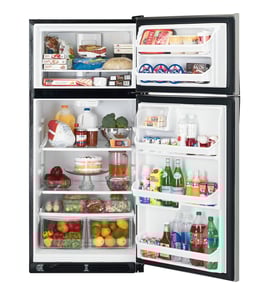



What are the disadvantages of a top mount fridge?
Top-mount refrigerators like the Frigidaire FFTR1814LW4 are reliable and space-efficient, but the main disadvantages are less convenient fresh-food access (you bend more), fewer premium organization features, and fewer built-in dispenser options compared with many bottom-freezer designs.
Common disadvantages (what you will notice day to day)
- More bending for fresh food: the refrigerator compartment sits lower, so produce, deli items, and drinks are below waist level.
- Freezer at eye level: convenient for frozen foods, but it can make the fridge section feel less accessible.
- Fewer built-in features: many top-mount models skip external water and ice dispensers.
- Organization can be simpler: fewer adjustable bins, drawers, and specialty zones than some bottom-mount layouts.
- Door swing and clearance needs: you still need room for doors to open fully and seal correctly.
Setup details that affect “downsides”
Good installation reduces everyday annoyances like doors that do not close smoothly or uneven shelves.
- Confirm the cabinet is level side-to-side and tilted about 1/4 inch front-to-back.
- Make sure the door seals completely on all sides.
- Leave typical airflow clearances: 3/8 inch at sides and top, 1 inch at the back.
For the exact leveling and clearance steps for FFTR1814LW4, use the installation guide.
Quick comparison: top mount vs bottom freezer
| Feature | Top mount (FFTR1814LW4 style) | Bottom freezer (typical) |
|---|---|---|
| Fresh-food access | Lower, more bending | Higher, less bending |
| Freezer access | Higher, easier reach | Lower drawer, more bending |
| Built-in dispensers | Less common | More common |
| Organization | Often simpler | Often more flexible |
Why it matters
Choosing a refrigerator layout is mostly about ergonomics and habits. If you use fresh food many times a day, the lower refrigerator section can feel like a drawback; if you use frozen foods often, the upper freezer can feel like a benefit.
Last updated: January 2026
What is the upper part of a fridge called?
On the Frigidaire FFTR1814LW4 top-mount refrigerator, the upper section is the freezer compartment. It is the colder compartment designed to keep foods frozen, and it typically houses the ice maker (if equipped) and freezer temperature control settings.
What the freezer compartment includes
In a top-mount refrigerator like the FFTR1814LW4, the freezer compartment commonly includes:
- Freezer shelves or bins for frozen food storage
- A freezer door with a gasket that seals cold air in
- An ice maker area (if your unit has an ice maker installed)
- Airflow vents that circulate cold air to the fresh food section
- Temperature controls you set and then allow time to stabilize
For model-specific operating and feature details, use the FFTR1814LW4 owner's manual.
Quick terminology guide
| What you see | Common name | What it does |
|---|---|---|
| Upper compartment | Freezer compartment | Freezes food and helps cool the refrigerator section |
| Lower compartment | Fresh food (refrigerator) compartment | Keeps food cold but not frozen |
| Door seal | Door gasket | Prevents warm air leaks that cause frost and temperature swings |
Why it matters
Knowing the correct name helps when you are troubleshooting cooling problems, ordering Frigidaire refrigerator parts, or following setup steps like leveling and control adjustments. For example, the installation checklist calls out that the freezer door should be level across the top and that door seals should close completely on all sides.
Related setup tips we recommend
These are common items that affect freezer performance right away:
- Level the cabinet so doors close and seal properly
- Confirm the freezer door is level across the top
- Set controls, then wait 24 hours before making more adjustments
- If you have an ice maker, keep it OFF until the water supply is connected and leak-free
- Allow the recommended clearances for airflow (sides/top and back)
Last updated: January 2026
Is top mounted refrigerator better than bottom mounted?
A top-mount refrigerator like the Frigidaire FFTR1814LW4 is better when you want strong energy efficiency, a simpler layout, and typically lower purchase and repair costs. A bottom-mount is better when you want fresh-food items at eye level and easier access to the refrigerator section.
Quick comparison: top-mount vs bottom-mount
| Feature | Top-mount (freezer on top) | Bottom-mount (freezer on bottom) |
|---|---|---|
| Most-used section access | Refrigerator section is lower | Refrigerator section is higher |
| Energy use (typical) | Often lower | Often slightly higher |
| Freezer access | Easier (at chest height) | Requires bending or drawers |
| Organization | Simple shelves and bins | Often more drawers and zones |
| Repair complexity | Often simpler | Often more complex features |
When a top-mount is the better choice
Top-mount refrigerators are a great fit when these priorities matter most:
- You want a straightforward, reliable design with fewer “extras” to maintain.
- You prefer easier access to frozen foods.
- You want good efficiency and steady temperatures for everyday use.
- You have a tighter kitchen space and want a classic footprint.
- You want simpler door alignment and leveling adjustments during setup.
For model-specific setup and leveling targets (including the recommended cabinet tilt), follow the FFTR1814LW4 installation guide.
When a bottom-mount is the better choice
A bottom-mount refrigerator is usually the better pick when:
- You use fresh food far more than frozen food.
- You want less bending for milk, produce, and leftovers.
- You like drawer-style freezer organization.
- You want more “zone” storage and premium features (model dependent).
Why it matters
The “better” style depends on how you use your kitchen. If you open the refrigerator door dozens of times a day, a bottom-mount can reduce bending. If you want a simpler, efficient refrigerator that is easy to install, level, and live with, a top-mount like the FFTR1814LW4 is often the better value.
Last updated: January 2026
What is the most common problem with a Frigidaire refrigerator?
Cooling performance problems are the most common issue we see with Frigidaire refrigerators like model FFTR1814LW4. In many cases, the root cause is restricted airflow (dirty condenser area, blocked vents), a door that is not sealing tightly, or a fan problem that prevents cold air from circulating.
Most common symptoms customers notice
- Refrigerator section is warm but freezer seems cold
- Freezer temperature rises or food softens
- Frost buildup on the back wall of the freezer
- Unit runs constantly or cycles too often
- Water leaks or puddles after heavy frost/defrost events
Quick checks you can do first
- Confirm the doors seal on all sides; the installation checklist calls out that the door should seal completely to the cabinet. Use the leveling steps in the installation guide to correct a door that sits uneven.
- Give temperature changes time; the guide notes to wait 24 hours after changing controls before making more adjustments.
- Check airflow and loading; avoid blocking interior vents with large packages.
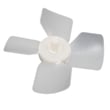
- Listen for fan operation; a failed evaporator fan can cause warm fresh food temps even when the freezer is cold.
Parts that commonly relate to cooling complaints
If you confirm a mechanical issue (noise, no airflow, heavy frost), these parts are often involved:
| Symptom | Common area | Example part for FFTR1814LW4 |
|---|---|---|
| Warm fridge, freezer OK | Evaporator airflow | Refrigerator evaporator fan motor 241854301 |
| Clicking, poor cooling | Sealed system control/protection | Filter drier 5303305677 |
| Frost buildup, warming | Defrost system | Refrigerator defrost heater 242044008 and refrigerator defrost bi-metal thermostat 5303918202 |
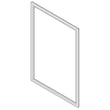
| Moisture, warm spots, long run time | Door seal | Frigidaire refrigerator door gasket (black) 241872512 |
Why it matters
Cooling issues usually get worse over time. A small air leak at the door gasket or a weak evaporator fan can lead to temperature swings, food spoilage, and excessive run time that stresses the compressor.
Helpful DIY reference
- Use how to fix your evaporator cooling fan to understand common fan failure symptoms and what to inspect before replacing parts.
Last updated: January 2026