Owner’s manual
 View engine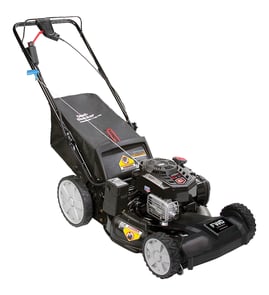



Is a walk behind a mower worth it?
Yes, a walk-behind mower is worth it for most homeowners with small to medium lawns because it costs less, stores easily, and delivers a clean cut. For the Craftsman 917375351, it is also straightforward to maintain with routine blade care, cleaning, and basic tune-up steps in the owner's manual.
When a walk-behind mower is the right choice
A gas walk-behind mower like the Craftsman 917375351 is a strong fit when you value control and maneuverability.
- Your yard is under about 1 acre and has gates, trees, or tight turns
- You want a smaller footprint for storage and transport
- You prefer lower upfront cost and simpler maintenance
- You are comfortable walking speed mowing and occasional overlap passes
- You want mulching, bagging, or side discharge flexibility (when equipped)
What to expect from performance and upkeep
The manual highlights practical mowing tips that affect results and effort, especially in tall or heavy grass.
| Situation | What you will notice | What to do |
|---|---|---|
| Tall or thick grass | More pushing effort, clumping | Raise cut height; mow slower; overlap passes |
| Uneven cut | Scalping or missed strips | Level wheel height settings; clean under deck |
| Excess vibration | Shaking handle | Stop engine; inspect blade and fasteners |
| Hard to push | Dragging in grass | Raise cut height; clear grass buildup |
Parts that commonly affect “worth it” (cut quality and drive)
If the mower is leaving a poor cut or vibrating, the blade and its mounting hardware are the first things we check.
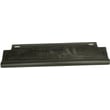
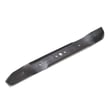
- Inspect and sharpen or replace the lawn mower blade 532406713
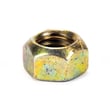
- Replace worn blade hardware such as the hex flange lock nut 532409149 when needed
- If self-propelled drive slips or slows, check the ground drive belt 532196857
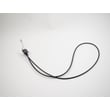
- For drive engagement issues, inspect the lawn mower drive control cable 532197195
Why it matters
A walk-behind mower is “worth it” when it matches your lawn size and you keep the deck clean, the blade sharp, and the drive system adjusted. Those basics reduce mowing time, improve cut quality, and help the engine run cooler and last longer.
Last updated: February 2026
Should I use 87 or 89 gas for lawn mower?
For the Craftsman 917375351 gas walk-behind mower, use regular unleaded gasoline with a minimum of 87 octane; 89 is not needed for normal operation. Use fresh fuel and fill only to the bottom of the filler neck to help prevent spills and hard-starting.
What to use (and what to avoid)
- Use: regular unleaded, 87 octane minimum
- Skip: higher octane (89 or 91) unless you have a specific engine issue being diagnosed
- Avoid: old fuel; buy amounts you can use within about 30 days
- Avoid: mixing oil into the gas (this is a 4-cycle setup)
- Be careful with: alcohol-blended fuels; they can attract moisture during storage
For the exact fuel guidance and tank capacity for your mower, follow the owner's manual.
Quick comparison: 87 vs 89
| Fuel choice | Works in model 917375351? | When it makes sense |
|---|---|---|
| 87 octane (regular) | Yes | Everyday mowing; best match to the manual guidance |
| 89 octane (mid-grade) | Yes, but unnecessary | Only if you are troubleshooting persistent pinging after confirming correct maintenance |
Tips that prevent most fuel-related problems
- If the mower will sit 30 days or longer, empty the fuel system or treat the fuel with stabilizer before storage.
- Wipe up any spilled fuel right away.
- Store gasoline away from ignition sources.
- If starting becomes difficult, check basic tune-up items (spark plug, air filter, fresh fuel) before replacing parts.
Why it matters
Using the correct octane and fresh fuel helps your small engine start easier, run smoother, and reduces varnish and corrosion in the carburetor and fuel system during storage.
Last updated: February 2026
What year is Craftsman Model 917375351?
The Craftsman walk-behind mower model 917.375351 does not have a single “model year” built into the model number. To find the year your specific mower was made, we use the product ID/serial number on the mower and match it to the date-code guidance in the owner's manual.
Where to find the date information
Look for the product identification label on the mower. Common locations include:
- Rear of the deck near the discharge opening
- On the handle support/bracket area
- Near the engine mounting area (on the deck)
- Under the rear door area (if equipped)
Write down both the serial number and any date code shown.
How to interpret the numbers (what usually works)
On many Craftsman 917-series mowers, the model number identifies the design, while the serial/date code identifies when yours was built.
- If you see a 6-digit date code, it is often formatted as MMDDYY
- Example: 072811 typically reads as July 28, 2011
- If your label uses a different format (letters mixed with numbers), use the manual’s identification section to match the code style
Quick reference table
| What you have | What it tells you | What to do next |
|---|---|---|
| Model number (917.375351) | Which parts diagram and parts list to use | Use it to match parts like blade, belt, wheels |
| Serial number/date code | When your mower was built | Decode the date code using the manual guidance |
Why it matters
The build date helps when you are matching engine tune-up parts, drive system parts, and deck hardware because running changes can happen within the same model family.
Parts that commonly depend on exact identification
Once you confirm your mower’s build info, these are common wear items to match carefully:
- Blade and blade hardware (correct length and mounting)
- Drive belt routing and size
- Drive control cable adjustment and length
- Wheels, dust covers, and drive pawls
- Discharge door and spring hardware
If you are replacing a common wear item on this model, the lawn mower blade 532406713 is one of the frequently replaced parts for the 22-inch deck configuration.
Last updated: February 2026