Error Codes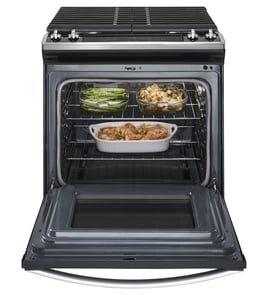


What is the lifespan of a 2 burner gas stove?
Most 2-burner gas stoves typically last about 13 to 15 years with normal use and basic maintenance. For a Hotpoint free standing gas range like RGBS100DM2BB, keeping burners clean and fixing ignition or temperature issues early is what most often extends service life.
- Cooking frequency and heat levels (daily high-heat use shortens life)
- Spillovers and grease buildup around burners and the oven bottom
- Ignition reliability (repeated clicking or delayed ignition stresses components)
- Oven temperature control accuracy (overheating can wear parts faster)
- Ventilation and moisture (corrosion on wiring and gas components)
- Clean burner caps and ports regularly so flames stay even and blue.
- Wipe up boilovers quickly to prevent clogged burner openings.
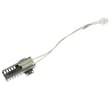
- If the oven won’t light or takes too long to ignite, inspect and replace the bake burner ignition WB13X40208 when it’s the cause.
- If baking temperatures drift hot or cold, troubleshoot the range oven control thermostat WB24X24270.
- Keep the oven door sealing well; a worn gasket wastes heat and increases run time.
| Symptom | Most common cause | Often fixable? |
|---|---|---|
| Oven won’t ignite | Weak igniter, gas valve issue | Yes |
| Uneven baking | Temperature control or heat loss | Yes |
| Smell of gas when off | Gas valve or fitting issue | Service recommended |
| Door won’t seal | Worn gasket or door alignment | Yes |
A gas stove that is clean, ignites quickly, and holds temperature uses less fuel, cooks more evenly, and avoids repeated strain on ignition and control parts. That is the difference between replacing a few parts over time and replacing the whole range early.
Last updated: January 2026
What gas is used in gas stoves?
Most gas stoves, including the Hotpoint RGBS100DM2BB free standing gas range, are set up to run on natural gas or propane (LP gas). Which one you should use depends on how your home is supplied; the range must be configured for that fuel.
- Natural gas: Most common for homes with a gas utility line
- Propane (LP): Common for homes with an outdoor propane tank
- Butane: Used in some regions and specialty setups (less common in the U.S.)
Use these practical checks before you connect or convert anything:
- Look at your home supply: utility gas meter (natural gas) vs. propane tank (LP)
- Check the regulator and burner orifices for markings or a conversion setting
- Confirm the correct orifice sizes are installed for the fuel type
- If flames are very large, very small, yellow, or sooty, stop using the oven and correct the setup
A common part involved in fuel setup is the surface burner orifice; for this model, see the range surface burner orifice WB28K10033.
| Fuel type | Typical home source | What usually changes on the range | Common symptom if wrong |
|---|---|---|---|
| Natural gas | Utility line | Regulator setting, orifices | Weak flame or poor ignition if set for LP |
| Propane (LP) | Tank | Regulator setting, orifices | High flames, yellow flames, soot if set for natural gas |
Using the wrong gas type or the wrong conversion setup can cause poor burner performance, uneven baking, soot buildup, and unsafe combustion. Correct fuel configuration protects the oven burner, igniter system, and gas valve operation.
Last updated: January 2026
What do you use to connect a gas line to a stove?
To connect a gas line to a Hotpoint RGBS100DM2BB gas range, we use an approved flexible gas connector kit (correct length and diameter) plus a shutoff valve and the right fittings for your gas type (natural gas or LP). After connecting, we leak-test every joint.
- Flexible gas range connector kit (usually stainless steel, sized for ranges)
- Manual shutoff valve (accessible after installation)
- Correct adapter fittings for the range and house piping (flare or NPT as required)
- Gas-rated thread sealant or gas-rated PTFE tape (only on NPT threads, not flare seats)
- Non-corrosive leak-detection solution (or soapy water)
- Turn off the gas supply at the shutoff valve.
- Connect the adapter fittings to the house gas supply and to the range inlet.
- Attach the flexible connector between the two adapters; avoid kinks and sharp bends.
- Turn the gas back on.
- Brush leak solution on every connection; bubbles mean a leak. Tighten, recheck, and repeat until no bubbles.
- Never reuse a damaged or kinked flexible connector.
- Keep the connector away from the oven burner area and hot surfaces.
- If you smell gas after tightening and leak-testing, turn gas off immediately and ventilate the area.
If the oven will not light after installation, ignition parts can be involved. For this model, a common ignition component is the bake burner ignition WB13X40208.
| Connection type | What seals it | Sealant used? |
|---|---|---|
| Flare fitting | Metal-to-metal flare seat | No |
| NPT (pipe thread) | Thread interference | Yes, gas-rated |
Using the correct connector kit and fittings helps prevent gas leaks, protects the range gas valve and regulator from stress, and ensures stable burner ignition and flame.
Last updated: January 2026
What is Hotpoint class 2?
Hotpoint “Class 2” is a marketing label used on some Hotpoint ovens to describe a specific feature set or design tier; it is not a service class or a parts category for the Hotpoint gas range model RGBS100DM2BB. For parts and repairs, we recommend focusing on your exact model number and the specific symptom.
On Hotpoint cooking products, “Class 2” commonly shows up in product listings to group ovens with certain styling and cooking features (for example, a particular control layout or cooking modes). It does not change how you identify replacement parts for RGBS100DM2BB.
- It is a product line or series label, not a model number
- It is not a gas type (natural gas vs. LP) indicator
- It is not an error code or diagnostic mode
- It does not replace the appliance rating plate information
For your Hotpoint free standing gas range RGBS100DM2BB, the model number is what ensures correct fit and compatibility.
| Identifier | What it’s used for | Example |
|---|---|---|
| Model number | Correct parts lookup and diagrams | RGBS100DM2BB |
| Part ID | Ordering the exact replacement part | WB24X24270 |
| Symptom | Troubleshooting which part failed | “Oven won’t heat” |
If the “Class 2” question came up because the oven is not heating or igniting, these parts are commonly involved on this model:
- Bake burner ignition WB13X40208 (igniter that lights the bake burner)
- Range oven control thermostat WB24X24270 (temperature control that regulates oven heat)
- Range oven gas valve WB21X35006 (controls gas flow to the oven burner)
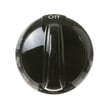
“Class 2” can be useful when comparing Hotpoint ovens while shopping, but it does not help with repair accuracy. Using the exact model number RGBS100DM2BB and the correct part ID prevents ordering the wrong igniter, thermostat, knob, or gasket.
Last updated: January 2026