Owner’s manual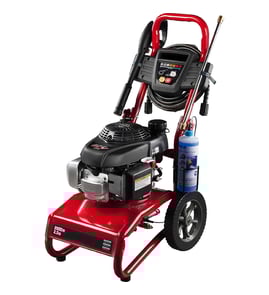



What PSI should my pressure washer be?
For the Craftsman 580752550 gas pressure washer, the rated working pressure is 2550 PSI. That PSI level is a solid fit for most homeowner cleaning jobs like decks, siding, patio furniture, and general driveway rinsing; use the widest spray pattern and proper distance to avoid surface damage.
What 2550 PSI means for real-world cleaning
We recommend matching PSI to the surface and using technique first (spray tip choice, distance, and angle) before assuming you need more pressure.
- Start with a wider spray pattern for safer cleaning
- Test a small, hidden area first to confirm you are not etching or stripping the surface
- Keep the nozzle 8 to 24 inches from the surface for most cleaning
- Avoid holding the trigger off for long periods; heat can build in the pump
- Use detergent only when the wand is in low-pressure mode (per the operating instructions)
Quick PSI guide (typical homeowner ranges)
| Task | Typical PSI range | Notes |
|---|---|---|
| Car washing | 1200 to 1900 | Use a wide fan tip and more distance |
| Decks and fences | 1500 to 2500 | Test first; wood can fuzz or gouge |
| Siding | 1300 to 2500 | Keep distance; avoid forcing water behind siding |
| Concrete (light duty) | 2500 to 3000 | Use steady passes; do not linger |
If your PSI seems too low on this model
A Craftsman 580752550 that feels weak is usually dealing with a restriction, air leak, or worn spray components.
- Confirm the water supply meets the manual guidance (adequate flow and at least 20 PSI at the hose end)
- Purge air from the pump by squeezing the trigger with water on before starting
- Check for kinks, cuts, or loose fittings on the high-pressure line
- Clean or replace a clogged nozzle; a worn tip can also reduce cleaning performance
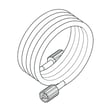
- Inspect the high-pressure line for internal damage; replace the hose 84006753 if it is compromised
Why it matters
Using the right PSI (and the right spray technique) prevents surface damage, improves cleaning speed, and reduces strain on the pump and engine. For the exact specifications and operating limits for your unit, follow the Craftsman 580752550 owner's manual.
Last updated: January 2026
Is it worth repairing a pressure washer?
Yes, repairing a Craftsman pressure washer model 580752550 is worth it when the problem is a wear item or simple maintenance issue (hose leak, clogged nozzle, O-rings, tune-up). If the pump or engine has major internal damage, replacement usually makes more sense.
Quick decision checklist
- Repair if the unit starts reliably and the issue is a leak, clog, or worn seal
- Repair if you can fix it with basic tools and a low-cost part
- Repair if the frame, wheels, and connections are in good shape
- Replace if the pump was run without water and now has low pressure or loud knocking
- Replace if the engine has persistent power loss, heavy smoke, or won’t stay running after tune-up
- Replace if repair cost is close to half the price of a comparable new gas pressure washer
Common “worth it” repairs on model 580752550
Many problems are caused by parts that wear normally or by maintenance items called out in the manual.
| Symptom | Likely cause | Typical fix |
|---|---|---|
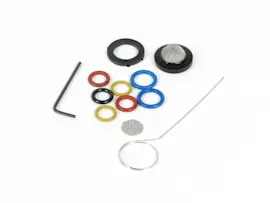
| Water leaking at connections | Worn seals | Replace O-rings and reseat fittings |
| Low pressure or surging | Clogged nozzle or inlet screen | Backflush nozzle, clean inlet screen |
| Hose damage or bulging | Worn/kinked high-pressure hose | Replace the hose (do not patch) |
| Poor spray pattern | Worn or clogged tip | Clean or replace nozzle jet |
Helpful model-matched parts include the hose 84006753 and the pressure washer spray nozzle jet 94804GS.
Why it matters
A pressure washer pump can be damaged quickly if it runs without water. Preventing that kind of failure keeps repairs in the “small and affordable” category instead of turning into a pump replacement decision.
Repair tips that protect your investment
Use the maintenance and safety steps in the 580752550 owner's manual. Key habits:
- Check for hose leaks, cuts, and bulges before each use
- Keep the water inlet screen clean
- Purge air from the pump before spraying
- Keep the spray nozzle 8 to 24 inches from the surface
- Never repair a high-pressure hose; replace it
Last updated: January 2026
Can you put 87 gas in a pressure washer?
Yes. For the Craftsman pressure washer model 580752550, regular unleaded gasoline with an 87 octane rating is the correct everyday fuel choice. Use fresh fuel, add it only after the engine is off and cooled, and follow the fueling steps in the 580752550 owner's manual.
Fuel type and what to avoid
For most gas pressure washers like the Craftsman 580752550, the goal is clean, fresh fuel that will not create deposits in the carburetor during use or storage.
- Use fresh, regular unleaded gasoline (87 octane)
- Avoid stale fuel (older than about 30 days without stabilizer)
- Do not overfill the tank; leave room for expansion
- Keep fuel away from sparks, open flames, and heat sources
- Store fuel and the unit away from appliances with pilot lights
Safe fueling steps (model 580752550)
The manual’s safety guidance is clear: shut down, cool, then fuel outdoors.
- Turn the pressure washer OFF.
- Let it cool at least 2 minutes before removing the gas cap.
- Fill the fuel tank outdoors.
- Do not overfill; tighten the cap securely.
Quick reference table
| Situation | What we recommend | Why it matters |
|---|---|---|
| Normal operation | 87 octane unleaded | Reliable starting and stable running |
| Seasonal storage | Fresh fuel plus stabilizer | Helps prevent gum deposits in the fuel system |
| Long storage (30+ days) | Prep fuel system per manual | Reduces corrosion and carburetor issues |
Why it matters
Using the right fuel and fueling safely helps prevent hard starting, surging, and fuel-system damage. The manual also notes that alcohol-blended fuels can attract moisture during storage, which can lead to fuel separation and acidic byproducts that harm the fuel system.
Related maintenance tip
If you are putting the unit away for the season, follow the storage steps in the 580752550 owner's manual and consider reviewing steps for winterizing and storing a pressure washer to protect the pump and seals.
Last updated: January 2026
How to tell if your pressure washer pump is bad?
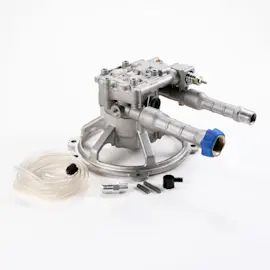
A bad pump on a Craftsman pressure washer model 580752550 usually shows up as low or surging pressure, water leaks at the pump, or abnormal noise. Before condemning the pump, we verify the water supply, purge air from the system, and rule out a clogged nozzle as outlined in the 580752550 owner's manual.
Quick signs the pump is failing
- Pressure is consistently low even with a clean nozzle and correct setup
- Pressure pulses or surges while holding the trigger
- Water leaks from the pump head or fittings (not just a loose hose connection)
- Grinding, rattling, or squealing sounds from the pump area
- Pump oil looks milky or discolored (water intrusion) on pumps with an oil crankcase
Rule out common “not a bad pump” causes first
The manual steps below prevent pump damage and also help you diagnose correctly.
- Confirm you are using cold water under 100°F
- Make sure the water source can supply more than 3.5 GPM and at least 20 PSI at the end of the garden hose
- Inspect and clean the pump inlet screen; do not run the unit if the inlet screen is damaged
- Purge air: hold the trigger until you get a steady stream with no air sputter
- Check for kinks, cuts, or loose connections in the high-pressure hose and garden hose
What to check and what it suggests
| What you observe | Most likely cause | What we do next |
|---|---|---|
| Pulsing pressure | Clogged/restricted nozzle or excessive pump pressure | Clean nozzle and in-line filter; retest |
| Low pressure only with one tip | Worn or partially blocked nozzle | Try a different tip; clean/replace nozzle |
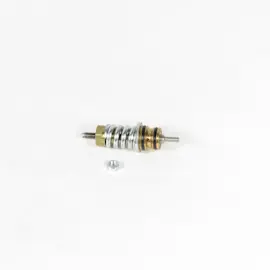
| Low pressure with all tips | Water supply issue, air in system, unloader issue, or pump wear | Verify supply and purge air; then inspect pump/unloader |
| Water leaking from pump head | Worn seals, cracked head, loose fittings | Tighten fittings; if still leaking, plan pump service |
Why it matters
Running the 580752550 with poor water supply, air in the pump, or a damaged inlet screen can quickly overheat and score internal pump parts. Correct setup protects the pump and prevents replacing good parts.
Parts that are often involved in pressure problems
If you find hose damage or a connection leak during checks, replacing the hose can restore pressure and stop air from entering the system. Use the model-matched hose 84006753 when the high-pressure hose is worn, kinked, or leaking.
Last updated: January 2026