Owner’s manual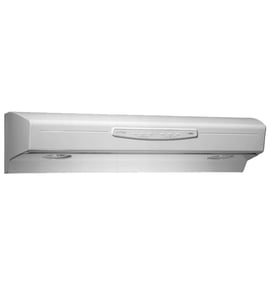



How do I know what model range hood I have?
To identify your Kenmore range hood model, find the rating label on the hood and read the model number printed on it. On model 23352052002, the label is commonly located on the top of the hood, on the underside, or behind the grease filter.
Where to look for the model number label
Check these common spots first:
- Top of the hood (often easiest to see if the hood is inside a cabinet)
- Underside of the hood near the light area or fan opening
- Behind the grease filter (remove the filter and look on the inner frame)
- Inside the wiring cover area (only after power is off at the breaker)
What the label looks like and what to write down
The label usually includes several identifiers. Record these exactly:
- Model number (most important for parts lookup)
- Serial number (helps confirm production run)
- Electrical rating (often 120 VAC for household hoods)
| Label item | Why it matters | Example format |
|---|---|---|
| Model number | Ensures correct parts and diagrams | 23352052002 |
| Serial number | Helps match revisions | Letters and numbers |
| Electrical rating | Confirms wiring and switches | 120 VAC |
Safety first before checking inside panels
If you need to look behind a filter or near wiring, follow these basics:
- Switch power off at the service panel (breaker) before opening any cover
- Let bulbs and metal surfaces cool before touching
- Use a flashlight; avoid pulling on wires
Why it matters
Using the exact model number prevents ordering the wrong Kenmore parts (like a range hood grease filter, fan switch, or control knob) and helps you follow the correct installation and wiring instructions.
For diagrams and model-specific details, use the 23352052002 owner’s manual.
Last updated: January 2026
How much does it cost to replace a kitchen vent hood?
Replacing a kitchen vent hood typically costs $300 to $850 for a straightforward swap, plus the price of the hood itself (often $100 to $600). If you add new ductwork, electrical work, or convert venting styles, total cost commonly rises to $650 to $2,100.
What drives the total replacement cost
- Venting type: ducted to outside vs non-ducted (recirculating)
- Ductwork changes: new duct run, roof or wall cap, elbows, and labor
- Electrical work: adding or relocating an outlet, wiring repairs
- Mounting height and fit: cabinet modifications, backsplash clearance
- Condition issues: grease buildup, damaged wiring, or a worn fan motor
Typical cost ranges (quick guide)
| Scenario | What’s included | Typical total cost |
|---|---|---|
| Like-for-like replacement | Remove old hood, install similar hood | $300 to $850 + hood |
| New hood with ductwork/outlet | New ducting and electrical updates | $650 to $2,100 |
| Commercial-style installation | Larger system, heavier ducting, make-up air considerations | $9,000 to $19,500 |
Model-specific notes for Kenmore 23352052002
Your Kenmore 23352052002 range hood is designed to be mounted with the top of the hood 24 to 30 inches above the cooking surface, which can affect labor if cabinets or ducting need adjustment. For the exact mounting and wiring steps, follow the 23352052002 owner’s manual.
When repair is the better value
If the hood housing and ducting are in good shape, replacing a failed part is often cheaper than replacing the entire unit. Common examples include:
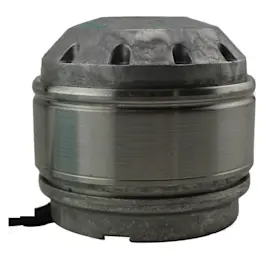
- Motor (gray) 99080667 if the fan motor is noisy or won’t run
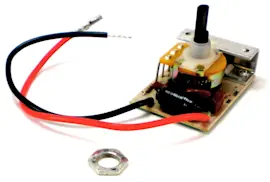
- Range hood fan switch SR99030319 if fan speeds do not change or the fan won’t turn on
- Range hood grease filter S99010316 if airflow is reduced due to a clogged filter
Why it matters
A properly installed range hood improves smoke and grease capture, helps protect cabinets, and reduces lingering odors. Keeping filters clean and the fan running correctly can also prevent overheating and nuisance performance issues.
Last updated: January 2026
Is it worth repairing a range hood?
Yes; repairing your Kenmore range hood model 23352052002 is worth it when the problem is limited to common wear items (switches, filters, light components) or airflow restrictions. Replacement is the better value when the motor is failing repeatedly, the hood is unsafe, or repair cost is about half the price of a comparable new hood.
When repair is the better choice
We recommend repair when the hood still fits your kitchen and the issue is isolated.
- Airflow is weak because the grease filter or baffle is clogged
- Lights or fan work intermittently due to a worn switch or loose connection
- The fan is noisy because the blade is damaged or rubbing
- You want to keep the existing ducting and mounting height (many hoods perform best about 24 to 30 inches above the cooktop)
For model-specific operation and safety steps, use the 23352052002 range hood manual.
When replacement is the better value
Replacement makes sense when the repair is major or the hood no longer meets your needs.
- The fan motor is seized, overheats, or trips the breaker repeatedly
- Multiple functions fail at once (fan and lights), pointing to broader electrical issues
- Venting is wrong for your setup (ducted fans must vent outdoors)
- You are remodeling and want higher airflow (CFM), quieter operation, or different lighting
Quick decision guide
| Situation | Best choice | Why |
|---|---|---|
| Filter or baffle is restricted | Repair/maintenance | Restores airflow and reduces grease buildup |
| Switch or knob is broken | Repair | Low complexity, targeted fix |
| Fan blade damaged or rubbing | Repair | Often resolves noise and vibration |
| Motor failure | Compare total cost | Highest-cost repair on most hoods |
Parts that commonly make repair worthwhile
- Range hood fan switch SR99030319 for a fan that will not turn on or changes speeds inconsistently
- Motor (gray) 99080667 when the fan hums, stalls, or will not run
- Range hood grease filter S99010316 when airflow drops and grease accumulates
Why it matters
A working range hood captures smoke and grease; regular cleaning reduces grease buildup and fire risk.
Last updated: January 2026