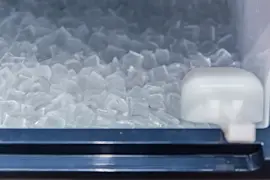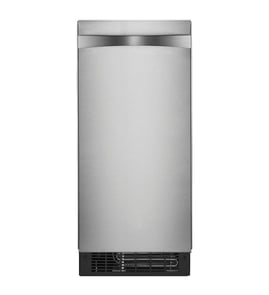




Can you run a KitchenAid ice maker without a filter?
Yes. You can run the KitchenAid KUID508HPS01 freestanding ice maker without a water filter installed; it will still make ice, but the incoming water will not be filtered. For best taste and to reduce mineral buildup, we recommend using a filter whenever your water quality calls for it.
How to run it without the filter
If you are bypassing the filter temporarily, keep the filter housing sealed correctly so you do not create a leak or air draw.
- Turn the ice maker off before removing or reinstalling anything
- Remove the filter (if installed) and keep the filter cap available
- Reinstall the cap or bypass piece as designed so it seats fully
- Turn the ice maker back on and let it run a few cycles
- Discard the first batch or two of ice if you notice odor or debris
What changes when you skip the filter
Running without a filter mainly affects water quality and maintenance frequency.
| Item | With filter | Without filter |
|---|---|---|
| Ice taste/odor | Typically improved | Depends on household water |
| Scale buildup risk | Lower | Higher (especially hard water) |
| Service/cleaning frequency | Typically less often | Typically more often |
| Ice production | Usually unchanged | Usually unchanged |
When a “no filter” setup causes problems
If the unit runs but performance drops, focus on water flow and circulation.
- Slow fill or hollow cubes can point to a supply restriction or inlet valve issue
- Cloudy ice and fast scale buildup often point to hard water and the need for more frequent cleaning
- Water leaks after removing the filter usually mean the cap or housing is not seated correctly
- Poor circulation during freeze can involve the recirculation pump
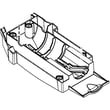
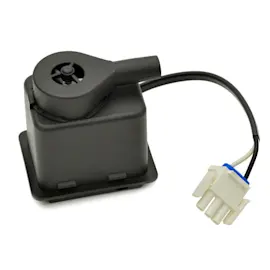
If you suspect a circulation issue, the pump-recircu W11542867 is the model-matched recirculation pump used to move water across the evaporator during the freeze cycle.
Why it matters
A filter is not required for operation, but it helps protect ice quality and reduces mineral deposits that can shorten component life (pump, valve, evaporator) and increase cleaning needs.
Last updated: January 2026
Why is my KitchenAid icemaker not making ice?
If your KitchenAid freestanding ice maker model KUID508HPS01 is running but not making ice, the most common causes are no water supply, a failed water inlet valve, poor water circulation over the evaporator, or a control issue stopping the harvest cycle.
Quick checks we recommend first
- Confirm the shutoff valve to the ice maker is fully open.
- Make sure the unit is powered on and the rocker switch is on (if equipped).
- Verify the water line is not kinked and the inlet screen is not clogged.
- Check that the condenser area has airflow and is not packed with dust.
- Look for a frozen-up water system (ice buildup in the reservoir or on the evaporator).
What usually fails (and what it looks like)
| Symptom | Likely cause | What you’ll notice |
|---|---|---|
| No water entering | Water supply issue or inlet valve | Reservoir stays low or empty |
| Water enters but no ice forms | Recirculation problem | Water not flowing evenly over the evaporator |
| Unit seems “dead” or erratic | Control problem | Random stops, no cycle progression |
| Ice slab forms but won’t cut | Cutter grid issue | Thick slab, no cubes dropping |
Parts that commonly fix “no ice” on this model
- If water is not filling consistently, check the valve W10897719 (water inlet valve that controls fill water).
- If water is not circulating over the evaporator, check the pump-recircu W11542867 (recirculation pump that moves water during the freeze cycle).
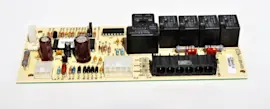
- If the unit has power but won’t run cycles correctly, the electronic control can be involved; see how to replace a freestanding ice maker electronic control board.
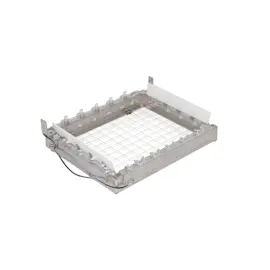
- If the ice slab forms but does not cut into cubes, inspect the cutter grid; see how to replace a freestanding ice maker cutter grid.
Why it matters
An ice maker can run without producing ice when it cannot fill, cannot circulate water, or cannot complete the freeze and harvest sequence. Fixing the correct stage (fill, circulate, freeze, harvest, cut) prevents repeat failures and wasted parts.
Last updated: January 2026
How to reset a KitchenAid refrigerator ice maker?
For the KitchenAid KUID508HPS01 freestanding ice maker, a “reset” is usually a power reset that restarts the control and forces the unit to re-home and begin a fresh ice-making cycle. After the restart, the unit should resume normal fill, freeze, and harvest operation.
Quick reset steps (safe, no tools)
- Turn the ice maker OFF using the power switch (or control) and wait 30 seconds.
- Unplug the unit (or switch the breaker OFF) for 5 minutes.
- Restore power, then turn the unit ON.
- Allow time for the system to stabilize; the first batch can take longer after a reset.
- If the unit runs but does not make ice after resetting, use the checks below.
What to check if a reset does not fix it
- Water supply: Confirm the shutoff valve is fully open and the supply line is not kinked.
- Fill problems: If you hear no water entering during a cycle, a water inlet valve can be the cause; see valve W10897719.
- No circulation over the evaporator: Weak or no water flow across the freeze plate often points to the recirculation pump; see pump-recircu W11542867.
- Not harvesting or acting “dead”: A failed control can prevent cycling; see how to replace a freestanding ice maker electronic control board.
- Runs but no ice: Use the symptom checklist in ice maker runs but no ice to narrow it down.
Common symptoms and likely next step
| What you notice | Most likely area to check | Typical next step |
|---|---|---|
| Unit powers on, no water sound | Water inlet valve, supply | Verify supply; consider valve replacement |
| Water present, no sheet of ice forming | Recirculation flow, refrigeration | Check pump flow; clean scale; verify cooling |
| Ice forms but will not release/cut | Harvest/cutter system | Inspect cutter grid and harvest action |
| Random stops or won’t start cycle | Control/electrical | Power reset; inspect wiring; test control |
Why it matters
Resetting clears minor control glitches and reinitializes the ice-making sequence. If a component like the inlet valve, recirculation pump, or electronic control is failing, a reset may briefly help but the symptom will return until the underlying part is corrected.
Last updated: January 2026