Owner’s manual
 Error Codes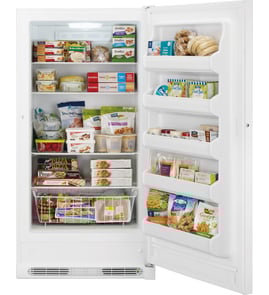


How can I tell how many cubic feet my freezer is?
To estimate the cubic feet of your Frigidaire LFFH21F7HWC upright freezer, we calculate the usable interior volume by measuring the inside height, width, and depth in inches, then dividing by 1,728 to convert cubic inches to cubic feet. For model-specific capacity details, check the LFFH21F7HWC owner's manual.
- Empty the freezer enough to measure the interior walls accurately.
- Measure the inside width (left to right) in inches.
- Measure the inside depth (back wall to inside of the door liner) in inches.
- Measure the inside height (floor to ceiling) in inches.
- Multiply:
width × depth × height. - Divide by 1,728 to get cubic feet.
If the interior measures 20 in (W) × 18 in (D) × 60 in (H):
| Measurement | Inches |
|---|---|
| Width | 20 |
| Depth | 18 |
| Height | 60 |
| Total cubic inches | 21,600 |
| Cubic feet (÷ 1,728) | 12.5 |
- Measure to the flat interior surfaces, not around shelves, bins, or the door gasket folds.
- If the back wall has an interior hump or ducting, measure to the point where food can actually sit.
- For the most practical storage estimate, subtract a small amount for rounded corners and air channels (many upright freezers lose a bit of usable space to airflow design).
Cubic feet helps you plan food storage and freezing loads. As a rule of thumb, many freezers handle about 3 lb of fresh food per cubic foot at one time; overloading can slow freezing and affect temperature recovery.
Last updated: January 2026
What is the life expectancy of a Frigidaire upright freezer?
A Frigidaire upright freezer like model LFFH21F7HWC typically lasts about 12 to 20 years, with around 16 years being a common average when it is installed correctly, kept level, and the door seals tightly. Use the LFFH21F7HWC owner's manual for care and setup details that help maximize lifespan.
Most upright freezers reach the higher end of the range when they run efficiently and avoid heavy frost buildup.
- Installation and leveling: A freezer that is not level can cause the door to misalign and not seal, leading to moisture, frost, and extra run time.
- Door seal condition: A leaking gasket lets warm air in, which increases compressor run time.
- Defrost and cleaning habits: Excess frost acts like insulation and reduces cooling efficiency.
- Room temperature and airflow: Hotter spaces and poor air circulation make the freezer work harder.
- How often the door is opened: Frequent openings add warm, moist air and speed frost accumulation.
These steps match common Frigidaire upright-freezer care practices and the setup guidance in the manual.
- Keep the cabinet level so the door closes easily and seals.
- Leave enough space for air circulation around the freezer.
- Defrost and clean when frost reaches about 1/4 to 1/2 inch.
- Use a plastic scraper, never metal tools, to remove frost between defrostings.
- If you have alarms, respond quickly to Door Ajar warnings to limit warm-air intrusion.
| Freezer age | What you may notice | What to do |
|---|---|---|
| 0 to 5 years | Steady temps, normal cycling | Maintain airflow and keep it level |
| 6 to 12 years | More frost if door is opened often | Defrost on schedule, check door seal |
| 13 to 20 years | Longer run times, more sensitivity to warm rooms | Improve ventilation, consider key parts if performance drops |
A freezer that runs longer to maintain temperature wears the sealed system and controls faster. Keeping LFFH21F7HWC level and sealed reduces frost, moisture, and compressor workload, which directly supports a longer service life.
Last updated: January 2026
What is the most common freezer problem?
The most common problem we see on the Frigidaire LFFH21F7HWC upright freezer is frost or moisture buildup caused by warm, humid air getting into the cabinet, usually from frequent door openings or a door that is not sealing correctly. Use the LFFH21F7HWC owner's manual troubleshooting guide to pinpoint the cause.
- Frost on inside walls: door opened too often or not sealing well
- Freezer runs too much/too long: warm air leaks in, temperature set too cold, or recent warm food load
- Moisture on the outside of the cabinet: door not seating, humid room air condensing
- Door will not close: freezer not level, floor uneven, door misaligned
- Rattling/vibration noise: freezer not level or touching a wall
- Confirm the door closes easily and evenly all the way around.
- Inspect the gasket for dirt, gaps, cracks, or areas that look flattened.
- Reduce door-open time and avoid holding the door open while loading food.
- Verify the temperature control is not set colder than needed; allow several hours after changes.
- Make sure the freezer is level and not rocking.
If the gasket is worn or leaking, replacing it is one of the most effective fixes.
| Symptom | Most likely area | Common fix |
|---|---|---|
| Frost inside cabinet | Door seal/usage | Clean or replace gasket; open door less |
| Moisture outside cabinet | Door not seating | Level freezer; correct door alignment |
| Runs too long | Air leak or settings | Warmer setting; fix gasket leak |
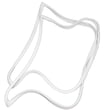
If you determine the seal is the issue, the correct replacement for this model is the freezer door gasket 5304507199.
Frost and moisture problems are not just cosmetic; air leaks make the compressor run longer, can cause temperature swings, and can lead to freezer burn and higher energy use.
Last updated: January 2026
Is it worth repairing an upright freezer?
Yes, it’s worth repairing a Frigidaire upright freezer like model LFFH21F7HWC when the problem is a single, straightforward failure (door sealing, defrost, fan, or controls) and the total repair cost stays well below the cost of replacement. If the sealed system or compressor is involved, replacement is usually the better value.
Use this checklist to make a clear repair vs. replace call:
- Compare total cost: parts + labor + service call vs. a new upright freezer.
- Identify the system: cooling/defrost/airflow issues are often repairable; sealed-system issues are typically expensive.
- Check for simple causes first: leveling and door seal problems can create frost, moisture, and warm temps.
- Consider food loss risk: recurring temperature swings can spoil food even if the freezer “runs.”
- Look at part availability: common parts (fan motor, defrost thermostat, control board) are usually practical repairs.
These are typical “high value” repairs because they address common failures without sealed-system work:
| Symptom | Likely area | Example part for LFFH21F7HWC |
|---|---|---|
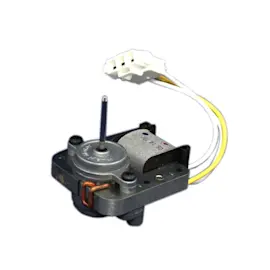
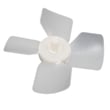
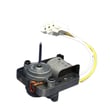
| Warm freezer but fan is quiet | Airflow | Freezer evaporator fan motor 297309000 |
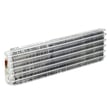
| Heavy frost on back wall, poor cooling | Defrost system | Refrigeration appliance defrost bi-metal thermostat 297216600 |
| Door won’t close easily, frost/moisture | Door seal/leveling | Freezer door gasket 5304507199 |
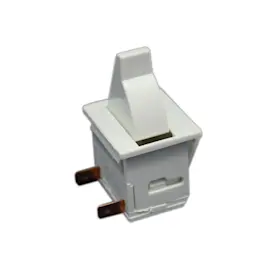
| Beeping or “Door Ajar” light | Door switch/door not sealing | Crosley freezer door switch 297243800 |
These problems often cost more because they involve refrigerant handling or major components:
- Compressor not starting or running properly
- Sealed-system leaks or restrictions
- Repeated warm temperature after basic airflow and defrost checks
If you suspect a compressor issue, the part commonly associated with that repair on this model is compressor 5304478809, but sealed-system diagnosis and repair is typically a technician job.
The LFFH21F7HWC needs to be level so the door closes and seals correctly. A misaligned door can cause cooling problems, frost buildup, and moisture issues. We recommend following the leveling steps in the LFFH21F7HWC owner’s manual.
Last updated: January 2026