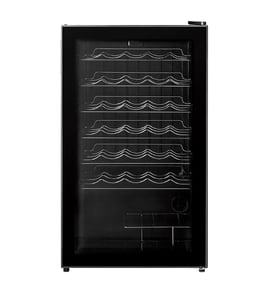

Does a wine chiller use a lot of electricity?
A Vinotemp VT182 wine and beverage cooler typically does not use a lot of electricity compared with full-size refrigerators; most units of this type run at roughly 100 to 150 watts while the compressor is running, and actual usage depends on room temperature, door openings, and temperature settings.
What affects electricity use the most
- Room temperature: Hotter rooms make the compressor run longer.
- Set temperature: Colder settings increase run time.
- Door openings: Warm air entering forces longer cooling cycles.
- Ventilation/clearance: Poor airflow around the cabinet raises energy use.
- Dust on condenser coils (if accessible): Reduces heat transfer and efficiency.
- Load and bottle temperature: Warm bottles take extra energy to pull down.
Quick way to estimate cost
Wine chillers cycle on and off, so the best estimate comes from measuring real use with a plug-in energy meter.
| What you know | What to do | What you get |
|---|---|---|
| Metered kWh over 24 hours | Multiply by 30 | Approx. monthly kWh |
| Your electric rate ($/kWh) | Multiply by monthly kWh | Approx. monthly cost |
Tips to reduce power use (without hurting cooling)
- Keep the unit out of direct sunlight and away from ovens or heat vents.
- Leave proper clearance around vents so heat can escape.
- Minimize door openings; organize bottles so you can grab items quickly.
- Set a realistic target temperature (for many wines, mid-50s°F is common).
- Clean dust from vents and any accessible condenser area.
Why it matters
Lower run time means steadier temperatures for wine storage, less compressor wear, and lower operating cost over the life of your Vinotemp VT182.
For general DIY safety and planning before checking electrical components, use our guide: are diy appliance repairs safe.
Last updated: February 2026
What is the difference between a wine cooler and a beverage cooler?
A wine cooler is built to store wine at stable serving and short-term aging conditions (typically about 45 to 65°F) with gentler operation, while a beverage cooler is built to chill mixed drinks like soda and beer colder (often about 35 to 50°F) with shelving that prioritizes cans and bottles. Your Vinotemp VT182 is a wine and beverage cooler, so it’s designed to handle both use cases.
Key differences that affect performance
- Temperature range: Wine storage is usually warmer; beverage chilling is usually colder.
- Temperature stability: Wine benefits from smaller swings; beverages are more forgiving.
- Humidity needs: Wine storage often benefits from moderate humidity; beverages do not require it.
- Vibration and noise: Wine storage favors lower vibration to protect sediment and flavor development.
- Interior layout: Wine coolers often use racks; beverage coolers typically use flat, adjustable shelves.
Quick comparison
| Feature | Wine cooler | Beverage cooler |
|---|---|---|
| Best for | Wine bottles | Cans, beer bottles, mixers |
| Typical setpoint | 45 to 65°F | 35 to 50°F |
| Shelving | Racks sized for bottles | Adjustable shelves for varied sizes |
| What you notice most | Stability and bottle-friendly storage | Faster, colder chilling and flexibility |
How we recommend using a combo unit like the Vinotemp VT182
- Set 45 to 55°F for most reds and whites you plan to serve soon.
- Set 37 to 42°F if the priority is cold beer, soda, or sparkling water.
- Avoid overpacking; leave space for airflow so the cabinet cools evenly.
- Keep the door closed as much as possible; frequent openings cause temperature swings.
- If you store corked wine long-term, store bottles on their side when your rack layout allows.
Why it matters
Choosing the right cooler type (or setting up a combo model correctly) protects flavor and carbonation, reduces temperature swings, and helps your compressor run more efficiently, which can extend the life of the cooler.
For general DIY repair readiness and tool basics that apply to coolers, we recommend must have tools for appliance repair.
Last updated: February 2026
What is the average lifespan of a wine fridge?
A wine fridge (including the Vinotemp VT182 wine and beverage cooler) typically lasts 10 to 15 years with normal home use. Consistent ventilation, stable room temperature, and clean condenser airflow are the biggest factors that help the compressor and controls reach that lifespan.
Typical lifespan and what affects it
Most wine and beverage coolers fall into a fairly predictable range, but real-world life depends on heat load and maintenance.
- Ventilation and clearance: restricted airflow makes the compressor run longer and hotter
- Room temperature: hot garages or tight cabinets shorten compressor life
- Door seal condition: air leaks cause long run times and temperature swings
- Condenser cleanliness: dust buildup reduces heat transfer
- Power quality: frequent outages or surges stress the control board and compressor
Quick care checklist (best ROI)
Use these steps to keep your VT182 running efficiently year-round:
- Vacuum dust from the condenser intake/exhaust area every 3 to 6 months
- Keep the unit level so the door closes squarely and seals evenly
- Avoid overpacking; leave space for air circulation between bottles/cans
- Minimize door openings; temperature recovery is slower in compact coolers
- Verify the door gasket grips paper evenly all the way around (simple seal check)
What “end of life” usually looks like
These symptoms often show up as a cooler approaches replacement time:
| Symptom | Most common cause | What to do first |
|---|---|---|
| Warmer than set temp | Dirty condenser or poor airflow | Clean vents, improve clearance |
| Runs constantly | Door gasket leak or hot room | Check seal, relocate if needed |
| Clicking, then stops | Start device or compressor issue | Unplug 5 minutes, retry; then diagnose |
| Frost or sweating | Door not sealing or frequent openings | Check gasket and loading |
Why it matters
A wine fridge that is forced to run hot or nonstop can lose temperature stability, which affects wine storage and increases energy use. Basic airflow and seal maintenance usually adds years of reliable cooling.
For more DIY basics that apply to appliance maintenance and troubleshooting, see easy diy appliance repairs that anyone can do.
Last updated: February 2026
Can wine coolers be repaired?
Yes. A Vinotemp VT182 wine and beverage cooler can usually be repaired when the problem is isolated to a serviceable component (power supply issue, fan, thermostat/control, door seal, or wiring). Sealed-system failures (compressor or refrigerant leak) are repairable but typically require a licensed refrigeration technician.
What you can troubleshoot first (safe, common checks)
- Confirm the outlet has power and the plug is fully seated; reset the tripped breaker if needed.
- Verify the temperature setting is not set to its warmest setting.
- Clean dust from the condenser area and make sure airflow is not blocked.
- Check that the door closes squarely and the gasket seals all the way around.
- Listen for the evaporator fan inside the cabinet; a failed fan often causes warm zones.
- Look for pinched, loose, or heat-damaged wires near the control area.
What usually determines “repairable” vs “replace it”
| Symptom | Most common cause | Typical repair path |
|---|---|---|
| No power, no lights | Outlet, cord, internal fuse/control | Electrical diagnosis, replace failed electrical part |
| Runs but not cold | Dirty condenser, fan issue, control issue | Cleaning, fan/control replacement |
| Frost buildup, uneven temps | Door seal leak, fan issue, defrost/control issue | Gasket adjustment, fan/control service |
| Clicking, short cycling | Start device/control, compressor issue | Electrical test first; sealed-system service if needed |
When to stop DIY and use a technician
- You smell burning insulation, see melted connectors, or the unit trips the breaker repeatedly.
- The compressor is extremely hot and the cooler never reaches temperature.
- You suspect a refrigerant leak (oil residue near tubing, persistent poor cooling).
Why it matters
Quick checks like airflow, door sealing, and basic electrical testing often fix “not cooling” complaints without major parts. If the issue is sealed-system related, getting an accurate diagnosis early prevents repeated restarts that can stress the compressor.
For tools and safe testing basics, we recommend reviewing how to use a multimeter to test electrical parts video.
Last updated: February 2026
What is the most common problem with wine coolers?
The most common problem we see with wine coolers (including the Vinotemp VT182) is inconsistent cooling: the cabinet temperature drifts warmer or swings up and down. In most cases, the root cause is restricted airflow (dusty condenser area, blocked vents), a weak door seal, or a control/thermostat issue.
Most common symptoms and what they usually point to
- Not cold enough: dirty condenser, poor ventilation clearance, weak compressor start components, low refrigerant (sealed-system issue)
- Temperature fluctuates: door gasket leak, frequent door openings, sensor/thermostat problem, fan airflow problem
- Runs constantly: warm room location, blocked airflow, door not sealing, condenser fan not moving air
- No power: outlet/GFCI issue, blown internal fuse (if equipped), damaged cord, control board problem
- Water inside: clogged drain path, high humidity, door left ajar
Quick checks we recommend first (no tools)
- Confirm airflow: keep front and rear vents clear; do not pack bottles/cans against interior vents.
- Clean dust: vacuum the grille and condenser area (unplug first).
- Check the door seal: close a sheet of paper in the door; if it slides out easily, the gasket is leaking.
- Verify the setting: set a stable target temperature and give the unit 24 hours to stabilize.
- Room conditions: move the cooler away from ovens, direct sun, and tight cabinets that trap heat.
Common causes vs. DIY difficulty
| Likely cause | What you notice | DIY difficulty | Typical fix |
|---|---|---|---|
| Dirty condenser / blocked vents | Warmer temps, long run times | Easy | Clean and improve clearance |
| Door gasket leak | Sweating, temp swings | Easy to moderate | Reseat/replace gasket |
| Fan problem (evaporator or condenser) | Warm spots, noise, poor airflow | Moderate | Inspect fan, wiring, blade obstructions |
| Thermostat/sensor issue | Erratic temps, short cycling | Moderate | Test sensor/control inputs |
| Sealed-system/compressor issue | Not cooling despite good airflow | Pro-level | Sealed-system service |
Why it matters for wine storage
Stable temperature protects flavor and aroma. Temperature swings force the compressor to work harder, increase condensation, and can shorten the life of key components like the compressor, fan motors, and electronic control.
Helpful DIY reference
If you need to check power, wiring, or a fan circuit, we use the same safe testing approach shown in how to use a multimeter to test electrical parts video.
Last updated: February 2026