Owner’s manual
 Error Codes



How much does it cost to install a new 50 gallon electric water heater?
Installing a new 50-gallon electric water heater typically costs about $800 to $2,500 for the heater plus professional installation. Your final price depends most on whether plumbing or electrical upgrades are needed and whether the install requires code-related changes; see the 153321642 owner's manual for installation requirements that can affect labor.
What drives the total installed price
- Heater type and efficiency (standard electric vs. higher-efficiency models)
- Electrical work (new breaker, wiring, disconnect, or conduit)
- Plumbing changes (shutoff valve, expansion tank, new piping, fittings)
- Location and access (attic, crawlspace, tight closet, stairs)
- Permit and inspection requirements in your area
- Haul-away and disposal of the old tank
Typical cost breakdown (common ranges)
| Cost item | Typical range | Notes |
|---|---|---|
| 50-gallon electric water heater | $400 to $1,500 | Brand, warranty length, efficiency |
| Labor (remove and replace) | $400 to $1,200 | Access and complexity drive this |
| Materials and code items | $0 to $800 | Valves, piping, electrical parts |
| Permit/inspection | $0 to $300 | Varies by city/county |
How to estimate your price quickly
- If you are doing a straight swap (same size, same location, existing wiring and piping), plan on the lower end of the range.
- If the installer must add or replace safety and service items (valves, piping, electrical disconnect), plan on the middle to upper end.
- If you are changing size, moving the heater, or correcting older non-code work, plan on the upper end.
Why it matters
A water heater install is not just “set the tank and hook it up”. Correct electrical connections, safe temperature settings, and proper piping help prevent nuisance leaks, inconsistent hot water, and premature part failures.
Last updated: January 2026
Can I replace a 4500 watt water heater with a 5500 watt?
Yes, you can use a 5500-watt element in a Kenmore 153321642 only when the heater is designed for that conversion and your electrical supply supports it. This model uses a convertible lower element (3800W or 5500W at 240V), so the key is matching the rating plate and electrical requirements in the 153321642 owner's manual.
What must match before you upgrade
A higher-watt element draws more current, so we treat this as an electrical compatibility check first.
- Confirm the water heater is on a 240-volt circuit (not 120V).
- Confirm the breaker/fuse is rated for 30 amps.
- Confirm the branch circuit wiring is 10 AWG Type TW, 60°C (or equivalent).
- Confirm the rating plate indicates the unit is convertible and whether it was converted at installation.
- Only convert the lower element; the upper element is a fixed 3800W on this design.
Which replacement part to use for this model
For Kenmore 153321642, the manual lists different replacement elements depending on whether the heater was converted to 5500W.
| Heater configuration | Correct replacement lower element | What it means |
|---|---|---|
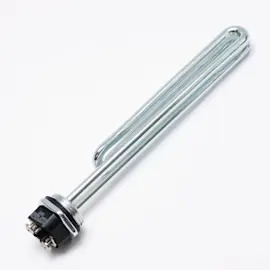
| Not converted (runs 3800W) | Element 3800 100108346 | Standard lower element replacement |
| Converted to 5500W at installation | Element 5500 100093526 | Use the higher-watt replacement element |
Why it matters
Going from 4500W to 5500W (or from 3800W to 5500W on this model) increases amperage draw. If the wiring or breaker is undersized, you can get nuisance trips, overheated wiring, or damage to electrical components. Matching the rating plate and the manual requirements keeps the upgrade safe and reliable.
Practical tips before you buy parts
- Check the rating plate for an “If Converted” indication.
- If you are unsure which element is installed now, compare the old element markings after removal.
- Replace the element gasket whenever you remove an element; a new water heater heating element gasket 100108379 helps prevent leaks.
- If you are replacing the thermostat at the same time, follow the wiring diagram in the manual and use the correct thermostat for the position.
Last updated: January 2026
What is the downside of an electric water heater?
An electric water heater like Kenmore model 153321642 typically heats water more slowly than a comparable gas unit, so recovery time after heavy hot-water use can be longer. It also depends completely on the correct electrical supply and wiring shown in the 153321642 owner's manual.
Common downsides (and what you can do)
- Slower recovery time: after long showers or laundry, the tank can take longer to reheat.
- Higher electric demand: it needs a properly sized 240V circuit, correct wire gauge, and correct breaker sizing.
- No hot water during power outages: electric elements and controls stop heating when power is off.
- Scale buildup can reduce performance: sediment can insulate the heating element and slow heating.
- Component wear over time: thermostats and heating elements can fail and cause no-heat or inconsistent temperatures.
Quick comparison: electric vs. gas (typical)
| Feature | Electric tank water heater | Gas tank water heater |
|---|---|---|
| Recovery speed | Slower | Faster |
| Power dependency | Needs electricity to heat | Usually still needs some power for controls (varies) |
| Common service items | Elements, thermostats, wiring | Burner, thermocouple/ignition, venting |
| Installation focus | Electrical capacity and connections | Gas supply and venting |
When a “downside” is actually a symptom
If your 153321642 is heating unusually slowly or you run out of hot water quickly, these are the most common checks:
- Verify the water temperature setting is appropriate (avoid overly hot settings to reduce scald risk).
- Confirm the unit is on the correct voltage listed on the rating plate.
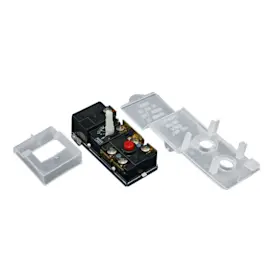
- Inspect for a failed thermostat such as thermostat 100108424 or a failed element such as element 3800 100108346.
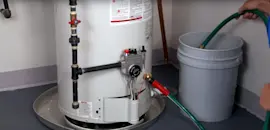
- Flush sediment from the tank and confirm the drain valve operates properly.
Why it matters
Recovery time and electrical requirements directly affect comfort and operating cost. Following the manual’s electrical and safety guidance helps the heater run correctly and reduces the risk of shock, fire, and scalding.
Last updated: January 2026
What is the longest lasting electric water heater?
The longest-lasting electric water heaters are typically models with strong corrosion protection (especially a well-maintained anode rod), durable tank construction, and consistent maintenance. For your Kenmore 153321642 electric water heater, following the maintenance schedule in the 153321642 owner's manual and replacing wear items on time is what most directly extends service life.
What “longest lasting” usually means for electric water heaters
Longevity is mostly about slowing tank corrosion and preventing overheating or sediment damage.
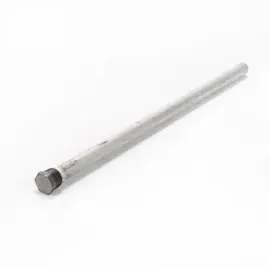
- Anode rod condition: the anode sacrifices itself to protect the tank
- Sediment control: flushing reduces element stress and hot spots
- Correct thermostat settings: avoids excessive cycling and overheating
- Water quality: hard or aggressive water shortens life if maintenance is skipped
- Timely part replacement: elements, thermostats, and valves wear out before the tank does
Parts that most affect lifespan on model 153321642
These are common “life-extending” service parts for this Kenmore model.
| What you service | What it helps prevent | Example part for this model |
|---|---|---|
| Anode rod | Tank rust-through | Anode rod 100300397 |
| Heating element | Slow recovery, overheating from scale | Element 3800 100108346 or element 5500 100093526 |
| Thermostat | Overheating, inconsistent temps | Thermostat 100108424 |
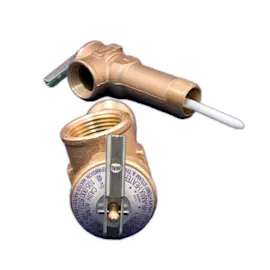
| T&P relief valve | Unsafe pressure/temperature conditions | Temperature and pressure valve 100108779 |
Quick checks we recommend (safe, homeowner-friendly)
- Confirm the water temperature setting is reasonable for your household.
- Watch for rumbling/popping sounds (often sediment on the element).
- Look for water around access panels or fittings.
- Test the T&P relief valve per the manual’s guidance.
- If hot water is inconsistent, suspect a thermostat or element issue.
Why it matters
Most electric water heaters fail because the tank corrodes or components overheat from sediment. Keeping the anode rod healthy and the tank flushed helps you get the maximum life from a Kenmore electric water heater like model 153321642.
Last updated: January 2026