Owner’s manual
 Error Codes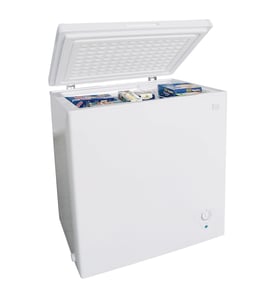
Where is the serial number on a chest freezer?
On the Kenmore 25316922105 chest freezer, the model and serial number plate is typically on the left exterior wall of the cabinet. You can confirm the exact label location and how to record the numbers in the owner's manual.
How to find it quickly
- Look on the left outside side panel of the freezer cabinet.
- Check near the upper area of that side panel where labels are easiest to read.
- Wipe dust off the panel so the plate is legible.
- Use a flashlight and view from an angle if glare makes it hard to read.
- Write down both the model number and the serial number exactly as shown.
What the label usually includes
| Item on the plate | What it’s used for |
|---|---|
| Model number | Matching parts and diagrams to your exact freezer |
| Serial number | Identifying the production run for service and documentation |
| Electrical rating | Verifying correct voltage/amp requirements |
Why it matters
We use the model and serial number to make sure you get the right Kenmore freezer parts (like a temperature control thermostat, door switch, or wiring harness) and the correct troubleshooting steps for your exact configuration.
Last updated: February 2026
What size is a Kenmore refrigerator model 25316922105?
Kenmore model 25316922105 is a chest freezer (not a refrigerator). The exact exterior height, width, and depth are listed in the owner's manual, and you should use those measurements for fit, clearance, and delivery planning.
How to get the right measurements (and what to measure)
We recommend measuring your actual unit and comparing it to the manual so you account for real-world fit.
- Measure width at the widest point (often the cabinet or hinge area)
- Measure depth from the back to the front edge (include the handle if it protrudes)
- Measure height from floor to the top surface
- Confirm you have air space around the freezer for ventilation
- Measure your doorways and turns on the path to the installation spot
Clearance and placement guidelines for this model
For Kenmore chest freezers like model 25316922105, our manual guidance is to leave 3 inches of space on all sides for air circulation. This helps the compressor shed heat and improves cooling performance.
| What you’re planning | What to allow for | Why it matters |
|---|---|---|
| Final placement space | 3 in. clearance on all sides | Better airflow and efficiency |
| Tight alcove install | Extra room beyond cabinet size | Prevents overheating and warm exterior walls |
| Moving into position | Doorway and hallway clearance | Avoids damage during delivery |
Why it matters
Using the correct size and clearance prevents hot-running conditions, helps the freezer hold temperature, and reduces the chance of poor performance in warm rooms.
Last updated: February 2026
Can you replace the rubber seal on a chest freezer?
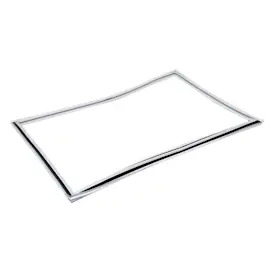
Yes. On the Kenmore 25316922105 chest freezer, you can replace the rubber door seal (gasket) when it’s torn, hardened, or leaking; a good seal helps prevent frost buildup and long run times. Use the steps and diagrams in the owner's manual to confirm the correct removal style for your lid.
How to tell the gasket needs replacement
Look for these common symptoms of a leaking door seal:
- Frost or ice building up faster than normal
- Moisture or sweating around the lid opening
- The lid doesn’t sit flat or pops up on one side
- The freezer runs longer than usual to hold temperature
- Visible cracks, gaps, or flattened sections in the gasket
Basic replacement steps (typical chest freezer gasket)
We recommend unplugging the freezer before working around the lid and interior.
- Empty enough food to access the lid opening comfortably
- Warm the new gasket (room temperature or warm water) so it lays flat
- Remove the old gasket by pulling it out of the retaining channel (some styles pull up, others pull outward)
- Clean and fully dry the channel and sealing surface with mild detergent and warm water
- Press the new gasket into the channel evenly, working around the perimeter
- Close the lid and let the gasket “set” for several hours; re-check for gaps
Quick checks after installation
Use these checks to confirm the lid is sealing correctly:
| Check | What you want to see | If it fails |
|---|---|---|
| Paper-strip test | Paper drags when pulled | Re-seat gasket in that area, warm and reshape corner |
| Visual alignment | Lid sits level all around | Level the freezer; misalignment can prevent sealing |
| Frost pattern | Frost slows down noticeably | Inspect for debris or warped lid edge |
Why it matters
A leaking gasket lets warm air into the freezer. That makes the compressor run longer to maintain temperature, and it can increase frost and moisture problems. Keeping the freezer level also helps the lid close and seal properly.
Last updated: February 2026
Where is the model number on a Kenmore chest freezer?
On Kenmore chest freezer model 25316922105, the model and serial number label is typically on the left exterior wall of the cabinet. This is the main location we use for chest models when identifying the correct parts and documentation.
Where to look first (fastest checks)
- Check the left exterior side panel near the upper area of the cabinet
- Look for a serial plate or rating label with the model and serial number
- Wipe dust off the label; numbers can be faint
- Use a flashlight and view from an angle to make the print easier to read
If you do not see it on the left exterior wall
Some freezers also place identification labels in other common spots. Check these next:
- Inside the freezer opening along the rim (near the lid seal area)
- On the back of the cabinet near the lower section
- Near the hinge area on the outside edge
What the label looks like
Most Kenmore labels include:
| Label item | What it helps with |
|---|---|
| Model number (example format: 253.XXXXXXX) | Matching parts to your exact freezer |
| Serial number | Identifying production details for service and parts lookup |
| Electrical ratings | Confirming safe power requirements |
Why it matters
We use the exact model number to ensure parts like the temperature control and lid hardware match your freezer’s configuration. For example, the temperature control location for chest models is on the left exterior wall, which aligns with where the identification label is commonly found.
For the official model and serial number recording guidance for this freezer, use the owner's manual.
Last updated: February 2026
Is it worth repairing a chest freezer?
Yes, repairing a Kenmore chest freezer model 25316922105 is worth it when the fix is a common, contained issue (like a thermostat, relay, or lid seal problem) and the freezer is otherwise in good condition; it can restore reliable freezing and prevent food loss without the cost of replacement. Use the owner's manual troubleshooting guidance to confirm the symptom before buying parts.
Quick way to decide
We use these checkpoints to decide whether repair makes sense:
- The freezer still powers on and runs, but temperatures are off (often a control or airflow issue).
- The lid closes and seals well, or the seal can be corrected.
- The problem is isolated to a serviceable part (control, relay, switch, light).
- The cabinet is in good shape (no major rust-through, no severe liner damage).
- You can confirm the cause with basic checks (outlet, settings, door seal, frost buildup).
Common repairs that are usually worth it
These are frequent, practical fixes for chest freezers like model 25316922105:
| Symptom | Often points to | Example part on this model page |
|---|---|---|
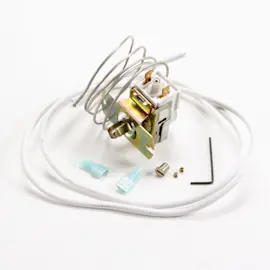
| Runs too long, struggles to hold temp | Temperature control out of range, lid not sealing | Freezer temperature control thermostat 5304496559 |
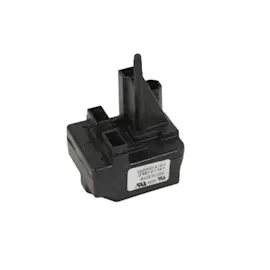
| Clicking, won’t start, then tries again | Start relay/overload issue | Freezer compressor overload and relay clamp 216954300 |
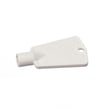
| Lid won’t lock or key missing | Lock/key issue | Gibson freezer door key 297147700 |
When replacement is the better call
We recommend replacement over repair when one of these is true:
- The sealed system is suspected (refrigerant leak, restriction) and the repair cost is high.
- The compressor is failing and the freezer is older or has other issues.
- The cabinet or lid is warped so the seal cannot be restored.
- You have repeated temperature problems even after correcting settings and door seal.
Why it matters
A chest freezer that runs “too much or too long” can be caused by simple issues like warm food load, frequent lid openings, or a dirty/worn gasket; correcting those can reduce run time and protect food quality. The manual also notes that overloading and slow freezing can reduce food quality and increase compressor run time.
Last updated: February 2026