Error Codes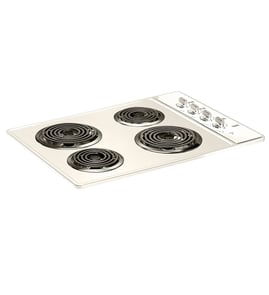


Which brand of electric cooktop is best?
GE is a strong, reliable choice for an electric cooktop, and it is a great fit if you already own a GE cooktop like model JP651. Overall, the “best” brand depends on your budget and priorities: heating performance, easy-to-clean design, serviceability, and whether you want radiant electric or induction.
Focus on the features that affect day-to-day cooking and long-term ownership:
- Heating type: radiant electric (common) vs. induction (fastest response and easiest cleanup)
- Element layout: sizes that match your cookware (6-inch and 8-inch elements are common)
- Controls: knob vs. touch controls; look for smooth simmer control
- Repair support: parts availability and straightforward access for service
- Fit and finish: trim, drip pans, and surface materials that match your kitchen
| If you want... | Brands that commonly fit | What to look for |
|---|---|---|
| Best value and easy ownership | GE, Whirlpool, Frigidaire | Simple controls, common element sizes, good parts support |
| Premium features and design | Bosch, KitchenAid, GE Profile, Café | Bridge elements, precise control, upgraded styling |
| Top performance and control | Induction-focused lines (varies by brand) | Fast boil, low simmer stability, pan detection |
| Luxury and specialty layouts | Wolf, JennAir, Viking | High-end build, unique configurations (some models include downdraft) |
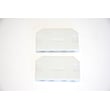
With an existing GE cooktop like JP651, choosing a brand with strong parts support keeps ownership costs down and repairs simpler. For example, common wear items such as drip pans, trim rings, and surface elements are typical maintenance parts on electric cooktops, and having the correct replacements on hand helps restore even heating and a clean fit.
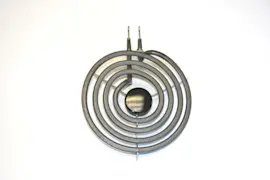
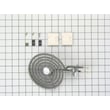
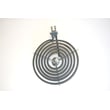
- Range coil surface element, 6-in WB30X359
- Range coil surface element, 8-in WB30X348
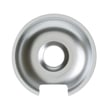
- Range drip pan, 6-in WB32X10012
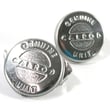
- Unit pan 8" WB32X10013
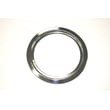
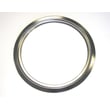
- Range burner trim ring WB31X5013
Last updated: January 2026
What is the difference between electric cooktop and induction cooktop?
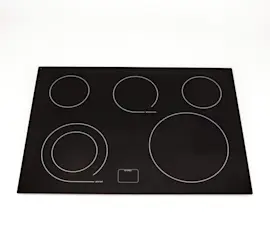
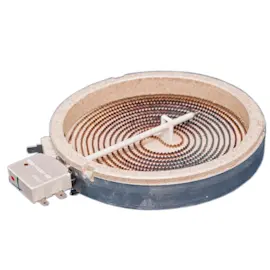
An electric cooktop uses a heating element (radiant or coil) to heat the glass or burner first, then the cookware. An induction cooktop uses electromagnetic energy to heat compatible cookware directly, so it typically heats faster and keeps the cooktop surface cooler around the pan.
- Electric (radiant or coil): Electricity heats an element; heat transfers to the cooktop surface and then into the pan.
- Induction: A magnetic field induces heat in the pan itself; the cooktop surface mainly warms from contact with the hot pan.
- Cookware matters: Induction requires magnetic cookware (often a magnet will stick to the bottom).
- Speed: Induction usually boils and responds to changes faster.
- Temperature control: Induction tends to be more precise at low and high settings.
- Cleaning: Induction surfaces often have fewer baked-on spills because the area around the pan stays cooler.
- Noise: Induction can produce a low hum or fan noise during operation.
| Feature | Electric cooktop | Induction cooktop |
|---|---|---|
| Heating method | Heats element, then pan | Heats pan directly |
| Cookware compatibility | Most flat-bottom cookware | Magnetic cookware required |
| Surface heat around pan | Hot | Cooler (warms from pan contact) |
| Response time | Moderate | Fast |
Your GE JP651 is an electric cooktop (surface section), so performance and repairs typically center on the surface elements, drip pans, and burner trim pieces. If a burner heats unevenly or not at all, common fixes include inspecting the element connection and replacing worn burner hardware such as the range coil surface element, 6-in WB30X359 or a damaged drip pan.
- Burner cycles on and off more than expected
- One burner will not heat, but others work
- Visible pitting, warping, or arcing at the element terminals
- Drip pan is rusted through or deformed
- Burner trim ring is loose or damaged
Last updated: January 2026
What is the standard size of an electric cooktop?
Most electric cooktops are built to fit standard base cabinet widths; the most common “standard” sizes are 30 inches and 36 inches wide. For a GE cooktop like JP651, you still want to confirm the exact cutout and overall dimensions before ordering parts or planning a countertop swap.
Most households see these widths most often:
- 30 in.: most common replacement size
- 36 in.: common for larger kitchens
- 15 to 24 in.: compact or apartment kitchens
- 45 to 48 in.: specialty, extra-large layouts
Depth is usually designed to fit a standard countertop; many cooktops land around 20 to 22 inches deep overall, but the cutout can differ by brand and model.
Measure the countertop opening and the cooktop itself. We recommend:
- Cutout width and cutout depth (the hole in the countertop)
- Overall cooktop width and depth (outside edge to outside edge)
- Countertop thickness (some mounting brackets have limits)
- Clearance to cabinets and backsplash (heat and fit)
- Electrical supply (voltage and breaker size for the cooktop circuit)
| Cooktop width | Typical use case | Notes |
|---|---|---|
| 30 in. | Standard replacement | Most common cabinet fit |
| 36 in. | Larger cooking surface | Often needs a wider cutout |
| 15 to 24 in. | Compact spaces | Fewer elements |
| 45 to 48 in. | Specialty kitchens | May require custom cabinetry |
Cooktop “size” is not just the visible width. The cutout dimensions and mounting style determine whether a new unit drops in cleanly or requires countertop modification. Even small differences can prevent a proper fit.
If you are refreshing the top surface while you measure, replacing a damaged drip bowl can also help keep the area clean and protect wiring; see the unit pan 8" WB32X10013.
Last updated: January 2026
How much is it to replace an electric stove top?
For a GE electric cooktop like model JP651, replacing the stovetop (the entire cooktop assembly) typically runs about $300 to $1,100 total, depending on whether you choose a basic coil style or a higher-end smooth-top/induction unit and whether you pay for professional installation.
Costs vary most by cooktop type and whether you reuse existing wiring and countertop cutout.
- Cooktop unit (part): about $200 to $800+
- Labor (electrician/appliance tech): about $100 to $300
- Possible extras: new junction box, wire whip, strain relief, or countertop modification
| Replacement approach | What you pay for | Typical total |
|---|---|---|
| DIY swap (same style, same cutout) | Cooktop only | $200 to $800+ |
| Pro install (same style, same cutout) | Cooktop + labor | $300 to $1,100 |
| Upgrade (different style or size) | Cooktop + labor + countertop work | $500 to $1,500+ |
- Cooktop type: coil is usually less expensive than smooth ceramic or induction
- Size and cutout match: same opening keeps labor low; resizing the countertop adds cost
- Electrical requirements: some upgrades require wiring changes (amperage, breaker, junction box)
- Condition of existing parts: worn receptacles, terminal blocks, or wiring can add parts and labor
If only one burner area is failing, you can often repair the JP651 surface section by replacing common wear parts instead of the whole cooktop.
- If a burner won’t heat or heats intermittently, the surface element may be the issue (example: range coil surface element, 8-in WB30X348 or range coil surface element, 6-in WB30X359).
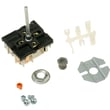
- If the burner cycles incorrectly or won’t adjust, the infinite switch is a common suspect (example: inf ht swi WB21X36771).
- If you see heat damage or loose connections at the burner wiring point, inspect the terminal block (example: range double coil surface element terminal block WB2X1351).
Replacing the entire cooktop costs more upfront, but it can make sense if the glass/top is damaged, multiple burners are failing, or the cutout and wiring already match a new unit. Repairing a single burner circuit is often the fastest, lowest-cost fix.
Last updated: January 2026