
Is it worth it to repair a compressor?
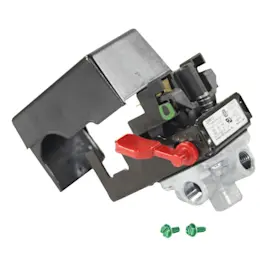
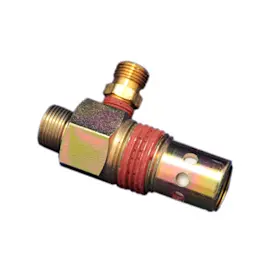
For a Craftsman air compressor model 919176851, repair is worth it when the problem is a single, diagnosable failure (like a pressure switch, check valve, or leaking fitting) and the tank and pump are in good shape. If the unit has repeated failures, severe pump wear, or tank damage, replacement is the better value.
Quick decision checklist
- Repair if it: starts normally, builds pressure close to normal, and has one clear symptom (leak, won’t start, won’t regulate).
- Replace if it: has recurring breakdowns, struggles to build pressure even after fixes, or shows signs of tank integrity issues.
- Repair if the fix is a common service item (pressure switch, regulator, gauge, check valve).
- Replace if the pump is heavily worn (low output, overheating, loud knocking) and needs major rebuild work.
- Replace if repair cost approaches 50% or more of a comparable replacement compressor.
What usually drives the cost (and the outcome)
| What’s wrong | Typical effort | Usual value call |
|---|---|---|
| Won’t start (electrical/control) | Low to medium | Often worth repairing |
| Air leaks at fittings/valves | Low | Worth repairing |
| Won’t build tank pressure | Medium to high | Depends on pump condition |
| Can’t adjust output pressure | Low to medium | Often worth repairing |
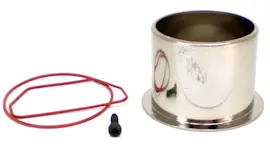
| Needs pump rebuild | High | Often replace unless unit is otherwise excellent |
Why it matters
Air compressors fail in two very different ways: small control or sealing problems that are inexpensive to correct, and major wear problems (pump or tank related) that tend to keep coming back. Making the right call prevents repeated downtime and repeated parts spending.
Best next step for model 919176851
Use the symptom that matches what you’re seeing to narrow the diagnosis before you spend money:
- If it won’t run at all: air compressor won't start
- If it runs but won’t build pressure: air compressor won't build tank pressure
- If you hear hissing or lose air: air compressor air leaks
- If it won’t regulate outlet pressure: air compressor can't adjust the output air pressure
- If you suspect internal wear: how to rebuild an air compressor pump
Last updated: February 2026
What are the 4 types of compressors?
The four main compressor types are reciprocating (piston), rotary screw, centrifugal, and axial. For a Craftsman air compressor like model 919176851, the most common design you will run into is a reciprocating (piston) style used for home and light shop air tools.
Quick breakdown of the 4 compressor types
- Reciprocating (piston): A piston compresses air in a cylinder; common in portable and small shop units.
- Rotary screw: Two intermeshing screws compress air continuously; common in commercial and industrial duty cycles.
- Centrifugal: A high-speed impeller accelerates air and converts velocity to pressure; used for high-volume applications.
- Axial: Rows of rotating and stationary blades compress air in stages; used where very high flow is needed.
How they compare (at a glance)
| Type | How it compresses air | Typical best use | Common traits |
|---|---|---|---|
| Reciprocating (piston) | Piston and cylinder | DIY, garage, intermittent use | Higher noise, lower cost, easy to service |
| Rotary screw | Twin screws | Shops, continuous use | Smooth output, efficient, higher upfront cost |
| Centrifugal | Impeller (dynamic) | Plants, high airflow | High CFM, complex, usually stationary |
| Axial | Blade stages | Turbines, specialized systems | Very high flow, highly engineered |
Why it matters when troubleshooting or buying parts
Knowing the compressor type helps you focus on the right systems:
- Piston units commonly involve valves, piston seals, connecting rod, and cylinder wear.
- Screw units focus more on air-oil separation, inlet valve control, and cooling.
- Centrifugal and axial units are typically serviced as industrial assemblies, not like a portable shop compressor.
For repair symptoms and step-by-step diagnostics that apply to most home and shop compressors, use our DIY guides such as air compressor won't start and air compressor won't build tank pressure.
Last updated: February 2026
What company makes Craftsman air compressors?
Craftsman air compressors (including model 919176851) are built by contract manufacturers (OEMs) that produce units to Craftsman specifications. The maker can vary by model and production era; for many older Craftsman compressors, the OEM is commonly tied to the model number series and the data tag on the tank or shroud.
How to identify the manufacturer for model 919176851
Use these quick checks on your compressor’s rating plate (usually on the tank) or the motor/pump label:
- Look for a line that says “MFG,” “Manufactured for,” “Manufactured by,” or an OEM name
- Note the full model number (919176851) and any type/code numbers
- Check for an ETL/UL listing file number (often traceable to the OEM)
- Record the serial number and date code (helps match the production run)
- Compare the pump style (oil-free vs. oil-lubricated) and pressure switch style to common OEM designs
For repair planning, our DIY troubleshooting content is the fastest way to narrow the system that’s failing, regardless of who built the unit: air compressor common questions.
Why Craftsman has multiple manufacturers
Craftsman is a brand; over time, different suppliers have produced Craftsman air compressors. That’s why two Craftsman compressors can share the brand name but use different pumps, regulators, gauges, or pressure switches.
What typically changes between OEM builds
| Component area | What may differ | What stays the same |
|---|---|---|
| Pump and cylinder | Rebuild kit style, valve plate design | Basic compression function |
| Controls | Pressure switch cut-in/cut-out range, unloader layout | On/off control logic |
| Air delivery | Regulator style, quick-connect type | Standard shop air usage |
Why it matters when ordering parts or troubleshooting
Correct OEM identification helps you match the right pressure switch, check valve, regulator, tank gauge, and safety valve style. If your symptom is “won’t start” or “won’t build pressure,” start with symptom-based diagnosis first, then confirm the exact part style on your unit.
- No-start issues: air compressor won't start
- Pressure build issues: air compressor won't build tank pressure
- Leaks and tank hold issues: air compressor air leaks
Last updated: February 2026
What is the most common cause of air compressor failure?
The most common cause of failure on a Craftsman air compressor like model 919176851 is poor maintenance that leads to overheating and accelerated wear (dirty intake filter, restricted cooling airflow, moisture left in the tank, and loose or leaking fittings). These issues snowball into hard starting, low pressure, and pump damage.
Most common failure patterns we see
- Overheating from blocked cooling fins, poor ventilation, or long run times
- Air leaks at quick-connects, regulator, drain valve, or fittings that force the pump to run too long
- Moisture corrosion from not draining the tank, which damages valves and can weaken the tank
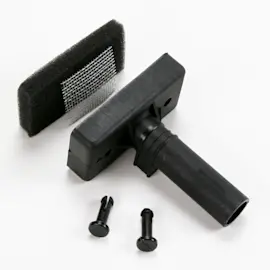
- Dirty intake filtration that pulls debris into the pump and wears piston seals/rings
- Electrical stress (weak outlet, long undersized extension cord, failing pressure switch) that causes no-start or repeated trips
Quick checks that prevent the big failures
- Drain the tank after each use (or at least daily during heavy use).
- Listen for leaks with soapy water on fittings and the regulator area.
- Keep airflow clear: clean dust off the pump and motor, and don’t run it in a tight corner.
- Confirm power supply: plug directly into a properly rated outlet; avoid long/light extension cords.
- Watch the duty cycle: if it runs nearly nonstop to maintain pressure, fix leaks or pump issues before continuing.
Symptom-to-cause guide
| What you notice | Most likely cause | What to do first |
|---|---|---|
| Won’t start | Power issue, pressure switch, motor overload | Check outlet/cord, then follow air compressor won't start |
| Runs but won’t build pressure | Leak, check valve, worn pump seals | Follow air compressor won't build tank pressure |
| Tank loses pressure sitting | Leak at fittings, drain valve, regulator | Follow air compressor tank won't hold air |
| Loud operation or rattling | Loose mounts, vibration, worn pump | Follow how to reduce air compressor noise |
Why it matters
Overheating and leaks are “multiplier” problems: they increase run time, which increases heat, which speeds up wear on the pump and electrical components. Fixing airflow and leaks early is the fastest way to extend the life of your Craftsman 919176851 air compressor.
Last updated: February 2026