Owner’s manual
 Error Codes


Where is the drain pan on a LG refrigerator?
On the LG LFCS27596S, the drain pan (also called the defrost drain pan) sits at the bottom rear of the refrigerator near the compressor and condenser area, behind the lower rear access cover. It collects defrost water that evaporates from heat and airflow. See the LFCS27596S owner's manual for safety and access guidance.
How to access the drain pan safely
- Unplug the refrigerator.
- Pull the refrigerator straight out to get working room.
- Remove the lower rear access cover (if equipped).
- Look for a shallow plastic pan on the base frame near the compressor.
Tips while you’re back there:
- Use gloves; sheet-metal edges can be sharp.
- Keep towels handy; the pan can spill if it’s overfilled.
- Do not puncture or bend refrigerant lines.
- Avoid forcing the pan; some designs slide out, others lift out.
Drain pan vs. drain tray: what’s the difference?
Some LG refrigerators also have a small tray in the dispenser area (if equipped). That tray is not the same as the rear drain pan.
| Part/location | What it does | Common reason you check it |
|---|---|---|
| Rear drain pan (bottom rear) | Catches defrost water for evaporation | Water under fridge, odors, overflow |
| Dispenser drip tray (front) | Catches drips from water/ice dispensing | Water drips at dispenser |
When a “drain pan problem” is really a clogged drain
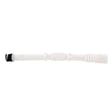
If you see water pooling inside the refrigerator or under the crisper drawers, the defrost drain may be restricted and sending water where it shouldn’t. On this model, the drain path includes a drain tube that can be inspected or replaced if damaged: refrigerator drain tube 5251JA3003D.
Common signs of a drain issue:
- Water collecting on the refrigerator floor
- Ice buildup near the freezer floor or back wall
- Musty odor near the bottom of the unit
Why it matters
A properly draining defrost system prevents leaks, ice buildup, and odor issues. Keeping the drain path clear also helps protect nearby components like the compressor area and wiring.
Last updated: January 2026
Why is my LG refrigerator leaking from the bottom?
On LG refrigerator model LFCS27596S, water leaking from the bottom is most often caused by defrost water not draining into the drain pan (so it overflows and runs down), or by a small water-supply or ice maker leak that travels to the lowest point. Use the LFCS27596S owner's manual to identify access points and safe handling steps.
Quick checks (start here)
- Unplug the refrigerator before removing covers or reaching near wiring.
- Look for ice or standing water on the freezer floor; that usually indicates a defrost drain restriction.
- Check the water supply line and shutoff valve behind the refrigerator for drips.
- If the ice maker is on, look for water trails around the ice maker fill area.
- Confirm the unit is level; a forward tilt can encourage water to run out the front.
Common causes and what to do
Clogged or iced-up defrost drain
During defrost, meltwater should flow through the drain and down to the pan. If the drain is blocked, water backs up, freezes, then later melts and leaks out.
If the drain tube is split, loose, or restricted, replacing it can restore proper drainage; see refrigerator drain tube 5251JA3003D.
Ice maker leak
A slow leak at the ice maker assembly or fill area can drip and run down to the base.
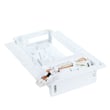
If you confirm the leak is coming from the ice maker itself (not the house water line), a compatible replacement option for this model is ice maker assembly AEQ72909602.
Drain pan or drain tray issue
If the drain is clear but water still ends up on the floor, the drain pan or tray can be cracked, mispositioned, or overflowing due to heavy defrosting.
Symptom-to-cause guide
| What you see | Most likely cause | Where to focus |
|---|---|---|
| Sheet of ice on freezer bottom, water under freezer drawer | Defrost drain clogged or iced | Drain opening and drain tube |
| Water appears only when ice maker is ON | Ice maker leak or supply seep | Ice maker area, tubing connections |
| Water near front corners | Leveling or door not sealing well | Leveling legs, door gaskets |
Why it matters
Bottom leaks can damage flooring and lead to ice buildup that restricts airflow, which can cause temperature swings in the freezer and fresh-food sections.
Last updated: January 2026
What does F1 mean on a refrigerator?
On the LG LFCS27596S refrigerator, “F1” is not a code we can verify from the model’s owner documentation; the meaning depends on the exact characters on the display (for example, F1 vs 1F vs IF vs “Er” plus letters). We recommend confirming the full code first, then matching it to LG’s bottom-freezer error-code list.
How we recommend confirming the code on LFCS27596S
- Open the LFCS27596S owner’s manual and check the Control panel and Troubleshooting sections.
- Write the code exactly as shown, including any “Er” prefix.
- Note whether the refrigerator is still cooling and whether the alarm is sounding.
- Power-cycle the refrigerator (unplug 5 minutes, then plug back in) and see if the code returns.
- If the code returns quickly, it usually points to a component or sensor issue rather than a one-time glitch.
Common problem areas when a code relates to cooling or sensing
If your display is showing a fault that looks like “F1”, these are common areas we check on LG bottom-mount units:
- Evaporator fan airflow problems
- Temperature sensor (thermistor) reading issues
- Frost buildup restricting airflow
- Door sealing problems causing temperature instability
- Electronic control issues
Parts that may be involved (only after diagnosis)
If troubleshooting points to a failed component, these parts are listed for LFCS27596S and are commonly related to cooling and sensing symptoms:
| Symptom you notice | What it can point to | Example model-listed part |
|---|---|---|
| Warm refrigerator, freezer OK | Airflow or evaporator fan issue | Refrigerator evaporator fan motor EAU63923603 |
| Temps fluctuate or seem inaccurate | Sensor/thermistor issue | Refrigerator temperature sensor 6500JB2002E |
Why it matters
LG error codes are designed to protect food and key components like the compressor. Identifying the exact code helps us avoid replacing the wrong part and gets you to the right repair faster.
Helpful reference
For code definitions across LG bottom-freezer models, use LG bottom freezer refrigerator error codes.
Last updated: January 2026
What is the problem with the LG bottom freezer refrigerator?
On the LG LFCS27596S bottom-mount refrigerator, the most common “problem” customers report is cooling performance that is uneven (fresh food warms up while the freezer stays cold). This is usually tied to airflow restrictions, frost buildup, or a failed fan, sensor, or defrost component; see the LFCS27596S owner’s manual for model-specific troubleshooting steps.
Most common issues we see on this model style
- Fresh food section too warm but freezer OK (airflow or evaporator-side issue)
- Frost buildup that blocks vents and reduces circulation
- Noisy operation from the rear or freezer area (fan or airflow obstruction)
- Ice maker not producing ice consistently (temperature, water supply, or ice maker issue)
- Water leaks or puddles (often related to a drain path restriction)
Quick checks before replacing parts
- Confirm settings: Typical targets are 37°F for the refrigerator and 0°F for the freezer.
- Check for blocked vents: Avoid packing food against interior air outlets.
- Look for frost patterns: Heavy frost on the back wall of the freezer often points to a defrost/airflow problem.
- Listen for fans: You should normally hear airflow when the unit is running.
- Power reset: Unplug for 5 minutes, then restore power and allow 24 hours to stabilize.
Parts that commonly relate to uneven cooling
If your symptoms match, these model-compatible parts are often involved:
- Refrigerator evaporator fan motor EAU63923603 (moves cold air through the compartments)
- Refrigerator temperature sensor 6500JB2002E (reports temperature to the control)
- Refrigerator defrost heater MEE63545708 (melts frost off the evaporator)
- Refrigerator evaporator assembly ADL73762013 (cooling coil area where frost can build)
Symptom-to-likely-cause guide
| Symptom | What it usually means | What to check first |
|---|---|---|
| Freezer cold, fridge warm | Poor airflow from freezer to fridge | Frost buildup, vents, evaporator fan |
| Fridge temps swing | Sensor/control reacting incorrectly | Sensor placement, door sealing |
| Loud humming/rattling | Fan hitting ice or debris | Ice buildup, fan blade clearance |
| Puddles under/inside | Drain not moving defrost water | Drain path and drain tube |
Why it matters
Uneven cooling can spoil food in the fresh food section even when the freezer seems “fine.” Catching airflow or frost issues early can prevent longer run times, higher energy use, and repeat icing problems.
Last updated: January 2026