Installation guide
 Owner’s manual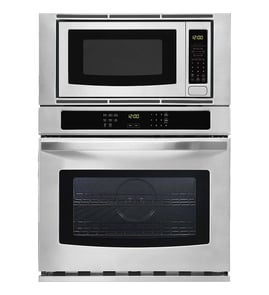



Are all 30 wall ovens the same size?
No. “30-inch” wall ovens are not all the same size; the 30-inch label mainly describes the overall width, while the required cabinet cutout width, height, and depth can vary by model. For KitchenAid model KEMS309BSP01, the installation guide lists specific 30-inch combo-oven dimensions and cutout requirements in the installation guide.
What “30-inch” usually means (and what it does not)
A 30-inch wall oven or wall oven/microwave combo is designed to fit a 30-inch-wide cabinet opening, but manufacturers still vary the recessed (built-in) dimensions and the exact cutout specs.
Common differences you will see between 30-inch models:
- Cutout width (the opening in the cabinet)
- Cutout height (especially for microwave/oven combinations)
- Cutout depth and required clearance behind the unit
- Overall height and recessed height
- Electrical junction box location and cable routing
KEMS309BSP01 30-inch combo: key install dimensions
For KitchenAid KEMS309BSP01 (30-inch model), the installation instructions call out these typical fit points:
- Overall width: 30 in
- Recessed width: 28 1/8 in
- Cutout width: 28 1/2 in
- Recommended cutout height: 41 3/8 in (with an allowed range noted in the guide)
- Cutout depth: 24 in
Quick comparison table
| Measurement type | What it affects | KEMS309BSP01 (30-inch) example |
|---|---|---|
| Overall width | How wide the front of the unit is | 30 in |
| Recessed width | How wide the cabinet cavity must accommodate | 28 1/8 in |
| Cutout width | The cabinet opening you must cut | 28 1/2 in |
| Cutout height | Vertical opening needed | 41 3/8 in recommended |
| Cutout depth | How deep the cabinet opening must be | 24 in |
Why it matters
If you shop by “30-inch” only, you can end up with a unit that is 30 inches wide but still does not fit your cabinet cutout, sits proud of the cabinet, or crowds wiring and ventilation space. Matching the cutout specs prevents cabinet damage and installation delays.
What we recommend before you buy or swap a unit
- Measure your existing cutout width, height, and depth (not just the old oven’s front width).
- Compare your measurements to the specs in the installation guide.
- Confirm your cabinet can support the unit weight listed for 30-inch models.
- Verify electrical supply and junction box placement before installation.
- If you are ordering parts for your existing unit, use the KEMS309BSP01 parts list on this page, or search by model at Sears PartsDirect.
Last updated: February 2026
How to know if the KitchenAid wall oven thermostat is bad?
If your KitchenAid KEMS309BSP01 wall oven/microwave combo consistently overheats, underheats, or swings widely in temperature even after you verify settings and calibration, the oven’s temperature control system is failing. On this model, the most common causes are a control issue or an overheat safety device opening, not a simple “thermostat” you can see.
What you will notice when temperature control is failing
- Food bakes unevenly or takes much longer than normal
- Oven temperature overshoots the set point (burning or over-browning)
- Temperature swings are large (hot, then cool, then hot)
- Broil works but bake is weak or intermittent
- The oven stops heating and may show an error code
Quick checks we recommend before replacing parts
- Confirm the cooking mode and rack position (bake vs. convection bake vs. broil). Some recipes run hotter in convection.
- Test actual temperature with an oven thermometer: check after a full preheat and again 20 minutes later.
- Power reset: turn the breaker off for 1 minute, then back on; retest.
- Look for error codes and match them to the troubleshooting steps in KitchenAid wall oven error codes.
- Inspect for overheating symptoms: strong hot smell at the vent, repeated shutdowns, or heat damage around wiring.
Parts that commonly cause “bad thermostat” symptoms on KEMS309BSP01
On this KitchenAid wall oven/microwave combo, temperature regulation is typically handled by the electronic control system and safety devices. These parts are common suspects when heat is wrong or shuts off:
| Symptom | Most likely area | Example part on this model |
|---|---|---|
| Oven won’t heat or stops heating | Overheat protection opened | Range high-limit thermostat WP4449751 |
| Oven heats erratically or won’t maintain temp | Electronic control issue | Oven electronic control WPW10317350 |
| Bake is weak or no bake heat | Heating circuit problem | Range bake element W11545804 |
Why it matters
Accurate temperature control prevents undercooked food and protects components from overheating. If the oven repeatedly runs too hot, it can trip safety devices and lead to more expensive failures in the control or wiring.
Safety note
Before checking wiring or replacing any electrical part, disconnect power at the breaker. For model-specific operating and calibration steps, follow the installation guide.
Last updated: February 2026
What is the best 30 wall oven?
For a 30-inch built-in wall oven, the “best” choice is the one that fits your cabinet cutout, electrical setup, and cooking priorities (convection performance, controls, cleaning features, and reliability). If you already own a KitchenAid KEMS309BSP01 wall oven/microwave combo, the best option is keeping it running with correct installation specs and the right replacement parts from this model’s parts list.
What “best” means for a 30-inch wall oven
When we help customers compare 30-inch wall ovens, we focus on measurable factors that affect day-to-day results:
- Fit: cabinet cutout width, height, and depth must match your opening
- Power and wiring: correct junction box location and grounded supply
- Cooking performance: convection fan design, temperature stability, preheat time
- Usability: control layout, display readability, rack system
- Serviceability: parts availability (elements, controls, door parts)
30-inch fit basics (important for remodels)
For 30-inch built-in microwave/oven combinations like this KitchenAid design, the installation guide lists these key targets:
| Measurement type | Typical 30-inch combo spec | Why it matters |
|---|---|---|
| Overall width | 30 in | Confirms it is a true 30-inch unit |
| Recessed width | 28 1/8 in | Must fit inside the cabinet opening |
| Cutout width | 28 1/2 in | Prevents binding and allows proper clearance |
| Cutout depth | 24 in | Ensures the unit sits correctly in the cabinet |
For exact cutout and electrical placement details, use the installation guide.
If you already have KEMS309BSP01, what to prioritize
If your goal is “best performance” from your current KitchenAid KEMS309BSP01, we prioritize the parts that most often affect heating, safety, and usability:
- Bake performance issues: consider the range bake element W11545804 if baking is uneven or the oven will not heat
- No power or intermittent operation: check fuses and thermal protection (for example, thermal fuse WPW10545255)
- Microwave door problems: a worn interlock system can stop operation (for example, microwave door switch W10211972)
You can order replacement parts for KEMS309BSP01 from the parts list for this model, or search by model number on Sears PartsDirect.
Why it matters
A 30-inch wall oven that is “best” on paper still performs poorly if the cabinet cutout is off, the junction box is misplaced, or key components like the bake element or thermal fuse are failing. Fit and serviceability decide long-term satisfaction as much as features.
Last updated: February 2026
What are the disadvantages of a microwave oven combo?
A microwave/oven combo like the KitchenAid KEMS309BSP01 saves space, but the tradeoffs are higher purchase and repair costs, more complex installation, and less flexibility if one section fails. It can also limit capacity compared with separate appliances and may require a learning curve for controls.
Common disadvantages to plan for
- Higher repair impact: If the microwave or oven side has an issue, you may lose use of the whole built-in unit until it is repaired.
- More complex installation: Built-in combos require a precise cabinet cutout and secure mounting; the installation guide spells out the cutout and electrical requirements.
- Electrical demand: These units can draw significant amperage (the KEMS309B family is listed around the mid-30 amp range depending on voltage), so the circuit and wiring must be correct.
- Capacity tradeoffs: You may have less usable space than two separate appliances (especially in the microwave cavity).
- Cost of major components: Control and display assemblies can be expensive compared with countertop microwaves or basic wall ovens.
- Harder to swap or upgrade: Replacing a built-in combo is usually a bigger project than replacing a single appliance.
What this means for KEMS309BSP01 installation and ownership
The biggest “hidden” disadvantage is that installation is not forgiving. The installation instructions for 30-inch built-in microwave/oven combinations call out specific cutout width, height range, and depth, plus recommended clearances. Using the correct cabinet opening and electrical supply reduces nuisance issues after install.
Quick snapshot: combo vs separate appliances
| Factor | Microwave/oven combo | Separate microwave + wall oven |
|---|---|---|
| Space | One built-in opening | Two locations or a built-in plus countertop |
| Downtime risk | One failure can affect the whole unit | Failures are isolated |
| Install complexity | Higher (cutout, mounting, wiring) | Often lower per appliance |
| Upgrade flexibility | Lower | Higher |
Why it matters
A combo unit is a great fit when you need a clean built-in look and have limited kitchen space. It is a tougher fit when you prioritize easy replacement, lowest repair cost, or the ability to keep cooking if one appliance goes down.
Parts that commonly come up in combo repairs
If symptoms point to the microwave not starting, not heating, or shutting off, these are examples of parts we often see involved on this model:
- Microwave door switch W10211972 (door interlock sensing)
- Thermal fuse WPW10545255 (overheat protection)
- Microwave turntable motor W10911403 (turntable not rotating)
For ordering, we recommend using the parts list for KEMS309BSP01, or searching by model on Sears PartsDirect.
Last updated: February 2026
Are KitchenAid microwaves any good?
Yes. KitchenAid microwaves are a solid choice overall, and the microwave in your KitchenAid KEMS309BSP01 wall oven/microwave combo is built for built-in convenience, consistent everyday cooking, and a premium look. Like any microwave, performance depends on correct installation, ventilation, and keeping door safety switches working properly (see the installation guide).
What “good” usually means for this model type
For a built-in microwave/oven combination like KEMS309BSP01, “good” typically comes down to reliability, even heating, and safe door operation.
- Heats and runs consistently without frequent resets or shutdowns
- Door closes firmly and the unit stops immediately when the door opens
- Fan and airflow keep heat from building up in the cabinet cutout
- Controls respond normally without flickering or random beeping
- Turntable system rotates smoothly (when your cooking mode uses it)
Quick checks that tell you if yours is performing correctly
We use these practical checks because they match how the unit is designed to operate during normal use.
- Door stop test: Start a short cook cycle, then open the door. Cooking should stop immediately.
- Close-and-run test: Close the door firmly and press Start; the interior light should come on during cooking.
- Heat test: A cup of water should come out hot after a normal timed heat.
If the door test is inconsistent, a common fix is replacing a worn door interlock switch such as the microwave door switch W10211972.
Common issues and the parts that often solve them
| Symptom | Common cause | Example part for KEMS309BSP01 |
|---|---|---|
| Runs only with door pushed in | Worn door switch or interlock issue | Microwave door switch W10211972 |
| Dead, no display, won’t start | Open fuse or thermal protection tripped | Thermal fuse WPW10545255 or fuse (black) WP4375321 |
| Shuts off mid-cycle, overheats | Airflow/overtemp protection opening | Range high-limit thermostat WP4449751 |
Why it matters
A microwave that does not stop instantly when the door opens is not just inconvenient; it points to a door interlock problem that can prevent safe, normal operation. Proper installation clearances and electrical connections also help prevent nuisance shutdowns and heat-related failures in a built-in cabinet.
You can order KEMS309BSP01 replacement parts from the parts list for this model, or search by model number on Sears PartsDirect.
Last updated: February 2026