Owner’s manual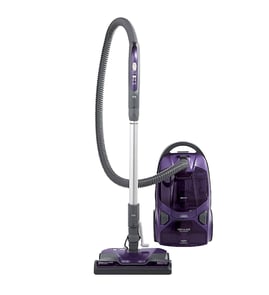




Where is the model number on a Kenmore canister vacuum?
On Kenmore canister vacuums like model 11628615801, the model and serial numbers are printed on the model and serial number plate on the vacuum body (the main canister housing). We use that plate information to match the correct parts list and troubleshooting steps in the owner's manual.
Where to look on the vacuum
Check these common spots on the canister housing (not the wand or PowerMate):
- Bottom of the canister near the wheels
- Back side of the canister near the cord rewind area
- Under the tool cover or accessory lid
- Inside the bag compartment door (near the bag and filters)
- Near the hose connection port on the canister
What you should write down
The plate typically includes two key identifiers. Record both before ordering parts or following repair steps.
| Item | What it’s used for | Example format |
|---|---|---|
| Model number | Identifies the vacuum design and parts breakdown | 116.28615 or 11628615801 |
| Serial number | Identifies the production run | Letters and numbers |
Tips to find it faster
- Unplug the vacuum before lifting or turning it over.
- Use a flashlight; the plate print can be small.
- If the label is worn, take a close-up photo and zoom in.
- If you see a shorter number like 116.28615, use it along with the full model on your parts page to confirm the match.
Why it matters
Kenmore canister vacuums often share similar housings, hoses, and PowerMate assemblies across model families. Using the exact model and serial from the plate helps ensure you get the right bag, filter, belt, brush roll, or hose for your specific build.
Last updated: February 2026
How do I tell what size shop vac I have?
To tell what size vacuum you have, we use the model number on the rating label and then match it to the capacity listed for that model. For Kenmore canister vacuum model 11628615801, the model and serial number are on the model and serial number plate; the exact capacity details are listed in the owner's manual.
Find the model label first
On vacuums, “size” can mean different things (bag/canister capacity, motor size, or overall tank size). Start by locating the model and serial number plate and writing down the full model number.
- Unplug the vacuum before checking labels or doing any inspection
- Look for a “Model and Serial Number Plate” on the canister body (not the wand)
- Record the full model number and serial number for future parts lookup
- If you are comparing to a true “shop vac,” note that most shop vacs use gallon capacity, while canister vacuums are usually described by bag size and filtration type
Shop vac vs. canister vacuum: what “size” usually means
If you are trying to confirm whether you have a shop vacuum (wet/dry) or a household canister vacuum, this quick comparison helps.
| Vacuum type | Typical “size” measurement | Where you’ll see it |
|---|---|---|
| Wet/dry shop vac | Gallons (ex: 6 gal, 12 gal) | Model label and product specs |
| Canister vacuum (like Kenmore 11628615801) | Bag capacity and filtration | Manual and parts diagrams |
Why it matters
Using the correct “size” prevents ordering the wrong consumables and maintenance items (like dust bags and filters) and helps troubleshoot issues like poor pickup, overheating, or shutoffs caused by restricted airflow.
Next best step for this model
Use the manual to confirm the exact bag type, filter locations, and maintenance intervals for Kenmore 11628615801. For performance issues that can feel like a “too small” vacuum (weak suction, frequent shutoff), follow the airflow and clog checks in the troubleshooting section of the owner's manual.
Last updated: February 2026
How long do Kenmore canister vacuums last?
A Kenmore canister vacuum like model 11628615801 typically lasts 10 to 15 years with normal household use and routine maintenance. Heavy use, repeated clogs, and running with dirty filters or a full bag can shorten life; consistent care can push lifespan beyond 15 years.
Typical lifespan by use level
| Use pattern | What we typically see | What makes the difference |
|---|---|---|
| Light (1 to 2 times/week) | 12 to 18 years | Bag and filter changes on schedule |
| Moderate (3 to 5 times/week) | 10 to 15 years | Keeping airflow open, avoiding overheating |
| Heavy (daily, pets, large home) | 7 to 12 years | More frequent bag, belt, and brush maintenance |
Maintenance that extends vacuum life
The manual explains that your vacuum relies on strong airflow to move dirt into the dust bag; for best cleaning results, keep the airflow passage open and check for clogs with the vacuum turned off and unplugged. See the owner's manual for the exact maintenance intervals and procedures for bag changes, motor safety filter, exhaust filter, and PowerMate care.
- Change the dust bag before it becomes overfull (reduced airflow strains the motor).
- Replace or clean filters on schedule (motor safety filter and exhaust filter).
- Clear clogs in the hose, wand, and airflow passages when suction drops.
- Keep the PowerMate brush area free of hair and string; clean the agitator.
- Replace worn belts promptly so the brush roll does not stall and overheat.
- Store and handle the canister and hose carefully to prevent cracks and air leaks.
Signs your vacuum is nearing end of life
- Burning smell, unusual motor noise, or frequent shutoffs
- Persistent low suction after bag, filter, and clog checks
- PowerMate brush roll stops under normal carpet load
- Electrical issues (intermittent power, cord problems)
Why it matters
A canister vacuum motor depends on airflow for cooling and performance. When bags, filters, or passages are restricted, the vacuum works harder, runs hotter, and wears out faster, even if it still turns on.
For step-by-step repair help, use the vacuum repair-guides landing page.
Last updated: February 2026
What is a canister cleaner?
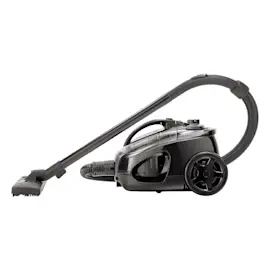
A canister cleaner (canister vacuum) is a vacuum where the motor and dust bag or dust container sit in a separate canister that rolls on the floor, connected to a hose and wand. On Kenmore model 11628615801, the canister works with attachments like the hose assembly, telescoping wand, and PowerMate for flexible cleaning.
How a canister vacuum is set up
A typical canister vacuum system is made of separate pieces that connect together for different cleaning tasks.
- Canister body (motor, bag area, filters)
- Hose assembly (airflow path from floor tool to canister)
- Telescoping wand (reach and height adjustment)
- Floor tools (PowerMate, floor brush, combination brush)
- Small tools (crevice tool, pet tool on some versions)
For the exact tool set and how each piece stores on the vacuum, use the owner's manual.
Why people choose a canister vacuum
Canister designs are popular because the hose-and-wand layout makes it easier to clean above-floor areas and tight spaces.
| Cleaning need | Canister vacuum advantage |
|---|---|
| Stairs | Canister can rest on a step while you use the hose and wand |
| Under furniture | Wand reaches low areas without pushing a full upright body |
| Drapes, vents, corners | Quick tool changes at the handle or wand |
| Mixed flooring | Swap between PowerMate and brushes based on surface |
Why it matters for troubleshooting
Knowing it is a canister design helps you diagnose common issues correctly. For example, suction loss is often caused by a clog in the hose, wand, or airflow passages, or by a clogged filter or full bag. Some models also use a thermal protector that shuts the motor off if airflow is blocked; after clearing clogs and checking filters, it typically resets after about 30 minutes.
If you are repairing or maintaining your vacuum, our vacuum repair-guides landing page walks through common symptoms and fixes.
Last updated: February 2026
What is the list of vacuum cleaner parts?
For the Kenmore 11628615801 canister vacuum, the parts list covers the main suction system (canister, motor, filters, bag area), the cleaning head system (PowerMate, brush roll, belt), and the tools that connect through the hose and telescoping wand. The complete breakdown is shown in the owner's manual.
Common parts you will see on a canister vacuum parts list
Most canister vacuum cleaner parts lists include these groups:
- Canister assembly (housing, cord reel, switches, wheels)
- Suction motor area (motor, motor mounts, seals)
- Dust collection (bag chamber, bag holder, bag cover latch)
- Filtration (motor safety filter, exhaust filter)
- Airflow path (hose assembly, wands, internal ducts)
- Power nozzle/PowerMate (brush roll or agitator, belt, end caps, height adjust parts)
- Attachments (crevice tool, combination brush, floor brush, Pet PowerMate)
Model-specific items included with Kenmore 11628615801
Your manual’s packing list for this model family calls out these included components:
- Canister vacuum cleaner
- PowerMate
- Telescoping wand
- Hose assembly
- Combination brush
- Crevice tool
- Floor brush
- Pet PowerMate
- Parts list
Where each part fits (quick map)
| Area | What it does | Examples of parts in that area |
|---|---|---|
| Canister | Creates suction and holds the bag/filters | Motor, cord reel, bag door, wheels |
| Hose and wand | Carries airflow and connects tools | Hose handle, swivel, telescoping wand |
| PowerMate/nozzle | Agitates carpet and picks up debris | Brush roll, belt, light bulb, height adjust |
| Tools | Detail cleaning | Crevice tool, combination brush, floor brush |
Why it matters
Knowing the part group helps you troubleshoot faster. For example, low suction usually points to the bag, filters, or a clog in the hose, while “brush not spinning” points to the PowerMate belt or brush roll.
For repair and troubleshooting walk-throughs, we recommend starting with the vacuum repair-guides landing page.
Last updated: February 2026