Installation guide
 Owner’s manual
 Error Codes


Are electric ovens worth repairing?
Yes, an electric oven in a Kenmore 66592173300 range is usually worth repairing when the fix is straightforward (like a bake element or oven sensor) and the total repair cost stays well below the price of a comparable new range. If multiple major systems are failing, replacement is the better value.
Quick rule of thumb (repair vs. replace)
We use this simple cost comparison to decide:
| Situation | Usually the best choice | Why |
|---|---|---|
| Repair estimate is under ~50% of replacement cost | Repair | Better value, less disruption |
| Repair estimate is ~50% or more of replacement cost | Replace | Cost risk is too high |
| Repeated breakdowns in the last 12 months | Replace | Reliability is trending down |
Repairs that commonly make sense on this model
These are typical, high-impact fixes on an electric range that often restore normal baking quickly:
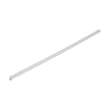
- Replace a failed heating element such as the bake element WPW10308477
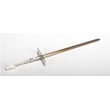
- Address inaccurate temperatures by testing/replacing the oven sensor WPW10181986
- Replace a burned-out oven light using the correct light bulb 8009
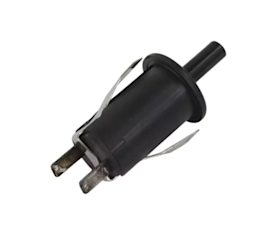
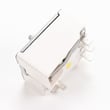
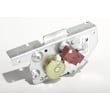
- Fix a surface burner that will not regulate heat by replacing the range surface element control switch WP3148952
- Correct a self-clean door that will not lock or unlock by diagnosing the latch system (see 66592173300 owner's manual)
When replacement is usually smarter
Replacement is typically the better value when you see any of these patterns:
- The oven will not heat and the element and sensor test good (points to control or wiring issues)
- The range has frequent electrical problems (intermittent power, repeated error messages)
- The cooktop glass or multiple radiant elements are failing at the same time
- You need several expensive parts at once (for example, door glass plus latch parts plus an element)
Why it matters
A targeted repair can restore safe, consistent cooking and avoid the downtime of a new installation. For safety, installation requirements like clearances and anti-tip protection should be followed during any move or reinstall; see the 66592173300 installation guide.
Last updated: February 2026
How do I tell what model Kenmore stove I have?
Your Kenmore stove’s model number is printed on the model and serial rating plate. On Kenmore electric range model 66592173300, that plate is located on the oven frame behind the storage drawer panel; pull the drawer out to view it and copy the full number exactly.
Where to look on a Kenmore range
We recommend checking these common locations in this order:
- Behind the bottom storage drawer panel (on the oven frame, most common)
- Along the oven door frame when you open the door
- On the back panel of the range
- Under the cooktop (on some designs, after lifting the top)
What the model number looks like
The model number is usually labeled with wording such as Model, Model No., or MOD. For Kenmore, the first three digits often identify the manufacturing source (for example, many Kenmore ranges start with 665).
| What to record | Example | Why we need it |
|---|---|---|
| Model number | 66592173300 | Ensures parts fit your exact range |
| Serial number | (varies) | Helps match production changes |
| Electrical rating | 120/240V or 120/208V (varies) | Confirms correct power cord and circuit setup |
Tips to avoid common mistakes
- Write down the full model number, including any trailing digits
- Take a clear photo of the rating plate before ordering parts
- Match every digit when searching parts; one digit off can change the bake element, control switch, or door trim fit
Why it matters
The model number ties directly to the correct wiring configuration, electrical supply requirements, and the exact replacement parts list for your Kenmore range. For example, installation requirements reference the rating plate for the specified voltage and frequency.
For more location details and diagrams, use the 66592173300 owner's manual.
Last updated: February 2026
How to replace Kenmore range oven control board?
On the Kenmore 66592173300 electric range, replacing the oven control board means shutting off power, accessing the control area, moving each wire connector from the old board to the matching terminal on the new board (including any ribbon cable), then reassembling and restoring power.
Safety first
- Turn off the breaker (240V range circuit) before touching any wiring.
- Confirm the cooktop and oven are cool.
- Use gloves; sheet-metal edges behind panels are sharp.
- Take a photo of every connector before you remove it.
- If any wire insulation looks overheated or brittle, replace the damaged wiring before powering up.
Replacement steps (typical for this Kenmore range)
- Disconnect power at the breaker.
- Pull the range forward enough to work safely; avoid stressing the power cord.
- Remove the rear access panel for the control area (keep screws organized).
- Label connectors and transfer them one at a time from the old board to the new board.
- If your model uses a ribbon cable, fully seat it in the connector and lock the retainer.
- Reinstall the rear panel, slide the range back, and confirm the rear foot is engaged in the anti-tip bracket (per the installation guide).
- Restore power and test Bake, Broil, and the clock/timer.
Quick wiring checklist
| What you see | What to do | Common mistake to avoid |
|---|---|---|
| Multi-pin plug connectors | Match by shape and locking tab | Forcing a plug onto the wrong header |
| Ribbon cable | Insert straight, then lock retainer | Crooked insertion causing keypad/display issues |
| Ground wire | Reattach to the same chassis ground point | Leaving ground loose |
If the oven still will not heat after the board swap
These checks often pinpoint the real failure:
- Verify the bake element is intact; replace if open (see bake element WPW10308477).
- Check the temperature sensor circuit; a failed sensor can cause no-heat or wrong temps (see oven sensor WPW10181986).
- Make sure the range is level; uneven leveling can affect baking results.
- Look for stored fault codes and follow the diagnostic steps in Kenmore 665 freestanding range error codes.
Why it matters
A control board replacement is only successful when every connector is transferred correctly and the range is reinstalled safely (anti-tip engaged). A mis-seated ribbon cable or a failed bake element can mimic a “bad board.”
Last updated: February 2026
What are the two most common problems that may occur in an electric stove?
The two most common electric stove problems are (1) a surface burner that will not heat or heats inconsistently and (2) temperature or control problems such as overheating, not turning off, or the oven not holding temperature. On Kenmore model 66592173300, these issues usually trace to a failed surface element or control switch, or an oven heating/temperature-sensing component. See the 66592173300 owner's manual for model-specific operating and safety details.
Problem 1: Surface burner will not heat (or heats unevenly)
This is the most frequent complaint on electric ranges with radiant or coil-style surface units.
Common causes
- Failed radiant surface element (open circuit)
- Worn or failed infinite switch (surface element control)
- Loose, overheated, or burned wire connection at the element or switch
- Cooktop lockout enabled (surface units cannot be turned on)
- Hot surface indicator confusion (light can stay on after the knob is off)
Quick checks we recommend
- Confirm the control knob is set correctly and the correct burner is selected.
- If the display shows lockout, unlock the cooktop (the manual describes pressing and holding the TOP keypad).
- If one burner is dead but others work, suspect the element or switch first.
- If the burner cycles oddly or overheats, suspect the switch.
| Symptom | Most likely part area | Typical next step |
|---|---|---|
| Burner does not heat at all | Element or wiring | Inspect terminals; test element continuity |
| Burner overheats or will not shut off | Control switch | Replace the switch if it is stuck closed |
Problem 2: Oven temperature or control problems
Oven complaints often show up as underbaking, overbaking, long preheat times, or error tones.
Common causes
- Failed bake element such as the bake element WPW10308477
- Failed temperature sensor such as the oven sensor WPW10181986
- Control settings or user-interface issues (clock, tones, bake settings)
Why it matters
A burner that overheats or will not turn off is a safety issue, and an oven that cannot regulate temperature wastes energy and ruins cooking results. Addressing the failed element, switch, or sensor restores normal heating and helps prevent heat damage to wiring and controls.
Last updated: February 2026