 Installation guide
 Owner’s manual


What is the life expectancy of a Frigidaire washing machine?
Most Frigidaire washing machines, including the Frigidaire FAFW3001LW0 front-load washer, typically last 8 to 10 years with normal household use and basic maintenance. Consistent cleaning, correct loading, and quick leak repairs help you reach the high end of that range.
- Load size and balance: frequent overloading or unbalanced loads increase stress on the tub, bearings, and motor.
- Detergent use: too much detergent can cause residue buildup and odors that lead to extra cleaning and wear.
- Water quality: hard water can leave mineral deposits in the dispenser and internal hoses.
- Drain health: coins, lint, and debris can strain the drain system and pump.
- Door seal care: keeping the bellows clean and dry helps prevent mold and leaks.
Use the care and safety guidance in the FAFW3001LW0 installation guide as your baseline for safe operation and servicing.
- Wipe the door glass and gasket after loads; leave the door slightly open to dry.
- Run a monthly cleaning cycle (or hot cycle) to reduce residue and odor.
- Check pockets to prevent pump clogs.
- Level the washer to reduce vibration and suspension wear.
- Fix small leaks quickly to prevent corrosion and electrical issues.
| Symptom | What it often points to | Example part for FAFW3001LW0 |
|---|---|---|
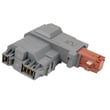
| Door won’t lock or cycle won’t start | Door lock failure | Washer door lock assembly 131763256 |
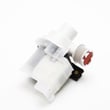
| Won’t drain, water left in tub | Drain pump issue or blockage | Water pump 137221600 |
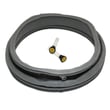
| Leaks at the door opening | Door boot (bellows) wear or clamp issue | Bellows 134515300 |
Knowing the typical 8 to 10 year lifespan helps you decide whether to repair or replace. If the washer is within that window, replacing a single failed part (like a door lock assembly or water pump) is often a practical way to restore reliable operation.
Last updated: January 2026
How to manually unlock a washer door?
On the Frigidaire FAFW3001LW0 washer, the door usually unlocks after the cycle ends and the tub is drained. If it stays locked, we manually unlock it by removing power first, confirming the washer is not holding water, then accessing the door-lock mechanism from the front or top to release it.
- Unplug the washer (or switch off the breaker) before touching panels or wiring.
- Wait 2 to 5 minutes; some door locks release after the control resets.
- Confirm the tub is drained; if there is water inside, the lock may stay engaged.
- Try a drain/spin cycle after restoring power (only if the tub is not overfilled).
- If the door is still locked, access the lock from inside the cabinet and release it.
Most front-load designs like the FAFW3001LW0 let you reach the latch by removing the top panel or front panel, then reaching down to the door-lock area.
| What you see | Most likely cause | What to do next |
|---|---|---|
| Door won’t open and water is visible | Drain issue keeping lock engaged | Drain water first; check pump/filter area and drain hose routing |
| Door won’t open, tub is empty | Failed lock or control not releasing | Manually release latch; plan to replace the lock if it repeats |
| Door opens sometimes, sometimes not | Intermittent lock switch | Replace the door lock assembly |
If manual release works but the problem returns, these parts are common fixes:
- Washer door lock assembly 131763256 (failed lock switch or jammed latch)
- Water pump 137221600 (washer cannot drain, so the lock stays engaged)
Forcing the door can crack the door panel, damage the bellows, or break the latch. Unlocking it the right way protects the door, prevents leaks, and helps you pinpoint whether the issue is draining, the door lock, or the control.
For model-specific panel removal notes and safety steps, follow the FAFW3001LW0 installation guide.
Last updated: January 2026
How do I get my Frigidaire washer to drain?
To get your Frigidaire FAFW3001LW0 washer to drain, first make sure the drain hose is installed correctly and secured so it cannot pull out; then check for a kinked hose, a clogged standpipe, or a blocked pump filter that is preventing water from leaving the tub. Use the FAFW3001LW0 installation guide for the correct drain setup.
- Unplug the washer before inspecting hoses or the pump area.
- Confirm the drain hose is not kinked, crushed, or shoved too far into the standpipe.
- Make sure the drain hose is secured to the standpipe or laundry tub so it cannot pop out during draining.
- Verify the standpipe is not clogged (a slow standpipe can cause backing up and no-drain symptoms).
- If the washer hums but does not drain, suspect a blockage at the pump or a failing pump.
Your FAFW3001LW0 drain setup should meet these basics:
| Item | Recommended requirement |
|---|---|
| Standpipe height | 24 to 96 inches above the floor |
| Standpipe diameter | 1-1/4 inch minimum |
| Drain capacity | Able to remove about 17 gallons per minute |
If the drain hose and standpipe are correct but the washer still will not drain, these are the most common culprits:
| Symptom | Most likely cause | Common next step |
|---|---|---|
| Hums, no water movement | Pump jammed or failed | Check for debris; replace pump if needed |
| Drains sometimes, then stops | Intermittent pump or blockage | Inspect pump path and hoses |
| Door stays locked with water in tub | Drain issue preventing unlock | Restore draining first; then address lock if needed |
If you determine the pump is not moving water, the model-specific replacement is the water pump 137221600.
A restricted drain can leave water in the tub, keep the door locked, cause poor spin performance, and lead to recurring error codes. Correct drain hose height, standpipe size, and a clear pump path prevent repeat no-drain issues.
Last updated: January 2026


