 Installation guide
 Owner’s manual


How to remove the filter and spinner on GE dishwasher?
On the GE PDWT180R30SS dishwasher, we remove the lower spray arm (spinner) first, then lift out the filter pieces from the sump area so you can rinse debris away and restore normal wash and drain performance. Use the steps and diagrams in the PDWT180R30SS owner’s manual for your exact filter style.
Before you start (safety and prep)
- Turn off power at the breaker; we do this anytime hands go near the sump.
- Let the unit cool if it just ran; heating elements and water can be hot.
- Pull out the lower rack for full access.
- Have a towel ready; a small amount of water in the sump is normal.
- Avoid sharp tools that can nick the stainless tub or seals.
Filter and spinner removal steps (typical GE layout)
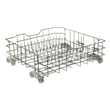
- Remove the lower rack and set it aside.
- Remove the lower spray arm (spinner): most GE arms either lift straight off or unlock with a center retainer. Turn the retainer counterclockwise if your model uses one.
- Lift out the coarse screen/filter from the sump area. If a plastic sump cover or reservoir is in the way, squeeze the tabs and wiggle it up and out.
- Rinse and clean: wash filters under warm water; use a soft brush to clear mesh and spray-arm holes.
- Reinstall in reverse order: seat the filters flat, then reinstall the spray arm so it spins freely by hand.
Quick checks if problems continue
| Symptom | What to check | Common fix |
|---|---|---|
| Grit on dishes | Filter not seated, spray arm holes clogged | Reseat filter; clean spray arm |
| Poor draining | Food debris in sump, drain path restricted | Clean sump area; check drain routing |
| Leaks at door | Door seal dirty or damaged | Clean or replace dishwasher door seal WD08X10055 |
Why it matters
A clogged filter or blocked spray arm reduces water flow and can leave soil on dishes, extend cycle time, and contribute to drain issues. Regular cleaning helps protect key parts like the pump and motor assembly.
Last updated: February 2026
Can you buy replacement parts for a dishwasher?
Yes. You can buy replacement parts for your GE PDWT180R30SS dishwasher, including common wear items (seals, filters, racks) and repair parts (pumps, control boards, latches) to fix leaks, draining problems, and cleaning performance.
What parts are commonly replaced on PDWT180R30SS?
These are some of the most frequently needed dishwasher parts for this model:
- Door and tub sealing parts to stop leaks
- Drain and circulation parts to fix standing water or poor wash action
- Detergent dispenser parts to restore proper soap release
- Filters and spray components to improve cleaning
- Electrical parts (keypad, control board, thermostat) for power and heating issues
Examples of model-matched parts
| Symptom | Part type | Example part for PDWT180R30SS |
|---|---|---|
| Water leaking at the door | Door seal | Dishwasher door seal WD08X10055 |
| Water leaking around the tub | Tub gasket | Dishwasher tub gasket WD08X10032 |
| Not draining | Drain pump | Dishwasher drain pump WD26X10048 |
| Detergent cup not working | Dispenser | Dishwasher detergent dispenser assembly WD12X10163 |
| Poor cleaning | Filter | Dishwasher filter WD22X10077 |
How we recommend choosing the right replacement part
Use your model number (PDWT180R30SS) and match the part by name and ID to avoid ordering the wrong item.
- Confirm the symptom first (leak, no drain, won’t start, not cleaning)
- Check for visible damage (cracks, swelling, broken tabs, corrosion)
- Compare the old part’s mounting points and connectors
- Replace clamps or seals when you replace hoses or pumps
- Follow the safety and installation steps in the PDWT180R30SS owner’s manual
Why it matters
Dishwashers rely on tight seals, clear filtration, and correct water movement. Replacing the correct GE parts restores wash pressure, prevents leaks that can damage cabinets, and helps the unit heat and drain normally.
Last updated: February 2026
What is the most common problem with GE dishwashers?
On the GE PDWT180R30SS dishwasher, the most common problems we see are draining issues, leaks around the door, and “won’t start” symptoms. In many cases, the fix is basic maintenance (filter cleaning, proper loading) or correcting a drain setup issue shown in the installation guide.
Most common issues (and what they usually point to)
- Not draining or draining slowly: clogged filter, blocked drain path, or a drain setup problem (missing air gap or high drain loop)
- Leaking at the front/door: worn door seal, debris on the seal, or sharp items damaging the seal
- Won’t start or stops mid-cycle: door not fully latched, control reset needed after an interruption, or a failing control component
- Poor cleaning or spots/film: low water temperature, overloading, old detergent, or no rinse aid
Quick checks you can do first
- Reset and restart: If the cycle was interrupted, allow the unit to drain and then restart per the PDWT180R30SS owner’s manual.
- Check the drain configuration: Verify you have an air gap or a high drain loop (a common cause of drain complaints).
- Inspect and clean the filter area: Remove debris that can restrict water flow.
- Confirm water temperature: For best results, incoming water should be at least 120°F.
- Look for door sealing problems: Clean the sealing surfaces; keep sharp items from contacting the seal.
Parts that commonly solve these symptoms
| Symptom | Common part to inspect/replace | What it does |
|---|---|---|
| Leaks at door | Dishwasher door seal WD08X10055 | Seals the door to prevent water escaping |
| Not draining | Dishwasher drain pump WD26X10048 | Pumps water out to the drain line |
| Poor wash performance | Dishwasher filter WD22X10077 | Traps debris to protect circulation and spray |
| Won’t start | Dishwasher door latch assembly WD13X10031 | Confirms the door is closed so the cycle can run |
Why it matters
Drain and seal problems can lead to standing water, odors, and water damage; start and control issues waste time and can leave dishes dirty. Catching the root cause early helps avoid repeat failures and unnecessary part replacements.
When an error code is showing
Use the GE electronic dishwasher error codes reference to match the code to a likely cause and next steps.
Last updated: February 2026





