Owner’s manual
 View engine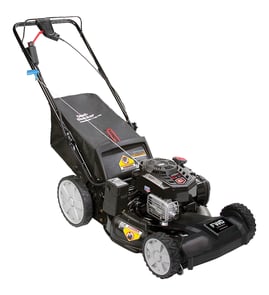


Should I use 87 or 91 gas for lawn mower?
For the Craftsman lawn mower model 917370415, we recommend using 87-octane (regular) unleaded gasoline for normal mowing. Higher octane (like 91) does not add power in small mower engines; the best results come from using fresh fuel and the correct oil level per the 917370415 owner's manual.
What to use (and what to avoid)
- Use 87 octane unleaded gasoline for everyday operation.
- Use fresh fuel; old gas is a top cause of hard starting and rough running.
- Avoid fuel that has been sitting in the can or tank for weeks (especially in warm weather).
- Avoid mixing octane grades to “tune” performance; it does not help a mower engine.
- If your area offers ethanol-free fuel, it can help reduce storage issues, but octane still does not need to be 91.
Why 91 octane usually is not better
Octane is mainly about knock resistance, not “strength.” Most walk-behind mower engines are designed to run correctly on regular fuel, so premium fuel typically provides no benefit.
Quick comparison
| Fuel choice | What you’ll notice | Best use case |
|---|---|---|
| 87 octane (regular) | Normal starting and power | Everyday mowing |
| 91 octane (premium) | Usually no change | Not needed unless a manual specifically calls for it |
Fuel habits that matter more than octane
- Fill with only what you’ll use soon.
- Keep the gas can sealed and stored in a cool, dry place.
- If the mower will sit, run the engine dry or treat the fuel for storage.
Related DIY help
If you are fighting stale-fuel symptoms (hard starting, surging, stalling), follow how to keep lawn mower gas from going bad.
Why it matters
Using the right fuel helps prevent starting problems, carburetor varnish, and inconsistent engine speed, which keeps your Craftsman 917370415 mowing cleanly and reliably.
Last updated: January 2026
What is the most dependable lawn mower brand?
The most dependable lawn mower brand is the one that matches your yard size and gets regular maintenance; for a Craftsman walk-behind mower like model 917370415, reliability usually comes down to blade condition, clean fuel, and keeping the deck and drive system in good shape. For model-specific operating and care details, use the 917370415 owner's manual.
What “dependable” means for a walk-behind mower
A dependable mower is one that starts consistently, cuts evenly, and keeps moving under load. Across major brands (Craftsman, Toro, Honda, Husqvarna, Troy-Bilt), long-term dependability is most influenced by upkeep and correct setup.
- Starts easily after sitting (fresh gas, clean air filter, good spark)
- Cuts cleanly (sharp, balanced blade; correct height)
- Self-propel works smoothly (cable adjustment, wheels and transmission condition)
- Runs without surging (clean carburetor and fuel system)
- Holds up structurally (deck kept clean and dry)
Quick maintenance checklist that improves dependability
These steps prevent the most common “unreliable mower” complaints (no-start, rough running, poor cut, won’t move).
- Use fresh fuel and stabilize gas before storage
- Keep the underside of the deck clean and dry after mowing
- Sharpen or replace the blade when the cut looks ragged
- Inspect control cables for stretch, binding, or damage
- Check wheels for wear and debris buildup
Helpful DIY guides
Parts that commonly affect reliability on model 917370415
If your mower starts but cuts poorly or vibrates, the blade and blade mounting parts are the first place we look.
| Symptom | Common cause | Example part for 917370415 |
|---|---|---|
| Ragged cut, tearing grass | Dull/bent blade | Husqvarna lawn mower 22-inch deck 3-in-1 blade 532421825 |
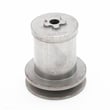
| Vibration after hitting debris | Bent blade or damaged adapter | Husqvarna lawn mower blade adapter 581473301 |
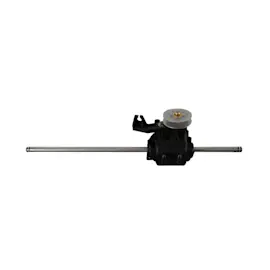
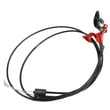
| Self-propel feels weak or inconsistent | Drive control/cable issue | Husqvarna walk-behind lawn mower drive control assembly with cable 586638001 |
Why it matters
Choosing a “top” brand helps, but consistent maintenance is what keeps a gas walk-behind mower dependable season after season. A sharp blade, clean fuel, and properly adjusted controls reduce strain on the engine and drive system and improve cut quality.
Last updated: January 2026
What model number is a Craftsman 6.75 lawn mower?
A “Craftsman 6.75” label usually refers to the engine series, not the mower’s model number. For Craftsman walk-behind mowers, the model number is typically a 9-digit number (often starting with 917) found on the mower’s ID tag; use the 917370415 manual to confirm the exact tag location and format.
Where to find the model number on a Craftsman walk-behind mower
We recommend checking the mower’s product ID label (not the engine shroud). Common places include:
- Rear of the deck near the discharge opening
- Top of the deck near the engine mounting area
- Behind the rear wheels on the deck housing
- On the handle bracket area (less common)
- In the documentation that came with the mower
What “6.75” means (and why it can be confusing)
“6.75” is commonly used to describe an engine power class/series. Multiple Craftsman mowers can use a similar 6.75-class engine, so the mower model number is what you need to get the right Craftsman parts (blade, drive parts, cables, wheels).
Quick ID check
| What you see | What it identifies | What to use for parts |
|---|---|---|
| “6.75” on engine cover | Engine series/power class | Mower model number (example: 917XXXXXX) |
| 9-digit number on mower tag | Mower model | Use this to look up diagrams and parts |
| Engine model/type/code | Engine model | Use for engine-specific parts only |
If you are trying to match parts for model 917370415
Once you confirm your mower is Craftsman model 917370415, match parts by function and fit. Common examples include:
- Cutting: husqvarna lawn mower 22-inch deck 3-in-1 blade 532421825
- Blade mounting: husqvarna lawn mower blade adapter 581473301
- Self-propel control: lawn mower zone control cable 587326601
Why it matters
Using the correct mower model number prevents ordering the wrong blade, drive control cable, or transmission-related parts, even when two mowers share a similar 6.75-class engine.
Last updated: January 2026