
How much horsepower does a Delta 36-545 have?
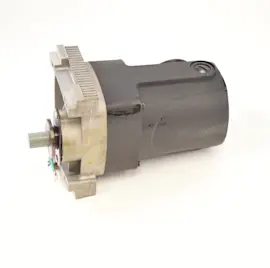
The exact horsepower rating for the Delta 36-545 10-inch bench saw depends on the motor nameplate and the specific motor installed on your saw. For this model, we use the motor’s label (HP or amps/volts) as the most reliable way to confirm the true power before ordering parts or troubleshooting performance.
How to confirm horsepower on your Delta 36-545
Unplug the saw, then check the motor nameplate (usually on the motor housing). Look for HP first; if it’s not listed, use amps (A) and volts (V).
- Unplug the saw and remove the belt guard or motor cover if needed
- Find the motor nameplate and record HP, amps, volts, and RPM
- If only amps/volts are shown, use the quick estimate below
- If the motor was replaced, use the motor’s nameplate (not the saw model) for horsepower
- Use the model number 36-545 when searching diagrams and replacement items on Sears PartsDirect
Quick horsepower estimate (when only amps and volts are listed)
This gives a practical ballpark for many bench and contractor-style table saw motors.
| What you have | What to do | What you get |
|---|---|---|
| HP listed | Use that value | Exact rating from the motor |
| Amps and volts listed | Estimate input watts = A × V | Approximate motor input |
| No electrical data visible | Clean the label and re-check | Usable data for parts matching |
Rule of thumb: many 120V bench saw motors in this class commonly land around 1.0 to 2.0 HP peak/marketing, with lower continuous (running) HP. Use the nameplate to avoid mismatching a switch, capacitor, or motor.
Why it matters
Horsepower affects cut quality and safety. If the motor is underpowered or wired incorrectly, you can see slow blade speed, burning, frequent breaker trips, or stalling in hardwood. Confirming the motor rating also helps match electrical parts like the power switch, cord, and overload protection.
Last updated: February 2026
Is the Delta ShopMaster a good woodworking tool?
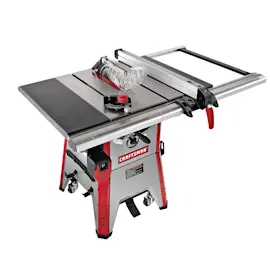
Yes. Delta ShopMaster tools are a solid choice for basic woodworking when you want dependable performance at a value price point. For a Delta 36-545 10" bench saw setup, the tool is “good” when it’s properly aligned, has a sharp blade, and all guards and controls work smoothly.
What “good” means for a ShopMaster saw in real use
A ShopMaster is a good fit when your projects match what a bench saw is designed to do:
- DIY and light workshop work: ripping and crosscutting common lumber and sheet goods
- Repeatable cuts: when the fence locks square and the blade stays aligned
- Practical power: steady cutting with the right blade and feed rate (no forcing the stock)
- Basic accuracy: good results after setup and periodic tune-ups
Quick checklist before you buy or put it back into service
These items matter more than the name on the badge for cut quality and safety:
- Fence locks parallel to the blade and doesn’t drift during a cut
- Blade is sharp, correct for the material (rip, crosscut, combination), and mounted tight
- Arbor has no wobble; blade runs true with minimal vibration
- Miter gauge slides smoothly and holds angle
- Switch, cord, and plug are in good condition; no intermittent power
- Guard, splitter/riving knife (if equipped), and anti-kickback parts are present and functional
Common “good tool” upgrades (setup, not modifications)
Most bench saw complaints come from setup issues. These steps typically deliver the biggest improvement:
| Goal | What to adjust | Result you should see |
|---|---|---|
| Straighter rips | Fence parallelism | Less burning, less binding |
| Cleaner cuts | Blade selection and height | Smoother edge, less tear-out |
| Less vibration | Blade condition, arbor tightness | Quieter running, better finish |
| Safer feeding | Outfeed support, push sticks | Less kickback risk |
Why it matters
A “good” woodworking tool is one that cuts accurately and predictably without fighting you. On a Delta 36-545, alignment, blade choice, and a stable work surface determine results as much as the saw itself.
If you need replacement parts for your Delta 36-545, start with the parts list for this model, or search by model number on Sears PartsDirect.
Last updated: February 2026
What sizes do table saws come in?
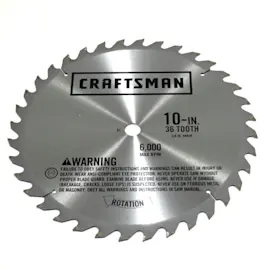
Table saw “size” is usually defined by blade diameter. Your Delta 36-545 is a 10-inch bench saw, and 10-inch blades are the most common size; smaller saws often use 8-inch to 8-1/2-inch blades, while larger jobsite and cabinet saws can use 12-inch blades.
Common table saw sizes (by blade diameter)
Most shoppers compare saws by blade size first, then by rip capacity and table size.
- 8-inch to 8-1/2-inch: compact benchtop saws; lighter duty and smaller cut capacity
- 10-inch: the most common size (includes many benchtop, contractor, and jobsite saws)
- 12-inch: larger saws; more depth of cut and typically more power
Arbor size: the other “fit” measurement
Blade diameter is only part of sizing. The blade’s center hole must match the arbor.
- Most 10-inch table saw blades use a 5/8-inch arbor hole
- Some specialty blades use different arbor holes or include reducer bushings
- Always match the blade’s maximum RPM rating to the saw
Quick comparison table
| Blade size | Typical saw type | Typical use |
|---|---|---|
| 8-inch to 8-1/2-inch | Compact benchtop | Light DIY, small stock |
| 10-inch | Benchtop, jobsite, contractor | General-purpose ripping and crosscutting |
| 12-inch | Cabinet, heavy-duty | Thicker stock, higher production work |
Why it matters
Choosing the right “size” helps you get the cut capacity you need without overbuying. For Delta 36-545 owners, sticking with the correct blade diameter and arbor fit helps reduce vibration, improves cut quality, and protects the motor and arbor bearings.
Parts and support
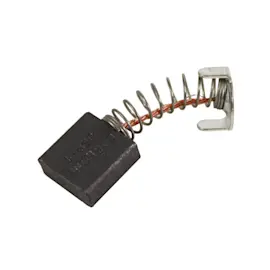
If you are shopping for replacement parts (like a blade guard, arbor hardware, switch, belt, or motor components), start with the model-specific parts list for Delta 36-545, or search by model number on Sears PartsDirect. For general site and ordering help, use top questions about Sears and Sears PartsDirect.
Last updated: February 2026