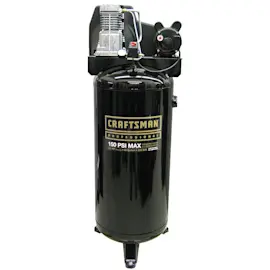
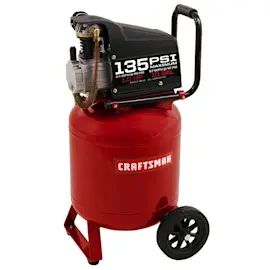
Owner’s manual

What is the average lifespan of an air compressor?
Most homeowner-style piston air compressors like the Craftsman 10716575 last 10 years with normal use and basic maintenance; heavy use and poor moisture control can shorten that, while careful operation and routine draining can push service life longer.
Typical lifespan by compressor type
Lifespan depends heavily on duty cycle, heat, and how well moisture is managed in the tank.
| Compressor type | Typical lifespan | Common use case |
|---|---|---|
| Small oil-free piston | 5 to 10 years | DIY, intermittent tools |
| Oil-lubricated piston | 10 to 15 years | Frequent home shop use |
| Rotary screw (shop/industrial) | 15 to 20 years | Continuous air demand |
What extends the life of the Craftsman 10716575
We see the biggest gains from controlling condensation, avoiding overheating, and keeping the unit clean.
- Drain condensation regularly; the manual calls out draining daily and/or every hour in humid conditions
- Stay within the duty cycle; give the motor and pump time to cool between long runs
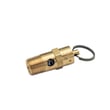
- Check the safety valve before each use to help prevent overpressure conditions
- Inspect the tank yearly for rust or pinholes and stop using the compressor if the tank looks unsafe
- Keep the exterior clean and dry; avoid harsh solvents that can damage plastics
For the model-specific maintenance schedule and procedures, follow the owner's manual.
Signs it is near end-of-life
These issues usually mean wear in the pump, valves, seals, or controls is adding up:
- Takes much longer than normal to build tank pressure
- Won’t build tank pressure or won’t hold air
- Frequent tripping on thermal overload
- Constant air leaks you cannot trace to fittings
- Excessive noise or vibration compared to normal operation
A focused troubleshooting path helps narrow it down quickly; use air compressor won't build tank pressure if pressure is the main symptom.
Why it matters
A compressor that is past its practical lifespan often runs hotter and longer to do the same work, which accelerates wear and increases the chance of tank corrosion from trapped moisture.
Last updated: February 2026
What does 4.0 scfm at 90 psi mean?
It means the compressor can deliver 4.0 standard cubic feet per minute (SCFM) of airflow while maintaining 90 PSI at the outlet. For a Craftsman air compressor like model 10716575, SCFM at 90 PSI is the key rating for whether it can keep up with air tools.
How to use SCFM and PSI to size tools
Use SCFM as the “how much air” number and PSI as the “how hard it pushes” number.
- Match your tool’s required SCFM at 90 PSI to the compressor’s rating
- If the tool needs more SCFM than the compressor can supply, pressure drops and the tool slows
- Many nailers and inflators use low SCFM; grinders and sanders often need higher SCFM
- Regulator setting affects outlet PSI, but it does not increase the compressor’s SCFM capacity
- Duty cycle matters; a small compressor may need rest time between runs
What “standard” in SCFM means
SCFM is measured under standardized conditions so you can compare compressors more fairly than with raw CFM.
Quick reference table
| Spec | What it tells you | What you do with it |
|---|---|---|
| SCFM @ 90 PSI | Airflow available at a common working pressure | Compare to tool SCFM requirement |
| PSI (outlet) | Regulated line pressure to the tool | Set with the regulator knob |
| PSI (tank max) | Maximum stored pressure in the tank | Not a tool requirement |
Model-specific note for Craftsman 10716575
Our owner's manual lists this model at 2.8 SCFM @ 90 PSI (and 3.7 SCFM @ 40 PSI) with 150 PSI max tank pressure and a 50% duty cycle. Use those numbers when choosing tools and planning run time.
Why it matters
If your tool needs 4.0 SCFM at 90 PSI but your compressor only supplies 2.8 SCFM at 90 PSI, the compressor will run continuously, tank pressure will fall, and the tool performance will be inconsistent.
Related troubleshooting help
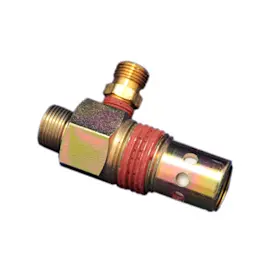
If the compressor struggles to keep up or won’t reach pressure, use air compressor won't build tank pressure to pinpoint common causes like leaks, a bad check valve, or pump wear.
Last updated: February 2026
What is the most common cause of air compressor failure?
Poor routine maintenance that leads to overheating and moisture-related damage is the most common cause of air compressor failure. For the Craftsman 10716575, the biggest preventable issues are leaving condensation in the tank, running with restricted ventilation, and power-supply problems; follow the maintenance and troubleshooting steps in the owner's manual.
What “failure” usually looks like
Many “dead compressor” complaints match these conditions:
- Compressor does not run (loss of power, tripped breaker, thermal overload open)
- Motor hums but won’t start or runs slowly (low voltage, wrong extension cord gauge/length)
- Breaker trips or fuses blow repeatedly (overloaded circuit, wiring/cord issues)
- Won’t build or hold tank pressure (leaks, drain valve open, check valve leaking)
- Excess moisture at the outlet (water in tank, high humidity)
Most common root causes (and the fix)
- Moisture left in the tank: drain condensation regularly; keep tank pressure low when draining.
- Overheating: use a well-ventilated area; let the motor cool if the thermal overload trips.
- Electrical supply issues: avoid extension cords; use correct wire gauge and shortest length when one is necessary.
- Air leaks: tighten fittings, tubing, and the drain valve; leak-test with soapy water.
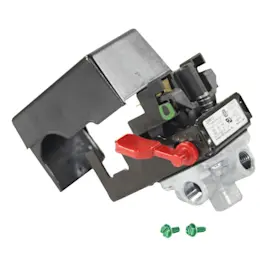
- Pressure control problems: a failing pressure switch can stop normal cycling.
Quick checks before you call it “failed”
- Confirm the power switch is ON and the cord is fully seated.
- Reset the breaker and reduce load by using a dedicated circuit.
- Drain the tank and disconnect the air hose to clear moisture.
Symptom-to-cause guide
| Symptom | Likely cause | First action |
|---|---|---|
| Won’t start | No power, thermal overload | Check power, let motor cool |
| Hums only | Low voltage, cord issue | Remove extension cord |
| Runs nonstop | Leak, drain valve open | Close drain, leak-test |
Why it matters
Overheating and moisture make the compressor run longer and hotter, which accelerates wear on the motor and pump components and triggers repeated thermal overload shutdowns.
Last updated: February 2026