Owner’s manual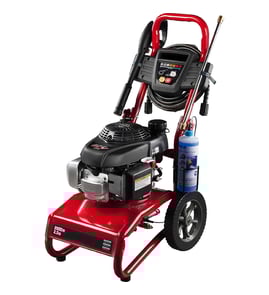



Can you put 87 gas in a pressure washer?
Yes. For the Craftsman pressure washer model 580752192, regular unleaded gasoline with a minimum 87 octane (87 AKI) is the correct fuel. The manual also allows gasoline blended with up to 10% ethanol (gasohol) or up to 15% MTBE.
Fuel requirements for model 580752192
Use fuel that meets these basics (and avoid the common mistakes that cause hard starting and poor performance):
- Use clean, fresh, unleaded gasoline
- Use 87 octane minimum (higher octane is fine)
- Ethanol blend is acceptable up to 10% ethanol
- MTBE blend is acceptable up to 15% MTBE
- Do not mix oil into the gasoline
- Do not use unapproved fuels such as E85
For the exact wording and any high-altitude notes, follow the 580752192 owner's manual.
Quick “can I use this gas?” guide
| Fuel type | OK to use? | Notes |
|---|---|---|
| Unleaded 87 octane (regular) | Yes | Minimum required octane for this model |
| Unleaded 88 to 93 octane | Yes | Can help in some conditions, not required |
| E10 (up to 10% ethanol) | Yes | Acceptable per manual |
| Up to 15% MTBE | Yes | Acceptable per manual |
| E85 | No | Not approved for this engine |
| Gas mixed with oil | No | Use straight gasoline only |
Why it matters
Using the correct octane and approved blends helps prevent starting issues, rough running, and fuel-system varnish. It also protects the engine and pump system so your pressure washer maintains consistent pressure.
Helpful tips if it runs poorly after fueling
If the engine starts but surges, loses power, or stalls after you change fuel:
- Drain old fuel and refill with fresh 87+ octane from a different station/brand
- Add fuel stabilizer when filling (especially for storage)
- Confirm the water supply is on and purge air from the pump before starting
- Check for kinks, cuts, or leaks in the high-pressure hose
- Verify the spray tip is not clogged (a restricted nozzle can make the engine labor)
Last updated: January 2026
Is it worth repairing a pressure washer?
For a Craftsman pressure washer model 580752192, repairing is worth it when the problem is a wear item (hose, nozzle, leaks, routine maintenance) and the total cost stays well below the price of a comparable replacement. If the pump or engine has major damage, replacement usually makes more sense.
Quick decision checklist
- Repair if the issue is a leak, clog, or worn accessory (spray tip, hose, fittings)
- Repair if the unit has been maintained (oil level, clean inlet screen, no hose damage)
- Repair if the fix is straightforward and parts are readily available
- Replace if the pump or engine has major internal failure or repeated breakdowns
- Replace if repair cost approaches about half the cost of a new, similar gas pressure washer
What to check first (often low-cost fixes)
The manual calls out several pre-use and maintenance checks that commonly solve “no pressure” or poor performance without major repairs. Use the 580752192 owner's manual to follow the correct setup and maintenance schedule.
- Inspect the high-pressure hose for cuts, bulges, leaks, or damaged couplings
- Purge air from the pump by turning on water and squeezing the trigger until flow is steady
- Clean the water inlet screen if clogged
- Check the spray tip for blockage or wear
- Verify proper water supply temperature (not to exceed 100°F)
Repair vs. replace: typical cost and effort comparison
| Scenario | Typical effort | Typical outcome |
|---|---|---|
| Clogged/worn spray tip or minor leak | Low | Restores pressure and spray pattern |
| Damaged high-pressure hose | Low to medium | Stops leaks, improves performance |
| Routine maintenance overdue (oil, debris, inlet screen) | Low | Improves starting and running |
| Pump or engine major failure | High | Costly; replacement often preferred |
Parts that commonly make repair worthwhile
If your issue is in the spray path, replacing the affected part is usually a good value compared with replacing the whole machine.
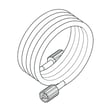
- Pressure washer hose 84006753 (high-pressure hose replacement)
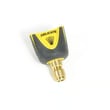
- Pressure washer spray nozzle 195983XGS (spray pattern and pressure issues)
Why it matters
A pressure washer that is properly supplied with water, purged of air, and maintained (clean inlet screen, good hose condition, routine checks) runs cooler, builds pressure more consistently, and avoids premature pump wear. That keeps repairs small and predictable instead of turning into major component failures.
Last updated: January 2026
What PSI should my pressure washer be?
For the Craftsman pressure washer model 580752192, the rated maximum outlet pressure is 2,550 PSI, which is a strong home-use level for cleaning decks, siding, patios, and driveways when you use the correct spray tip and technique. For operating and safety details, follow the 580752192 owner's manual.
What PSI range is “right” for typical jobs?
We match PSI to the surface and the risk of damage; higher PSI is not always better.
- 1,300 to 2,000 PSI: cars, outdoor furniture, softer woods (with a wide fan tip)
- 2,000 to 2,800 PSI: decks, fences, most patio cleaning
- 2,800+ PSI: heavier concrete work (more risk of etching if you linger)
How to control cleaning power on this model
Even though your 580752192 is rated up to 2,550 PSI, you control “effective PSI” at the surface with setup and technique.
- Use a wider spray pattern for delicate surfaces
- Increase distance from the surface to reduce impact
- Keep the wand moving; do not dwell in one spot
- Purge air from the pump before spraying steadily
- Avoid running the pump 3 to 5 minutes with the trigger released (thermal relief can discharge hot water)
Quick guide: PSI vs. what changes the results
| What you change | What it affects | What you’ll notice |
|---|---|---|
| Spray tip selection | Concentration of spray | Narrower spray cleans faster but can damage surfaces |
| Distance to surface | Impact force at the surface | Farther away is safer, closer is more aggressive |
| Dwell time and motion | Surface wear risk | Lingering can etch wood or concrete |
| Water supply quality | Pump performance | Low flow can cause weak or inconsistent spray |
Why it matters
Using the right PSI and spray tip helps you clean faster while preventing gouging wood, stripping paint, or etching concrete. It also reduces strain on the pump and high-pressure hose.
Last updated: January 2026