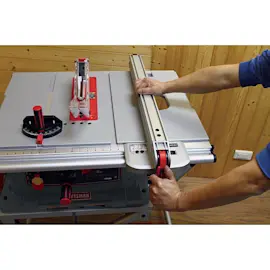
Owner’s manual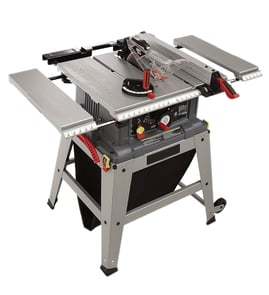

What size blade is a Craftsman 137221960 table saw?
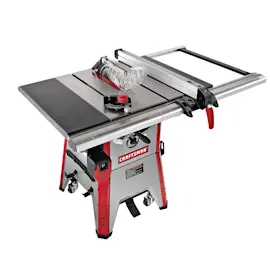
The Craftsman table saw model 137221960 uses a 10-inch blade. This is the standard blade diameter specified for this saw, and it matches the guard and splitter setup designed to keep cuts accurate and operation safer (see the owner's manual).
What “10-inch blade” means for fit
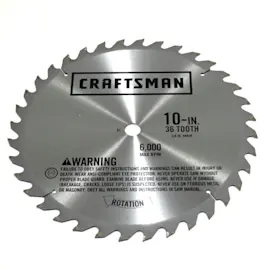
A 10-inch blade refers to the blade’s outside diameter. For proper fit and safe operation, also match these common blade requirements:
- Use a 10-inch diameter table saw blade
- Use a blade with the correct arbor hole size for your saw (confirm in the owner's manual)
- Use a blade rated for at least 5000 RPM
- Choose the right tooth count for your cut (rip vs. crosscut)
Dado blade note (important)
This model supports dado cutting with limits. From the manual guidance:
| Accessory type | What to use | What to avoid |
|---|---|---|
| Dado setup | Up to 6-inch diameter dado; max width 1/2 inch | Adjustable (wobble) dadoes; carbide-tipped dado blades; molding head sets |
Why it matters
Using the correct blade diameter and a properly rated blade helps prevent poor cut quality, binding, and kickback. It also ensures the blade guard, splitter, and fence alignment procedures work as intended.
Related help for blade and cut quality
If you are changing blades or chasing cut accuracy issues, these guides help:
Last updated: February 2026
What are the common table saw mistakes?
Common mistakes on the Craftsman 137221960 table saw include running without guards, using the wrong setup for the cut (rip fence vs. miter gauge), feeding stock that is warped or twisted, and skipping push sticks. These errors increase kickback risk and reduce cut accuracy.
Most common mistakes we see
- Not reading and following the safety rules first; the manual stresses staying alert and understanding hazards before plugging in.
- Removing or bypassing guards instead of keeping guards in place and working properly.
- Leaving adjusting keys or wrenches on the saw; always remove them before turning the saw on.
- Ripping stock that is warped, twisted, or bowed; the workpiece needs a straight edge against the fence.
- Standing or feeding in a way that invites kickback; push forward only on the section between the blade and fence.
- Not using push sticks when the ripped piece is narrow (the manual calls out using a push stick at about 2 inches or narrower).
Correct setup for rip cuts vs. crosscuts
Use the right guide for the cut; mixing setups is a common cause of binding and kickback.
| Cut type | Use this guide | Key reminder |
|---|---|---|
| Rip cut (with the grain) | Rip fence | Keep the workpiece flat to the table and tight to the fence; avoid warped stock. |
| Crosscut (across the grain) | Miter gauge | Remove the rip fence; keep hands out of the blade path. |
Blade height and feed control mistakes
A safer, cleaner cut usually comes from correct blade height and steady feed.
- Set blade height to about 1/8 inch above the top of the workpiece for ripping and crosscutting.
- Wait for full speed before feeding material.
- Feed slowly and steadily; forcing the cut can stall the blade and increase burning or kickback.
Why it matters
Most table saw injuries and “bad cuts” trace back to setup and control: incorrect guides, poor stock selection, and hands too close to the blade. Following the procedures and safety steps in the owner's manual helps prevent kickback, improves accuracy, and protects the motor from overload.
Last updated: February 2026
How much is a Craftsman professional table saw 137221960?
Pricing for the Craftsman table saw model 137221960 depends on condition, included accessories (rip fence, miter gauge, blade guard, leg stand), and your local market; most used units typically sell in the $400 to $500 range when complete and running well. For exact model identification and included components, match your saw to the specs in the owner's manual.
What affects the price most
- Condition and accuracy: smooth blade height/tilt adjustment, no excessive vibration, and square cuts
- Completeness: blade guard, splitter, kickback pawls, rip fence, miter gauge, and leg stand included
- Motor performance: starts quickly, reaches speed without bogging, no burning smell
- Wear items: blade condition, arbor bearings, belts (if equipped), and motor brushes (if applicable)
- Safety items present: guard and anti-kickback parts installed and usable
Quick spec check for model 137221960
The manual lists these key identifiers for this saw:
| Spec | What to look for | Why it matters |
|---|---|---|
| Blade size | 10-inch blade | Confirms you are pricing the right class of saw |
| Speed | 5000 RPM | Helps compare to similar jobsite-style saws |
| Motor rating | 2.5 HP (maximum developed) | Impacts perceived value and expectations |
How we recommend pricing it (simple method)
- Start with a baseline: $400 to $500 for a complete, clean, fully working saw.
- Adjust down if any key parts are missing (guard/splitter/fence) or if it needs repair.
- Adjust up if it is exceptionally clean, includes extra blades/accessories, and cuts accurately.
Why it matters
Table saw value is tied to safe operation and repeatable accuracy. Missing guarding, a misaligned fence, or a slow-starting motor can turn a “good deal” into a costly project.
Last updated: February 2026
Can you use an 8 inch blade on a 10 inch table saw?
Yes, you can use an 8-inch blade on the Craftsman 137221960 table saw as long as the blade fits the arbor and you can reinstall the guard and any safety hardware correctly. You will get less maximum cut depth than with the specified 10-inch blade (3 inches at 90°). See the owner's manual for blade and accessory requirements.
What changes when you use an 8-inch blade
An 8-inch blade works, but it changes how the saw performs.
- Shallower cuts: smaller diameter means less depth of cut.
- Guard and splitter alignment: the blade guard, spreader, and anti-kickback pawls must still line up and function.
- Cut quality depends on the blade: tooth count and blade condition matter more than diameter.
- Setup becomes more important: fence parallelism and blade-to-miter-slot alignment help prevent burning and kickback.
Quick spec comparison (what we know for this model)
The Craftsman 137221960 is designed around a 10-inch blade and has published depth-of-cut specs.
| Item | With 10-inch blade (spec) | With 8-inch blade (typical result) |
|---|---|---|
| Max depth of cut at 90° | 3 in. | About 2 to 2-1/4 in. |
| Max depth of cut at 45° | 2-1/2 in. | About 1-1/2 to 1-3/4 in. |
| Best use case | General ripping and crosscutting | Thin stock, fine-tooth finish cuts, some non-through setups |
Dado and non-through cutting notes
This model lists a maximum dado width of 1/2 inch. If you are using an 8-inch dado set, treat it as a non-through cutting setup and follow the manual’s accessory and guarding guidance.
- Confirm the arbor size and that the blade seats fully on the flange.
- Use the correct washers and tighten the arbor nut securely.
- Set blade height correctly (for many cuts, about 1/8 inch above the workpiece is a common target).
For step-by-step blade swap guidance, use how to replace a table saw blade.
Why it matters
Using the wrong blade size or a blade that prevents proper guarding increases the chance of binding and kickback. Keeping the guard system working and matching the blade to the cut helps you get safer, straighter cuts.
Last updated: February 2026
How to get rid of an old table saw?
For a Craftsman table saw model 137221960, the best way to get rid of it is to sell or donate it if it still runs; if it does not, recycle it as scrap metal or use a local bulk pickup. Before it leaves your shop, make it safe to handle.
Best options (most value to least)
- Sell it as-is (working or “needs repair”); include model 137221960 in the listing.
- Donate it to a school shop program, maker space, or reuse charity (only if it is complete and safe to transport).
- Recycle it as scrap metal at a local metal recycler or transfer station.
- Schedule bulk pickup or haul-away if you cannot transport it.
- Part it out (fence, miter gauge, motor, switch) if you are comfortable disassembling and labeling parts.
Safety steps before moving or disposal
- Unplug the saw and remove the switch key (if equipped).
- Remove the blade and package it so teeth cannot cut through the wrap.
- Lower the blade fully and lock height and bevel adjustments.
- Secure the power cord so it cannot snag during lifting.
- Clean out sawdust from the cabinet and motor area to reduce mess and fire risk.
What to do with the blade and accessories
Many facilities prefer sharp items handled separately.
| Item | Recommended handling | Why it helps |
|---|---|---|
| Saw body (mostly metal) | Scrap metal recycling | Keeps bulky metal out of the waste stream |
| Blade | Wrap, label “sharp”, transport separately | Prevents handling injuries |
| Guards, inserts, plastic parts | Dispose per local rules | Plastics acceptance varies |
Why it matters
The 137221960 is a 120V table saw intended for a 15-amp branch circuit, so it is a substantial power tool that should be transported with the blade removed, cord secured, and dust cleaned out. For safety reminders and handling guidance, follow the 137221960 owner's manual.
Last updated: February 2026