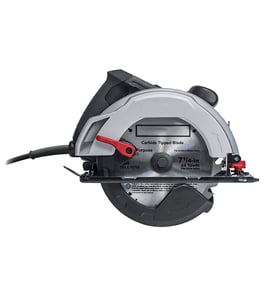

How thick of wood will a 7 1/4 circular saw cut?
A 7-1/4-inch circular saw typically cuts about 2-3/8 inches deep at a 90° cut and about 1-13/16 inches deep at a 45° bevel. On the Porter Cable model 743, plan around 2-5/16 inches at 90° and 1-13/16 inches at 45° for maximum depth.
Typical max depth of cut (7-1/4-inch blade)
Depth varies by saw design and how the shoe and guard are built, but these are the common targets.
| Cut angle | Typical max depth | What it covers |
|---|---|---|
| 90° | ~2-3/8 in | Most 2-by lumber in one pass |
| 45° | ~1-13/16 in | Many bevel cuts through 2-by lumber |
What changes the real-world cut thickness
- Bevel angle: depth drops as you tilt the base.
- Blade diameter and wear: a smaller or worn blade cuts shallower.
- Depth setting: set the blade so teeth extend about 1/4 inch below the board.
- Wood type and condition: LVL, hardwood, or wet lumber needs a slower feed rate.
- Blade choice: framing blades cut faster; finish blades cut cleaner but slower.
If the board is thicker than the saw can cut
- Cut, flip, and finish: make a straight cut from one side, flip the board, and complete it.
- Use a guide: clamp a straightedge so both passes line up.
- Choose the right tool: for very thick stock, a larger-blade saw or a different saw type is often faster and cleaner.
Why it matters
Matching depth of cut to your material reduces binding and kickback risk, and it helps you choose the right blade and technique for cleaner results. For general DIY safety practices, use our are diy appliance repairs safe guidance as a baseline.
Last updated: February 2026
What does 743 mean?
On the Porter Cable 743 circular saw, 743 is the model number. We use that model number to match the correct diagrams, parts list, and repair information for your specific saw so you get compatible components.
Where to find “743” on the saw
Look for the model number on the tool’s identification label. Common spots include:
- The motor housing near the handle
- The side of the upper blade guard
- The base (shoe) area near the rear
- A label plate near the cord entry or strain relief
If the label is worn, write down any other numbers you see (type, series, or revision) because they can affect part fit.
Why the model number matters for parts
Power tools often have multiple versions that look similar but use different parts (switches, brushes, cords, guards). Using the exact model number helps avoid ordering the wrong item.
| What you have | What it tells us | Why it matters |
|---|---|---|
| Model number (743) | The saw family | Gets you to the right parts breakdown |
| Type/series (if shown) | The specific version | Can change internal components |
| Voltage/amps | Electrical rating | Helps match switches, cords, and motor parts |
Quick troubleshooting tip (when “743” comes up during repair)
If you are looking up “743” because the saw will not run or cuts out, start with the most common electrical checks:
- Unplug the saw and inspect the power cord for cuts or a loose strain relief
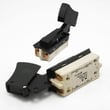
- Check the trigger switch for sticking or intermittent operation
- Inspect brush caps and motor brushes for heavy wear (if your version uses serviceable brushes)
- Look for a tripped breaker or a bad extension cord
- Test continuity with a multimeter if you are comfortable doing electrical checks
For step-by-step electrical testing and wire repair basics, use how to use a multimeter to test electrical parts video and how to repair broken or damaged wires video.
Why it matters
Entering the correct model number (743) is the fastest way to get parts that fit and to avoid repeat repairs caused by mismatched electrical or guard components.
Last updated: February 2026
What is a 7 1/4 circular saw used for?
A 7-1/4 inch circular saw is the most common, all-purpose size for cutting wood on DIY and jobsite projects. With a Porter Cable model 743, you typically use this size saw for straight cuts in framing lumber and sheet goods where you want a good balance of depth of cut, power, and portability.
Common jobs a 7-1/4 inch circular saw handles well
- Cutting dimensional lumber (2x4, 2x6, 2x8) for framing and repairs
- Ripping or crosscutting plywood and OSB for subfloors and sheathing
- Trimming deck boards and fence pickets to length
- Breaking down sheet goods for cabinets, shelving, and shop projects
- Making bevel cuts (angled cuts) for trim details and roof framing
What to expect for cutting capacity (typical)
Most 7-1/4 inch saws are designed to cut standard framing material in a single pass at 90 degrees, and they can usually handle common bevel cuts for construction work.
| Cut type | Typical capability with a 7-1/4 in. saw | Best practice |
|---|---|---|
| 90 degree crosscut | Single-pass cuts through most 2-by lumber | Support the board to prevent pinching |
| Bevel cut | Common bevel angles for framing | Slow feed rate to avoid binding |
| Sheet goods | Long straight cuts in plywood/OSB | Use a straightedge guide for accuracy |
Blade choice matters as much as saw size
A 7-1/4 inch saw can do very different work depending on the blade:
- 24-tooth framing blade: fast cuts in construction lumber
- 40-tooth general-purpose blade: smoother cuts in plywood
- 60-plus tooth finish blade: clean cuts for trim and cabinetry
- Specialty blades: only use blades rated for your material and saw speed
Why it matters
Using the right saw size and blade helps prevent kickback, reduces motor strain, and improves cut quality. For the Porter Cable 743, matching the blade to the material is the simplest way to get safer, straighter results.
For safety basics before any cut, follow the guidance in are diy appliance repairs safe.
Last updated: February 2026
What is the best corded circular saw to buy?
The best corded circular saw to buy depends on what you cut most often and how you work. For most DIY and remodeling jobs, a 7-1/4 inch, 15-amp sidewinder is the best all-around choice; for heavy framing, a worm drive or rear-handle saw is the better pick.
Quick picks by use case
- All-around DIY and remodels: 7-1/4 inch, 15-amp sidewinder (lighter, easier to handle)
- Framing and long rips: worm drive or rear-handle (more torque and stability)
- Finish-quality cuts: saw with a rigid shoe, minimal blade wobble, and easy bevel adjustments
- Left-blade visibility preference: choose a left-blade model if you want a clearer cut line (right-handed users often prefer this)
- Dust control needs: look for a usable dust port and a guard that clears chips well
What to compare before you buy
| Feature | What to look for | Why it matters |
|---|---|---|
| Motor | 15 amps (corded) | Maintains speed under load in 2x lumber and sheet goods |
| Blade size | 7-1/4 inch (most common) | Best blade availability and cutting depth |
| Bevel capacity | 45 degrees minimum; 56 degrees is a plus | Common framing angles and bevel cuts |
| Shoe/base | Flat, rigid, easy-to-read scale | Helps keep cuts straight and repeatable |
| Cord | Longer, flexible jacket | Fewer snags; better cold-weather handling |
How this relates to your Porter Cable model 743
If you already own a Porter Cable 743, the “best” upgrade is the saw that fixes what slows you down today: weight, visibility, bevel accuracy, or power in thick stock. Before replacing the tool, we recommend checking the cord, switch, and internal wiring for wear because electrical issues can mimic a weak motor.
- Unplug the saw and inspect the cord for cuts, kinks, or a loose strain relief
- If it runs intermittently, test continuity through the cord and switch
- Check brush wear (many corded saws use replaceable carbon brushes)
- Confirm the blade is sharp and correct for the material (a dull blade feels like low power)
For safe electrical troubleshooting steps, use our how to use a multimeter to test electrical parts video.
Why it matters
A corded circular saw is a high-load tool; choosing the right drive style and a solid shoe improves cut accuracy, reduces kickback risk, and makes bevel and rip cuts more consistent.
Last updated: February 2026
