Owner’s manual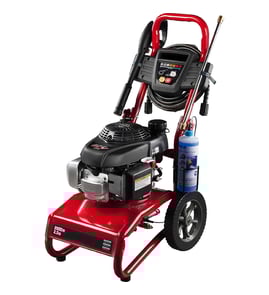



Can you put 87 gas in a pressure washer?
Yes. For the Craftsman pressure washer model 580750401, we recommend clean, fresh unleaded gasoline with a minimum of 87 octane (87 AKI). Gasoline with up to 10% ethanol is acceptable; do not use higher-ethanol fuels like E15 or E85. See the 580750401 owner's manual for fuel details.
Fuel type and what to avoid
Use fuel that matches the engine requirements to prevent hard starting, surging, and fuel-system damage.
- Use regular unleaded gasoline
- Use 87 octane minimum (higher octane is fine)
- Use gasoline with up to 10% ethanol
- Do not use E15 or E85
- Do not mix oil into the gasoline (this is not a 2-cycle mix)
Safe fueling steps (quick checklist)
Follow these steps any time you add fuel.
- Shut the engine OFF and let it cool at least 2 minutes
- Fuel outdoors only
- Open the cap slowly to relieve tank pressure
- Do not overfill; leave room for expansion
- Wipe up spills and wait for vapors to clear before starting
Quick comparison: common pump gas options
| Gas at the pump | Works in 580750401? | Notes |
|---|---|---|
| 87 octane (regular) | Yes | Recommended minimum octane |
| 89 to 93 octane (mid/premium) | Yes | Not required, but acceptable |
| E10 (up to 10% ethanol) | Yes | Acceptable ethanol limit |
| E15 | No | Unapproved fuel type |
| E85 | No | Unapproved fuel type |
Why it matters
Using the correct gasoline helps the engine run cooler and more consistently, and it reduces varnish and gum buildup in the carburetor during storage.
Last updated: February 2026
Is it worth repairing a pressure washer?
Yes, repairing a Craftsman pressure washer like model 580750401 is usually worth it when the engine and pump are basically sound; replacing wear items (hose, nozzle, seals, hardware) typically costs far less than replacing the whole unit and restores safe, reliable performance.
When repair makes sense
We recommend repairing when the problem is limited to common service items or external leaks.
- Worn or damaged high-pressure hose (replace, do not patch)
- Clogged or worn spray nozzle causing poor pressure or pulsing
- Loose or missing pump mounting fasteners or vibration issues
- Leaking fittings that need an O-ring or seal replacement (not sealant)
- Overheating symptoms that point to a thermal release valve issue
When replacement is the better call
If the core components are failing, costs can stack up quickly.
- Severe pump damage (cracked housing, seized pump, metal debris)
- Major engine problems (low compression, heavy smoke, hard starting after tune-up)
- Multiple failures at once plus heavy corrosion or frame damage
Safety and repair rules we follow
The 580750401 manual is clear that pressure washer repairs must be done safely.
- Shut the engine off and release trapped pressure at the gun before servicing
- Disconnect the spark plug wire before adjusting or making repairs
- Never aim the spray gun at people or animals
- Never repair a high-pressure hose; replace it
- Never use sealant to “fix” leaking connections; replace the O-ring or seal
Common repair parts for this model
| Symptom | Likely fix | Example part for model 580750401 |
|---|---|---|
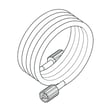
| Leaking or damaged hose | Replace hose | Pressure washer hose 84006753 |
| Poor spray pattern or low cleaning power | Replace nozzle | Pressure washer spray nozzle (green) 195983AGGS |
| Pump loosens or vibrates | Replace mounting hardware | Pressure washer pump mounting hardware kit 315033GS |
| Hot water dumping from pump area after sitting in bypass | Replace thermal valve | Pressure washer thermal release valve 318923GS |
Why it matters
A targeted repair keeps your pressure washer operating safely and at full cleaning power. It also supports the maintenance approach in the 580750401 owner's manual, which is designed to extend service life and reduce downtime.
Last updated: February 2026
What PSI should my pressure washer be?
For the Craftsman pressure washer model 580750401, the rated outlet pressure is 2,200 PSI (PWMA-rated), which is the right range for most homeowner cleaning jobs like patios, siding, and driveway spot cleaning. For the exact rating and operating details, use the 580750401 operator’s manual.
PSI recommendations by task
Use PSI as your “how aggressive is the spray” guide; then fine-tune with the correct spray tip and distance.
- 1,300 to 2,000 PSI: cars, outdoor furniture, grills (use wider fan tips)
- 2,000 to 2,800 PSI: decks, fences, most home concrete and brick
- 2,800+ PSI: heavy-duty concrete prep and commercial-type cleaning (more risk of damage)
What to check if your PSI feels low
A 2,200 PSI unit can still feel weak if water supply, nozzle, or hose flow is restricted.
- Verify your water source can supply more than 2.9 GPM and at least 20 PSI at the end of the garden hose
- Purge air from the pump by turning water on and squeezing the trigger until flow is steady
- Inspect the spray tip for clogs and confirm you are using the right nozzle for the job
- Check for kinks, leaks, or internal restrictions in the high-pressure line; replace a worn hose with the pressure washer hose 84006753
- Avoid letting the engine run 3 to 5 minutes with the trigger released; the thermal relief system can discharge hot water and performance can seem inconsistent
Quick spec snapshot (model 580750401)
| Spec | Value |
|---|---|
| Rated pressure | 2,200 PSI (PWMA-rated) |
| Rated flow | 1.9 GPM |
| Max water supply temp | 100°F |
Why it matters
Using the right PSI helps you clean faster while preventing damage to wood, paint, and seals. Matching PSI with the correct spray nozzle and steady water supply also protects the pump and extends the life of your Craftsman pressure washer.
Last updated: February 2026