
Are radial arm saws worth anything?
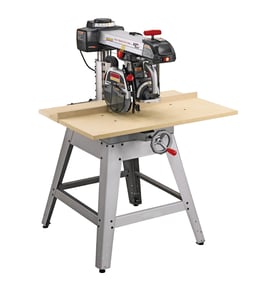
Yes. A vintage radial arm saw can be worth real money if it is complete, runs smoothly, and includes key accessories; for a Craftsman 113234800 8-1/4" radial saw, value is usually driven more by condition and local demand than by rarity.
Most used radial arm saws sell locally because they are heavy and take up space. These ranges are common for homeowner-grade saws like many Craftsman units:
- As-is, missing parts, or rough condition: $0 to $75
- Working, average wear, basic setup: $75 to $200
- Very clean, tuned, with accessories (guard, fence, table, wrenches): $200 to $400
- Collector-grade industrial brands/models: often higher (varies widely)
| Condition | What buyers look for | Value impact |
|---|---|---|
| Incomplete | Missing guard, fence, table, yoke parts | Big decrease |
| Runs but needs work | Noisy bearings, stiff travel, worn cord | Moderate decrease |
| Ready to use | Smooth carriage travel, square cuts, solid table | Increase |
These factors usually move the price the most:
- Completeness: blade guard, fence, table boards, anti-kickback parts
- Mechanical condition: smooth arm travel, tight column lock, minimal play in the carriage
- Motor health: starts quickly, no burning smell, no excessive sparking at brushes
- Accuracy: can be tuned to cut square and stay aligned
- Accessories: dado setup, original clamps, extra tables, stand
Unplug the saw before inspecting anything closely.
- Verify the guard is present and functional
- Check the carriage rolls smoothly without binding
- Listen for bearing noise (grinding or rumbling)
- Inspect the power cord and switch for damage
- Confirm the fence and table are solid and not badly hacked up
A radial arm saw can be a versatile crosscut and dado tool in a small shop, but only if it is complete and properly tuned. Missing safety parts or a sloppy carriage can turn a “deal” into a project that costs more than the saw is worth.
For safe electrical troubleshooting (switch, cord, motor), we recommend using a meter and proven test steps like in how to use a multimeter to test electrical parts video.
Last updated: February 2026
What are common problems with radial arm saws?
Common problems on a Craftsman radial arm saw like model 113234800 include inaccurate cuts, rough or noisy operation, weak power, and safety or control issues (switch, cord, or brake). Most problems trace back to alignment, blade condition, worn bearings, or electrical faults.
- Inaccurate cuts (out of square, drifting, inconsistent depth): fence not straight, arm/yoke not aligned, bevel or miter scale out of calibration, blade warped or dull
- Burning, slow cutting, or excessive tear-out: dull blade, wrong blade type (rip vs. crosscut), feed rate too fast, blade installed backward
- Vibration or chatter: bent blade, arbor flange debris, loose hardware, worn motor bearings
- Motor hums but won’t start or trips breaker: bad switch, damaged cord/plug, failing start components (if equipped), seized bearings
- Sparks or burning smell: worn brushes (if the motor uses brushes), loose wiring connections, failing armature
- Carriage doesn’t slide smoothly: dirty/dry track, damaged rollers/bushings, misadjusted carriage
- Unplug the saw before any inspection.
- Verify the blade is sharp, clean, and correct for the cut (fine-tooth crosscut blade for trim; fewer teeth for ripping).
- Check for play in the carriage and yoke; tighten obvious loose fasteners.
- Clean sawdust from the arm track and table, then confirm the carriage rolls smoothly.
- Inspect the power cord and switch for heat damage, cracks, or intermittent operation.
- If vibration persists, remove the blade and check for runout (wobble) and debris on the arbor washers.
| Symptom | What to check first | Typical fix |
|---|---|---|
| Cuts not square | Fence and arm alignment | Re-square fence; recalibrate arm/yoke stops |
| Burning wood | Blade sharpness and tooth count | Replace/clean blade; slow feed |
| Loud grinding | Bearings | Replace worn bearings; stop using until corrected |
| Won’t start | Cord/switch, then motor | Repair wiring; replace switch; motor service |
A radial arm saw can still spin and cut even when it’s out of alignment or mechanically worn; that combination increases kickback risk and ruins accuracy. Keeping the blade, carriage travel, and electrical controls in good shape protects both cut quality and safe operation.
For repair planning and electrical testing basics, we recommend our how to use a multimeter to test electrical parts video.
Last updated: February 2026
What is the best brand of radial arm saw?
There is no single “best” brand for every shop; the best radial arm saw is the one that stays accurate, has solid safety features, and has parts support for your needs. For a Craftsman 113234800 8-1/4" radial saw, we focus on fit, alignment, and serviceability so you can keep your saw cutting safely and consistently.
- Rigid arm and column: less flex means better crosscut accuracy.
- Smooth carriage travel: reduces chatter and helps prevent grabby cuts.
- Reliable yoke and bevel locks: keeps miter and bevel settings from drifting.
- Common, replaceable wear parts: bearings, brushes (if applicable), switches, cords.
- Clear adjustment points: makes squaring the arm and setting stops practical.
| What you care about | What to prioritize | Why it helps |
|---|---|---|
| Accuracy over time | Stiff arm, tight locks, easy calibration | Holds 90 degree crosscuts and repeatable miters |
| Long-term ownership | Parts availability and standard hardware | Keeps downtime and repair cost down |
| Safety and control | Guard condition, return spring, anti-kickback habits | Reduces climb-cutting and unexpected movement |
| Shop space | Footprint and table size | Prevents awkward setups and unsafe reaches |
- Start with the cuts you do most (crosscuts, dados, miters) and match the saw’s capacity.
- Inspect the guard, table, and fence; these affect safety and cut quality more than brand name.
- Check for play in the carriage and slop in the arm locks; excessive movement is a red flag.
- Plan on a tune-up: squaring the arm, setting the fence, and verifying stops.
- If you are maintaining an older saw, use the model number to match components; how to find your appliance model number (and what it means for parts).
Radial arm saws can cut extremely well, but only when alignment and locking mechanisms stay tight. Choosing a brand (or a specific used saw) with solid build quality and serviceable parts helps you keep the saw accurate and safer to operate.
Last updated: February 2026
When did Craftsman stop making radial arm saws?
Craftsman radial arm saws like model 113234800 were largely discontinued in the early 1990s; most were no longer sold new through Sears by about 1992, with some smaller 8-inch versions continuing into the mid-1990s. The market shifted heavily toward miter saws as safety expectations and guarding designs evolved.
Even though the saw is an older design, you can still keep it running safely by focusing on core wear items and setup: blade condition, alignment, and electrical integrity (cord, switch, and connections).
- Confirm the model number on the ID plate is 113234800 before ordering parts
- Inspect the power cord and plug for cuts, heat damage, or loose prongs
- Check the switch for sticking, arcing, or intermittent operation
- Verify the arm and carriage lock down firmly (no drift during a cut)
- Keep the table/fence flat and secure to reduce binding and kickback
These dates are the practical “end of the line” for most Craftsman radial arm saw sales through Sears.
| Period | What you typically see | What to do now |
|---|---|---|
| Late 1950s to early 1990s | Many Craftsman radial arm saw models sold | Maintain, align, and replace worn electrical/mechanical parts |
| Around 1992 | Most models no longer sold new | Use the model-based parts list to match components |
| Mid-1990s | Some smaller versions lingered | Prioritize guarding, table condition, and safe operation |
Knowing the era helps set expectations: parts availability can be limited, and condition varies widely. For an older radial arm saw, the biggest performance and safety gains usually come from correct alignment, a sharp blade, a solid fence/table, and reliable wiring.
If you are troubleshooting power issues (no start, intermittent run, tripping breaker), use a meter to confirm the cord and switch are good before replacing anything: how to use a multimeter to test electrical parts video.
Last updated: February 2026