
Can you make straight cuts with a scroll saw?
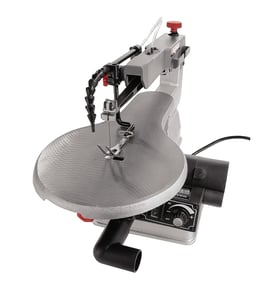
Yes. You can make straight cuts with a Craftsman 315172050 auto-scroller saw, but it takes more setup and technique than a saw designed for ripping; blade drift and flex make long, perfectly straight cuts harder to hold.
Best ways to get straighter cuts
- Use a wider, stiffer scroll saw blade (fine blades wander more).
- Increase blade tension to reduce deflection (tight, not overstressed).
- Feed the work slowly and consistently; forcing the cut increases drift.
- Keep the workpiece flat to the table; lifting twists the blade.
- Use a straightedge or shop-made fence as a visual guide for short straight cuts.
- Let the blade do the work; steer gently instead of correcting aggressively.
What “straight” looks like on a scroll saw
Scroll saws excel at tight curves and intricate patterns. For straight cuts, they are best for short trim cuts, small parts, and controlled line-following, not long rip-style cuts.
| Cut type | Scroll saw result | Typical use |
|---|---|---|
| Short straight cut (a few inches) | Very doable with care | Small craft parts, notches |
| Long straight cut | Often shows slight wander | Panels, long edges (not ideal) |
| Dead-straight edge for joinery | Hard to guarantee | Better done on other saw types |
Why it matters
If you need repeatable, perfectly straight edges, the limiting factor is usually blade drift (the blade naturally wants to track slightly off-line). Managing tension, blade choice, and feed rate improves accuracy and reduces rework.
Helpful DIY reference
For safe electrical checks if your saw is running inconsistently, use how to use a multimeter to test electrical parts video.
Last updated: February 2026
Are scroll saw blades interchangeable?
Scroll saw blades are interchangeable only when the blade end style matches your Craftsman model 315172050. Most blades are either pinned or pinless (plain-end), and your saw must be designed for that style; after that, you can choose blade size and tooth pattern based on the cut you want.
What you must match first (pinned vs. pinless)
Before buying blades, confirm what your 315172050 blade clamps accept.
- Pinned blades have small cross pins at each end; they fit pinned blade holders.
- Pinless blades are plain-end; they require clamps designed to grip the blade ends.
- Some saws accept both styles with the right holders or adapters.
- If the end style is wrong, the blade will not mount securely and can slip or break.
Blade sizes and tooth styles: what is “interchangeable”
Once the end style matches, many blades are broadly compatible across scroll saws because common lengths and size numbering are widely used.
| What varies | What it affects | What to choose |
|---|---|---|
| Blade size (#) | Thickness and turning radius | Smaller numbers for tight curves; larger for thicker stock |
| TPI (teeth per inch) | Cut speed vs. smoothness | Higher TPI for smoother cuts; lower TPI for faster, rougher cuts |
| Tooth pattern | Chip clearing and control | Skip tooth for general work; reverse tooth to reduce bottom tear-out |
Quick picking guide (common use cases)
- Tight fretwork and thin wood: smaller blade size, higher TPI
- General scrolling in 1/4 to 3/4 inch wood: mid-size blade, moderate TPI
- Thicker hardwood: larger blade size, lower to moderate TPI
- Cleaner bottom edge: reverse-tooth style (expect more sawdust)
Why it matters
Using the correct blade type and size helps your Craftsman auto-scroller saw track straight, reduces burning, and lowers the chance of blade breakage. It also improves cut quality and control, especially on tight curves.
For help confirming your exact model number before ordering, use how to find your appliance model number (and what it means for parts).
Last updated: February 2026
Should I get pinless or pinned scroll saw blades?
For the Craftsman 315172050 scroll saw, we recommend pinless (plain-end) blades for most projects because they let you thread the blade through small pilot holes for inside cuts and fine fretwork. Pinned blades are quicker to install but are bulkier and limit detail work.
Quick comparison: pinless vs pinned
| Feature | Pinless (plain-end) blades | Pinned blades |
|---|---|---|
| Best for | Intricate cuts, inside cuts, tight turns | Faster blade changes, basic cuts |
| Pilot hole size for inside cuts | Smaller | Larger |
| Blade variety | Widest selection (fine-tooth, reverse-tooth, spiral) | More limited |
| Typical use case | Fretwork, lettering, puzzles | Thicker stock, rougher patterns |
How to choose the right blade type for your work
- Choose pinless if you do inside cuts, tight curves, or detailed patterns.
- Choose pinned if you prioritize quick changes and mostly cut larger, simpler shapes.
- For hardwoods and clean edges, look for reverse-tooth or skip-tooth styles (often easier to find in pinless).
- For thick stock, use a larger blade size (regardless of end type) to reduce deflection.
- If you are breaking blades often, slow your feed rate and check blade tension and alignment.
Fit and setup tips (what matters on the saw)
Even when a saw can accept both styles, performance depends on setup:
- Set blade tension high enough to prevent wandering, but not so high that blades snap quickly.
- Keep the workpiece flat on the table; lifting the stock encourages blade twist.
- Use the right teeth-per-inch (TPI) for thickness (more TPI for thin stock, fewer TPI for thicker stock).
- If cuts burn, reduce speed (if variable) and increase TPI or ease feed pressure.
Why it matters
Blade end type affects what you can physically cut. Pinless blades make it practical to do inside cuts through small holes and produce cleaner, more controlled detail, which is why they are the best all-around choice for most scroll saw owners.
Related reading: how to find your appliance model number (and what it means for parts)
Last updated: February 2026
Which is the best scroll saw?
The best scroll saw is the one that matches your projects and how often you cut. For most DIY and hobby use, we recommend choosing a saw with low vibration, easy blade changes, and enough throat size for your typical patterns; those factors matter more than brand alone.
What to look for in a “best” scroll saw
- Throat size (depth of cut area): 16 to 20 inches is the most common range for general woodworking.
- Variable speed control: Helps prevent burning and improves control on tight curves.
- Tool-less blade changes: Saves time, especially for fretwork and inside cuts.
- Vibration control: Heavier base, solid stand, and good blade tensioning reduce chatter.
- Dust management: A blower and a dust port help you see the cut line.
- Table features: A flat, rigid table with a clear bevel scale improves accuracy.
Quick comparison: which type fits your needs?
| If you mainly do... | Best fit | Why it’s usually best |
|---|---|---|
| Small crafts, occasional use | 16-inch variable-speed saw | Lower cost, easier to store, still versatile |
| Fretwork and detailed patterns | 16 to 20-inch with tool-less blade changes | Faster inside cuts, less downtime |
| Larger plaques and wide patterns | 20-inch class saw | More capacity and stability |
| Long sessions, frequent use | Heavier saw plus stand | Less vibration and better control |
How this relates to your Craftsman model 315172050
If you already own the Craftsman 315172050 auto-scroller saw, the “best” upgrade is usually improving cut quality and reliability: use the right blade type (skip-tooth, reverse-tooth, spiral), keep blade tension consistent, and make sure the table is square to the blade. For electrical or power issues, testing the cord, switch, and internal wiring is the fastest way to pinpoint the failure.
- Unplug the saw before any inspection
- Verify the outlet and extension cord are good
- Check for loose spade connectors and damaged insulation
- Inspect brushes (if equipped) and the on/off switch
- Confirm the blade clamps hold securely and do not slip
Why it matters
Scroll saw performance is mostly about control: low vibration, consistent blade tension, and the right speed let you cut cleaner lines with fewer broken blades and less sanding.
For safe troubleshooting practices, we recommend reviewing are diy appliance repairs safe.
Last updated: February 2026
What are some common scroll saw mistakes?
Common mistakes on a Craftsman 315172050 scroll saw include incorrect blade tension, forcing the workpiece, using the wrong blade, and poor setup (unstable mounting or misaligned hold-down). Fixing these basics improves cut accuracy, reduces blade breaks, and makes the saw safer to use.
The most common mistakes (and what to do instead)
- Over-tightening or under-tightening the blade: Tension the blade so it feels firm and “rings” when plucked; recheck after the first few minutes of cutting.
- Feeding too fast: Use a steady, light feed rate; let the blade do the cutting to avoid drift, burning, and rough edges.
- Using the wrong blade type/size: Match blade size to material thickness and detail level (smaller blades for tight turns, larger blades for thicker stock).
- Cutting with a dull or damaged blade: Replace blades early; dull blades cause wandering cuts and extra heat.
- Not supporting the work: Keep the work flat on the table and use both hands to guide; avoid lifting the piece during turns.
- Poor dust control: Clear sawdust often so you can see the line and keep the blade cooler.
- Skipping safety basics: Wear eye protection, keep fingers out of the cut path, and unplug the saw before adjustments.
Quick troubleshooting guide
| Symptom | Most likely mistake | Best first fix |
|---|---|---|
| Blade breaks often | Too much side pressure, wrong blade, too much tension | Slow feed, use correct blade, set firm (not extreme) tension |
| Cut wanders or bevels | Forcing the cut, dull blade, uneven feed | Replace blade, lighten feed, keep stock flat |
| Excess burning | Feeding too slowly with dull blade, too much friction | Replace blade, clear dust, use smoother feed |
| Excess vibration | Saw not secured, uneven bench, worn mounts | Bolt saw down, stabilize bench, check fasteners |
Setup habits that prevent problems
- Bolt the saw to a solid bench or stand to reduce vibration.
- Verify the blade is installed correctly (teeth facing the correct direction for your saw’s cut).
- Start with scrap wood to dial in speed and feed before cutting your project piece.
- Make relief cuts on tight inside corners instead of twisting the blade.
Why it matters
Most “scroll saw problems” are technique and setup issues, not major failures. Correct tension, the right blade, and a controlled feed rate protect the blade, improve accuracy, and reduce kickback risk.
For tool and safety basics that apply to scroll saw work, use our are diy appliance repairs safe guide.
Last updated: February 2026