Owner’s manual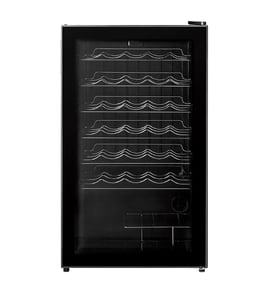

What is the life expectancy of a wine cooler?
Most wine coolers, including the Edgestar TWR325ESS, typically last 10 to 15 years with normal household use. Lifespan depends most on ventilation, stable placement, and routine cleaning; heat buildup and frequent temperature swings are the most common life-shorteners.
What affects lifespan the most
A wine cooler is basically a small refrigeration system; keeping heat and strain down helps it run longer.
- Ventilation clearance: keep about 2 inches on each side and 4 inches behind for airflow
- Room conditions: avoid direct sunlight and external heat sources
- Stable, level setup: use the leveling legs; do not operate with legs removed
- Clean habits: wipe interior with mild soap and water; avoid harsh solvents
- Door discipline: close the door promptly to prevent big temperature swings
Quick care checklist (high impact, low effort)
Use this as a simple maintenance routine for the TWR325ESS.
| Task | How often | Why it matters |
|---|---|---|
| Verify clearances (2 in sides, 4 in back) | At install, then yearly | Prevents compressor overheating |
| Level the cabinet using leveling legs | At install, after moving | Helps door seal and reduces vibration |
| Clean interior with mild detergent | Every 3 to 6 months | Reduces odors and residue |
| Keep unit out of sun and away from heat | Always | Lowers run time and wear |
Signs your wine cooler is nearing end of life
These symptoms often show up as the sealed system or controls start to struggle.
- Temperature will not hold steady even after adjusting settings
- Unit runs almost constantly or gets unusually hot around the cabinet
- Excessive vibration or new rattling noises
- Condensation issues that persist with normal use
Why it matters
A wine cooler that runs hot or fights temperature swings wears out faster and can store wine at inconsistent temperatures. Following the setup and clearance guidance in the TWR325ESS owner's manual reduces stress on the cooling system and helps you get the full 10 to 15 years.
Last updated: February 2026
What is the difference between a wine cooler and a beverage cooler?
A wine cooler is built to keep wine stable for storage and serving by minimizing temperature swings and vibration; many models also prioritize gentle, even cooling. A beverage cooler is built for flexible drink storage and faster chilling, typically with adjustable shelving and colder setpoints.
How they’re designed differently
Wine and beverage coolers can look similar, but they’re optimized for different goals.
- Temperature focus: Wine storage is usually centered around steady mid-range temps; beverage storage often targets colder “ready to drink” temps.
- Stability: Wine coolers emphasize consistent temperature and low vibration to protect flavor and aging.
- Interior layout: Wine coolers commonly use bottle-friendly racks; beverage coolers usually use flat shelves for cans and bottles.
- Humidity and airflow: Wine storage benefits from balanced airflow so bottles cool evenly; beverage storage prioritizes quick recovery after door openings.
- Noise profile: Many wine coolers aim for quieter operation in living spaces.
What this means for your Edgestar TWR325ESS
Your Edgestar TWR325ESS uses thermoelectric cooling, which is known for low energy use and no vibration, but it can take longer to pull down to its lowest temperature (plan 24 hours or more after setup). Those traits align well with wine storage where stability matters. Details and operating guidance are in the TWR325ESS owner's manual.
Quick comparison
| Feature | Wine cooler | Beverage cooler |
|---|---|---|
| Best use | Wine storage and serving | Mixed drinks, soda, beer |
| Typical temp approach | Stable, moderate range | Colder, faster chilling |
| Shelving | Racks for bottles | Adjustable shelves |
| Vibration | Minimized | Less critical |
Why it matters
Using the right cooler helps protect taste and carbonation, reduces temperature swings from frequent door openings, and improves performance. For thermoelectric units like the TWR325ESS, good placement also matters; allow ventilation clearance (commonly 2 inches on each side and 4 inches behind) and keep it away from heat sources for better cooling.
Last updated: February 2026
What is the most common problem with wine coolers?
The most common wine cooler problem is inconsistent cooling (the unit will not reach or hold the set temperature). On the Edgestar TWR325ESS, this is most often tied to heat and airflow issues, frequent door openings, or ambient conditions that make thermoelectric cooling work harder. See the TWR325ESS owner's manual for model-specific troubleshooting steps.
What usually causes temperature problems
- Not enough ventilation clearance on the sides and back
- Cooler placed near sunlight or a heat source
- Door opened too often or left open too long
- Warm bottles or drinks loaded before they cool to room temperature
- Room conditions that are too warm or too humid for stable operation
Quick checks we recommend for the Edgestar TWR325ESS
- Give it time: thermoelectric units commonly need 24 hours or more to pull down to their lowest temperature.
- Improve airflow: keep several inches of space around the cabinet; do not block vents.
- Reduce heat load: move it away from direct sun, ovens, or other heat-producing appliances.
- Limit door openings: close the door immediately after loading or removing bottles.
- Level the cabinet: place it on a flat, solid surface so the door seals consistently.
Symptom-to-cause guide
| Symptom | Most likely cause | What to do first |
|---|---|---|
| Not cold enough | Heat source nearby or poor ventilation | Relocate and add clearance |
| Temperature swings | Door opened frequently | Minimize openings; confirm door closes tightly |
| Frost forming | High humidity or frequent openings | Raise temp slightly; reduce openings; defrost if needed |
| Won’t turn on | No power, tripped breaker, blown fuse | Check outlet power; reset breaker/replace fuse |
Why it matters
Wine stores best when temperature stays steady. When airflow is restricted or the room is hot, the TWR325ESS can struggle to maintain a consistent setpoint, which can affect flavor and long-term storage.
Last updated: February 2026
How to reset a wine cooler?
For the Edgestar TWR325ESS wine cooler, the most reliable reset is a power cycle: unplug the unit, wait about 10 to 60 minutes, then plug it back in and re-set your temperature using the up and down arrows. This reboots the digital control and clears many minor glitches.
Reset steps (recommended)
- Close the door fully so the temperature stays stable.
- Unplug the wine cooler by grasping the plug (do not pull the cord).
- Wait 10 to 60 minutes.
- Plug the unit back in.
- Set the temperature again using the up and down arrow temperature controls.
- Give the cooler time to stabilize before judging results (especially if it was warm inside).
If it still will not cool correctly after a reset
A reset will not fix airflow, placement, or door-seal problems. These checks solve most “not reaching temperature” complaints:
- Keep the cooler away from direct sunlight and other heat sources.
- Maintain ventilation space around the cabinet (several inches on the sides and back is typical).
- Limit door openings and do not leave the door open for long periods.
- Confirm the unit is on a flat, level, solid surface.
- Make sure items inside are not blocking airflow between shelves.
Quick troubleshooting table
| Symptom | What to check first | What to do |
|---|---|---|
| No power, display off | Outlet power, breaker/fuse | Restore power, reset breaker, then power-cycle |
| Not reaching set temp | Ventilation, heat sources, door openings | Improve airflow, move unit, reduce door openings |
| Frost buildup | Humidity, frequent door opening | Raise temp setting slightly, reduce openings, unplug to melt frost |
Why it matters
Wine and beverage coolers like the Edgestar TWR325ESS are sensitive to ventilation and door openings; even after a reset, poor airflow or added heat load can prevent the cabinet from holding a steady set temperature.
For model-specific operating details (controls, features, and care), follow the TWR325ESS owner's manual.
Last updated: February 2026
Why is my thermoelectric wine cooler not working?
If your Edgestar TWR325ESS thermoelectric wine cooler is not working, the most common causes are a power problem, poor ventilation, or heat load issues that prevent the thermoelectric system and its fans from removing heat. We follow the troubleshooting steps in the TWR325ESS owner's manual to pinpoint whether it is a no-power issue or a cooling-performance issue.
Step 1: Confirm it has power (no lights, no fan, no cooling)
- Plug the cooler directly into a wall outlet (avoid power strips and extension cords).
- Check for a power failure in the home.
- Reset the tripped circuit breaker or replace a blown house fuse.
- Unplug the unit, wait 2 minutes, then plug it back in.
Step 2: Fix the most common cooling blockers (runs but does not get cold)
Thermoelectric coolers cool more slowly than compressor units and are sensitive to room conditions.
- Give it 24 hours or more to reach its lowest temperature after setup.
- Keep at least 2 inches of clearance on each side and 4 inches behind for ventilation.
- Move it away from direct sunlight and other heat sources.
- Limit door openings; close the door immediately after loading.
- Avoid overpacking; keep airflow paths open around bottles and shelves.
Quick check table
| What you notice | Likely cause | What to do |
|---|---|---|
| No operation at all | Outlet, breaker, fuse | Verify outlet power; reset breaker/replace fuse |
| Runs constantly but warm | Heat source or poor ventilation | Improve clearance; relocate away from heat |
| Temperature swings | Door opened too often | Reduce door-open time; confirm door closes tightly |
Frost buildup can also reduce cooling
Even with auto-defrost, frost can form under certain conditions.
- Set a warmer temperature temporarily.
- Open the door less often.
- Unplug the cooler and allow frost to melt; dry the interior before restarting.
Why it matters
A thermoelectric wine cooler relies on steady airflow and stable ambient temperature. When ventilation is restricted or the room is warm, the system cannot shed heat effectively, so the cabinet will not reach the set temperature.
Last updated: February 2026