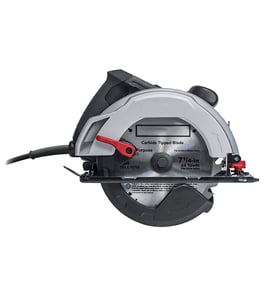

Can I cut a 2x4 with a circular saw?
Yes. A circular saw like the Skil 5656 7-1/4-inch power saw is made for cutting common framing lumber, including 2x4s, as long as you use the right blade, support the board correctly, and set the blade depth for a controlled, clean cut.
Best setup for a straight, safe 2x4 cut
- Use a sharp wood-cutting blade (a dull blade is the top cause of burning and wandering cuts).
- Set blade depth so the teeth extend about 1/4 inch below the 2x4.
- Support the 2x4 on sawhorses or a stable bench; keep the cutoff side free to drop.
- Clamp the board when possible; movement causes kickback and crooked cuts.
- Use a speed square or straightedge as a guide for accurate crosscuts.
- Let the saw reach full speed before entering the wood; keep a steady feed rate.
Quick depth and cut-type guide
| Task | Typical blade | Depth setting | Guide recommended |
|---|---|---|---|
| Crosscut (across the grain) | General-purpose framing blade | Teeth about 1/4 inch below board | Speed square |
| Rip cut (with the grain) | Ripping or general-purpose blade | Teeth about 1/4 inch below board | Straightedge |
| Multiple 2x4s stacked | Framing blade (only if fully supported) | Deep enough to clear stack | Straightedge and clamps |
Why it matters
Most problems people blame on “not enough power” are actually caused by poor support, incorrect blade depth, or a dull blade. A controlled setup reduces splintering, binding, and kickback, and it helps your Skil 5656 track straight.
Helpful DIY reference
If you need to troubleshoot a saw that bogs down, trips a breaker, or runs intermittently, use a meter to check the cord, switch, and motor circuit: how to use a multimeter to test electrical parts video.
Last updated: February 2026
Is a 5 1/2 circular saw worth it?
A 5-1/2 inch circular saw is worth it when you want a lighter, easier-to-handle saw for quick DIY cuts; for heavier framing and frequent rip cuts, a 7-1/4 inch saw like the Skil model 5656 is the better long-term fit for power and cut capacity.
When a 5-1/2 inch saw makes sense
A smaller blade saw is a practical choice if your projects stay within its cut depth and you value portability.
- Cutting thin plywood, paneling, and trim stock
- Working overhead or in tight spaces (lighter tool, less fatigue)
- Occasional DIY use where compact storage matters
- Short crosscuts where maximum depth is not required
When you will be happier with a 7-1/4 inch saw (like Skil 5656)
If you regularly cut thicker lumber, the larger blade size pays off quickly.
- More cut depth for 2x material (especially at bevel angles)
- Better all-around framing performance
- Wider blade availability (more choices in tooth counts and specialty blades)
- Less need to “flip and finish” cuts on thicker stock
Quick comparison
| Feature | 5-1/2 inch circular saw | 7-1/4 inch circular saw (Skil 5656 type) |
|---|---|---|
| Typical best use | Light DIY, sheet goods | Framing, general-purpose cutting |
| Cut capacity | Lower | Higher |
| Handling | Lighter, more compact | Heavier, more stable in long cuts |
| Blade selection | More limited | Broad and easy to find |
What to check before you buy (or decide to keep it)
These factors determine whether a 5-1/2 inch saw will feel “worth it” for your projects.
- Maximum cut depth at 90 degrees and at 45 degrees
- Blade type you need (fine finish vs. fast framing)
- Power source (corded vs. cordless) and runtime expectations
- Shoe and bevel adjustment rigidity (stays square under load)
- Dust direction and guard movement (smooth return)
Why it matters
Blade diameter directly affects cut depth and how often you have to change your approach on thicker material. If your work includes 2x lumber, bevel cuts, or repeated long rips, stepping up to a 7-1/4 inch saw reduces workarounds and improves consistency.
For help confirming you have the right model number before ordering Skil 5656 replacement parts, use how to find your appliance model number (and what it means for parts).
Last updated: February 2026
How good are Skil circular saws?
Skil circular saws are a strong value choice for DIY and homeowner projects: they typically deliver solid cutting power, straightforward depth and bevel adjustments, and good ergonomics for the price. For the Skil model 5656 7-1/4" power saw, expect dependable performance for framing lumber, plywood, and general jobsite cuts.
What Skil saws do well
- Value and capability: good performance for common crosscuts and rip cuts without premium pricing.
- User-friendly adjustments: depth and bevel controls are usually simple and quick to set.
- Comfort and handling: many Skil saws prioritize manageable weight and grip comfort.
- Good everyday accuracy: with a straightedge or guide, they track well for typical DIY work.
- Parts support: you can look up diagrams and replacement components by model number on Sears PartsDirect.
Where they can fall short (compared to pro-grade saws)
Skil circular saws are built primarily for homeowner and light-to-moderate jobsite use. In heavy, all-day professional cutting, you will typically notice differences in refinement and long-term durability.
| Use case | Skil circular saw fit | What to watch for |
|---|---|---|
| DIY home projects | Excellent | Use a sharp blade and proper support for clean cuts |
| Decking, shed builds | Very good | Avoid forcing the feed rate in thick stock |
| Daily pro framing | Fair | Heat buildup, wear, and adjustment drift over time |
How to get the best results from a Skil circular saw
- Use the right blade (fine-tooth for plywood, framing blade for 2x lumber).
- Set blade depth so only about 1/4 inch of tooth extends below the material.
- Support the workpiece to prevent pinching and kickback.
- Keep the shoe/base plate clean and check it for bends after drops.
- If the saw bogs down, reduce feed pressure and confirm the blade is sharp.
Why it matters
A circular saw that matches your workload cuts faster, tracks straighter, and runs cooler. For most homeowners, Skil hits the sweet spot: reliable cuts and practical features without paying for pro-only upgrades.
Last updated: February 2026
What are the two basic types of circular saws?
The two basic circular saw designs are sidewinder (direct-drive) and worm-drive. For your Skil model 5656 7-1/4 inch power saw, knowing which design you have helps you compare torque, weight, blade-left or blade-right layouts, and the best use cases for framing or long rip cuts.
Quick comparison: sidewinder vs worm-drive
| Feature | Sidewinder (direct-drive) | Worm-drive |
|---|---|---|
| Motor position | Beside the blade | Behind the blade with a gear case |
| Feel and balance | Lighter, more compact | Heavier, longer, often steadier |
| Power delivery | Higher RPM, fast crosscuts | Higher torque, strong for rips |
| Typical blade orientation | Often blade-right (varies) | Often blade-left (varies) |
How to choose the right type for your work
- Pick sidewinder for general DIY, framing, and overhead or ladder work where lighter weight matters.
- Pick worm-drive for frequent ripping, thicker lumber, and long cuts where torque and stability matter.
- If you cut sheet goods often, prioritize a saw that supports a straightedge guide and has a stable base plate.
- If visibility is your priority, choose the blade orientation (left or right) that matches your dominant hand and cutting line preference.
- If you work indoors, consider dust control and a sharp blade matched to the material (plywood, framing lumber, or composite).
What this means for parts and repairs
Sidewinder and worm-drive saws use different drive components. Worm-drive models add a gear case and related seals and lubrication needs, while sidewinders are typically simpler direct-drive designs. When you are identifying the exact version of your saw for parts lookup, use the model tag information and our guide: how to find your appliance model number (and what it means for parts).
Why it matters
Choosing the right circular saw type improves cut quality and safety. The wrong design for the job can lead to slower cuts, more binding, and more fatigue, especially on long rips or repeated framing cuts.
Last updated: February 2026
How deep can a 5 1/2 circular saw cut?
Most 5-1/2 inch circular saws cut about 1-11/16 to 2 inches deep at 90° and about 1-1/8 to 1-3/8 inches at 45°, depending on the saw’s shoe and guard clearance. Your Skil 5656 is a different class of saw (7-1/4 inch); use the measurement steps below to confirm its exact max depth.
Typical max cut depth ranges (5-1/2 inch saw)
These ranges reflect what we see across common 5-1/2 inch corded and cordless circular saws:
- 90° (straight cut): ~1-11/16 in. to 2 in.
- 45° (bevel cut): ~1-1/8 in. to 1-3/8 in.
- Material and blade type: don’t change max depth much, but they change how easily the saw reaches full depth
- Dull or gummed blade: reduces effective depth and increases binding risk
How we recommend measuring your saw’s true max depth (safe method)
This gives you the real number for your specific saw and blade.
- Unplug the saw.
- Set bevel to 0°.
- Set depth adjustment to maximum.
- Retract the lower blade guard.
- Measure from the lowest tooth tip to the bottom of the shoe.
- Repeat at 45° if you use bevel cuts.
Quick reference table (typical)
| Blade size | Typical max depth at 90° | Typical max depth at 45° |
|---|---|---|
| 5-1/2 in. | ~1-11/16 to 2 in. | ~1-1/8 to 1-3/8 in. |
| 7-1/4 in. | ~2-3/8 to 2-7/16 in. | ~1-11/16 to 1-15/16 in. |
Why it matters
Matching cut depth to material thickness helps prevent binding and kickback, and it reduces motor strain when ripping 2x lumber, plywood, or sheet goods.
If the saw bogs down or intermittently loses power, electrical checks can help; see how to use a multimeter to test electrical parts video.
Last updated: February 2026
