Error Codes

Are bottom mount fridges better?
A bottom-mount refrigerator like the KitchenAid KRFF577KBS02 is better for many households because the fresh-food section sits at eye level, so everyday items are easier to see and reach. It is a strong choice if you use the refrigerator compartment more often than the freezer.
When a bottom-mount is the better choice
- You want less bending for daily items like milk, produce, and leftovers
- You prefer wider refrigerator shelves and easier organization up top
- You open the fridge door far more often than the freezer drawer
- You want better visibility of fresh food (helps reduce forgotten items)
- You are comfortable with a freezer drawer layout (stacking and bins)
When a bottom-mount might not be better
- You access frozen foods constantly (a top-freezer keeps them at chest height)
- You dislike freezer drawers (items can get buried without good bin habits)
- You need the lowest upfront cost (top-freezer models are often simpler)
Quick comparison
| Feature | Bottom-mount refrigerator | Top-freezer refrigerator |
|---|---|---|
| Fresh food access | Easiest (eye level) | Requires more bending |
| Freezer access | Requires bending | Easier access |
| Organization style | Shelves up top, drawer freezer | Shelves plus top freezer shelf |
| Best for | Fresh-food heavy households | Frozen-food heavy households |
Why it matters
Most people open the refrigerator section many times per day. Putting fresh food at eye level reduces strain and makes it easier to keep temperatures stable because you spend less time searching with the door open.
Helpful upkeep tip for bottom-mount owners
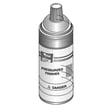
If you want your KRFF577KBS02 to stay fresher-smelling (especially with frequent door openings), replacing the air filter on schedule helps; see the refrigerator air filter W10311524.
Last updated: February 2026
How to remove bottom grill from KitchenAid refrigerator?
On KitchenAid model KRFF577KBS02, the bottom grill (toe kick) snaps onto the lower frame. We remove it by gripping the grill at the ends and pulling straight forward to release the retaining clips; then lift it away. Reinstall by aligning it and snapping it back into place.
Before you start
- Unplug the refrigerator or switch off power at the breaker (recommended).
- Remove items from the bottom door bins if they block your grip.
- Protect the floor with a towel or cardboard to prevent scratches.
- Use a flashlight to see the clip locations along the bottom edge.
Step-by-step: remove the bottom grill (toe kick)
- Stand in front of the refrigerator and place both hands near the left and right ends of the grill.
- Pull the grill straight toward you (not upward) to pop the clips free.
- If one side releases first, keep steady pressure and work across until all clips disengage.
- Once loose, lift the grill away and set it aside.
If it will not come off
- Check for hidden screws (some toe kicks use screws depending on configuration).
- Warm stiff plastic slightly with a hair dryer on low for 30 to 60 seconds, then pull forward again.
- Avoid prying with a metal screwdriver; use a plastic putty knife to prevent dents and paint damage.
Quick comparison: pull direction matters
| What you do | What happens | Best practice |
|---|---|---|
| Pull straight forward | Clips release cleanly | Recommended |
| Pull up or twist | Clips can bind or crack | Avoid |
| Pry with metal tool | Scratches and dents | Avoid |
Why it matters
Removing the toe kick correctly gives you access for cleaning, leveling adjustments, and checking for airflow obstructions. Pulling straight forward protects the grill clips and the lower frame from damage.
For related maintenance that helps keep odors down after you have the grill off, see how to get rid of refrigerator smells.
Last updated: February 2026
What are the disadvantages of a bottom freezer?
Bottom-freezer refrigerators like the KitchenAid KRFF577KBS02 keep fresh food at eye level, but the tradeoff is that frozen items sit low in a pull-out drawer. That design can mean more bending, heavier drawer loads, and sometimes higher repair or replacement-part costs over time.
Common disadvantages (what owners notice most)
- More bending for frozen food: you reach down for everyday freezer items.
- Heavier, bulkier access: a fully loaded freezer drawer can feel heavy and awkward.
- Organization can be harder: stacked baskets and deep bins can hide items.
- Drawer wear and alignment issues: rollers, rails, and door seals can take more stress.
- Ice and water components add complexity: more parts can mean more troubleshooting when performance drops.
Parts that often relate to bottom-freezer “pain points”
If you are seeing symptoms (warm freezer, frost, leaks, poor ice production), these are common systems involved:
| Symptom | Common area involved | Example part on this model page |
|---|---|---|
| Frost buildup, door not sealing | Door gasket, door alignment | Door gasket (gray) W10407212 |
| Ice maker not filling or freezing up | Fill tube, ice maker, water valve | Fill tube heater W11087201 |
| Temps swing, food freezing in fresh-food section | Temperature sensing, airflow | Refrigerator thermistor W11724692 |
| Odors linger in fresh-food section | Air filtration | Refrigerator air filter W10311524 |
Why it matters
Bottom-freezer designs are efficient for fresh-food access, but the freezer drawer is a high-use, high-load area. When the drawer is overpacked or the door seal is slightly out of alignment, you can get temperature instability, frost, and extra strain on moving parts.
Tips to reduce the downsides
- Keep heavier items low and centered so the drawer glides smoothly.
- Do not block interior vents; airflow problems mimic “weak cooling.”
- Clean and inspect the door gasket; correct small gaps early.
- Replace the air filter on schedule to help control odors.
- If ice issues start, check for fill tube icing and water flow restrictions.
Last updated: February 2026
What is the most common problem with KitchenAid refrigerators?
For KitchenAid refrigerators like model KRFF577KBS02, the most common issues we see are ice maker problems (no ice, slow ice, clumping) and cooling or temperature swings in the fresh food section. These symptoms are often tied to airflow, water supply, or temperature sensing components.
Most common symptoms and what they usually point to
- Ice maker not making ice or making hollow cubes: water supply restriction, frozen fill tube, or a failing ice maker
- Slow ice production: warm freezer temps, restricted airflow, or a partially blocked water system
- Fresh food too warm but freezer seems OK: evaporator fan or airflow path issue
- Temps fluctuate: temperature sensor (thermistor) drifting out of range
- Water dispenser weak or ice is small: water filter restriction or inlet valve issue
Quick checks we recommend first (no tools)
- Confirm freezer is set near 0°F and refrigerator near 37°F.
- Make sure vents inside the refrigerator are not blocked by food packages.
- If ice is slow, dump old ice and let the bin refill; clumped ice can slow output.
- Replace the water filter on schedule; a restricted filter commonly reduces ice and water flow.
- If the fill tube keeps freezing, inspect for frost buildup and airflow problems.
Parts that commonly solve these problems on KRFF577KBS02
If your symptoms match, these are frequent fixes for this model:
| Symptom | Common part to check/replace | Why it matters |
|---|---|---|
| No ice or erratic ice | Ice maker as W11658802 | The ice maker module can fail mechanically or electrically |
| Small cubes, weak water flow | Valve, dual water W11482383 | A weak inlet valve can starve the ice maker and dispenser |
| Temps swing, warm sections | Refrigerator thermistor W11724692 | Bad temperature feedback causes poor cooling control |
| Fill tube freezing | Fill tube heater W11087201 | Helps prevent the ice maker fill tube from icing over |
Why it matters
Ice maker and temperature complaints are usually not “one big failure”; they are often a chain reaction. For example, a restricted water path can look like an ice maker failure, and an airflow problem can look like a sealed system issue. Checking the simple items first saves time and prevents unnecessary part replacement.
Helpful DIY guidance
- How to replace the water filter in a KitchenAid refrigerator
- Common refrigerator ice maker problems and solutions
- How to diagnose a faulty refrigerator water inlet valve
Last updated: February 2026